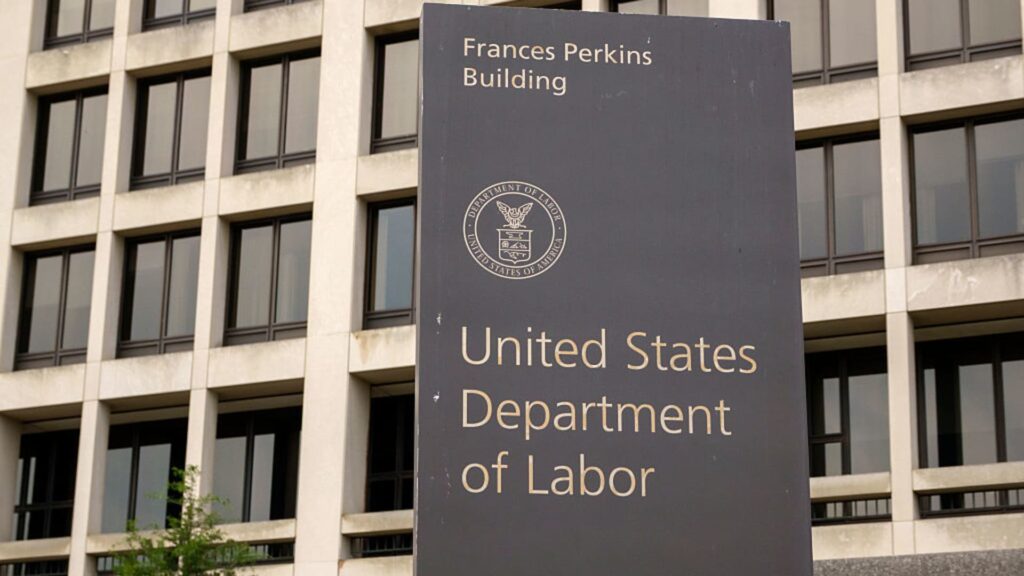
A sign is displayed at the Department of Labor Frances Perkins Building on June, 2025, in Washington.
Kevin Carter | Getty Images
The Department of Labor on Monday proposed a rule that would allow 401(k) plans to more easily include alternative assets such as cryptocurrency, real estate and private market assets.
The proposal is in response to President Donald Trump‘s executive order, released in August, which directed the Labor Department and the Securities and Exchange Commission to facilitate expanded access to alternative assets in 401(k)s.
“This proposed rule will show how plans can consider products that better reflect the investment landscape as it exists today,” Labor Secretary Lori Chavez-DeRemer said in a statement.
Proponents say including alternative investments in 401(k)s could provide retirement savers with greater diversification away from public markets and potentially higher returns. But some financial advisors have expressed concerns that many 401(k) investors lack the knowledge or experience to incorporate these more sophisticated investments, which can be riskier and more costly.
The Labor Department proposal comes as private credit markets are under stress from investor redemptions and concerns about overexposure to software investments amid artificial intelligence disruptions.
Read more CNBC personal finance coverage
Although 401(k) plans are already not prohibited from including alts, fears of lawsuits challenging their investment decisions have kept most plan sponsors on the sidelines.
The Labor Department rule creates a so-called “safe harbor” that can help shield plan sponsors from litigation. It identifies six factors for a plan fiduciary to “objectively, thoroughly, and analytically consider” when selecting alternative investments. The six factors are performance, fees, liquidity, valuation, performance benchmarks and complexity.
The rule is subject to further review, including a 60-day public comment period, before it can be finalized.
The typical investor is better suited to owning an index fund with broad exposure to the stock market, a strategy that often outperforms professional investors and helps keep investment expenses low, Josh Brown, CEO of Ritholtz Wealth Management, said in an interview with CNBC in October.
“The average investor by definition does not need alternative assets in their portfolio,” Brown said.
There’s “absolutely no chance” 401(k) investors would get access to the best alts managers or the best funds, Brown said. Even if they did, they’d “pay through the nose for it” because they don’t have the buying power to reduce investment fees, he said.
“You are not the sovereign wealth fund of Norway,” he said. “You will not be treated that way.”