

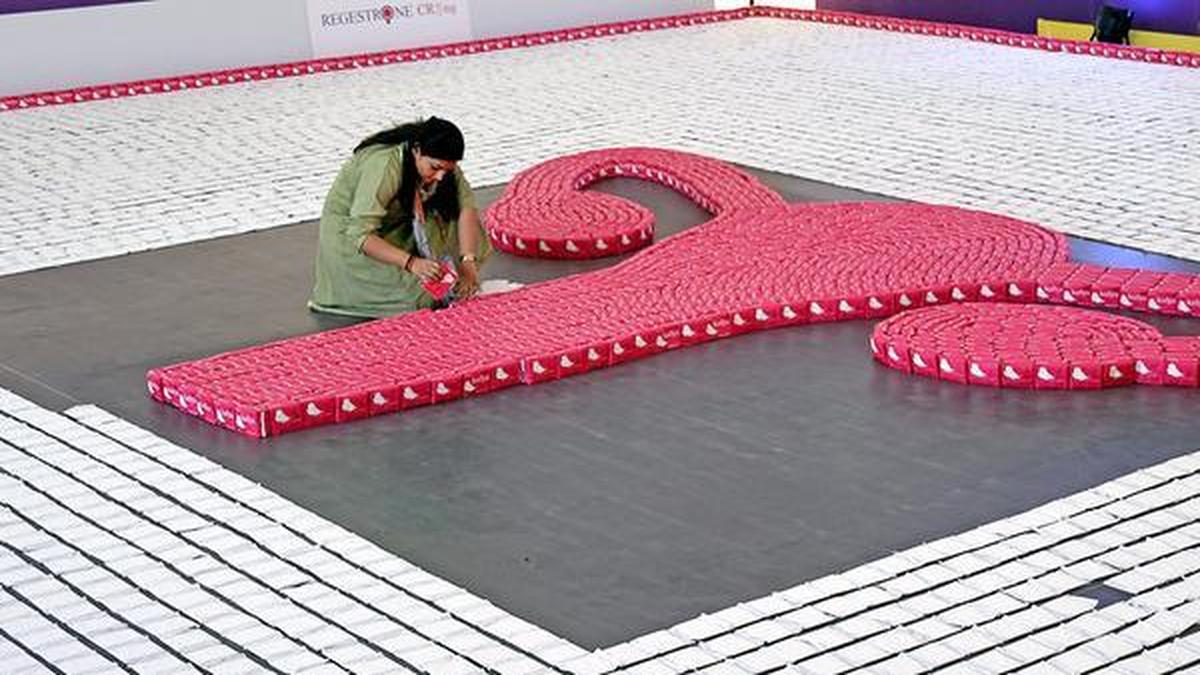
The Supreme Court on Friday (January 30, 2026) declared that the right to menstrual health and access to menstrual hygiene management (MHM) measures in educational institutions is part of the fundamental right to life and dignity under Article 21 of the Constitution.
“Dignity cannot be reduced to an abstract ideal; it must find expression in conditions that enable individuals to live without humiliation, exclusion, or avoidable suffering. For menstruating girl children, the inaccessibility of MHM measures subjects them to stigma, stereotyping, and humiliation,” a Bench of Justices JB Pardiwala and R. Mahadevan observed in a judgment.
Also Read | Menstrual health is a public health issue
The absence of safe and hygienic menstrual management measures undermined dignified existence by compelling adolescent students to either resort to absenteeism or adopt unsafe practices.
“Both violate the bodily autonomy of menstruating girl children… Menstrual poverty hinders menstruating girls from exercising their right to education with dignity equal to that of their male counterparts, or students who can afford sanitary products. There is no gainsaying that impairment of primary or secondary education has grave and lasting consequences, not only for individual development but also for long-term social and economic participation,” the Supreme Court explained.
The judgment was based on a writ petition filed by Dr. Jaya Thakur highlighting the lack of MHM measures in schools across the country, leading to absenteeism and, even worse, dropping out of school. The court held that lack of MHM measures in schools violate the right to privacy and bodily autonomy of students.
“A girl child’s expectation to manage her menstruation in privacy with dignity is legitimate. In such circumstances, the lack of resources cannot be permitted to govern her autonomy over her own body,” the court noted. It said MHM was not limited to traditionally understood sanitation, but included bodily autonomy and decisional freedom.
“The denial of adequate facilities, appropriate sanitary products or privacy effectively compels a girl child to manage her body in a manner dictated by circumstance rather than choice. Autonomy can be meaningfully exercised only when girl children have access to functional toilets, adequate menstrual products, availability of water, and hygienic mechanisms for disposal,” the court observed.
The court said the state cannot force a child to choose between dignity and her education. Such a choice was neither just nor equitable. The failure to provide sanitary napkins created a gender-specific barrier that impedes attendance, and continuity in education, thereby defeating the substantive guarantee of free and compulsory education.
In a separate section on the role of ‘men in menstruation’, the apex court said it was crucial to educate and sensitise male teachers and students about the “biological reality of menstruation” in order to avoid any sort of harassment or invasive questioning of a menstruating student in school.
Issuing a series of directions, the Supreme Court ordered States and Union Territories to ensure that every school, whether government-run or privately managed, in both urban and rural areas, are provided with functional, gender-segregated toilets. These schools must make oxo-biodegradable sanitary napkins readily accessible to students, preferably within the toilet premises, through sanitary napkin vending machines. Schools must establish ‘MHM corners’ equipped with, including but not limited to, spare innerwear, spare uniforms, disposable bags and other necessary materials to address menstruation-related exigencies.
The court held that the State concerned would be held accountable if government-run schools did not comply with Section 19 (norms and standards for schools, including separate washrooms for boys and girls and barrier-free access) of the Right to Education (RTE) Act. Similarly, private schools would be de-recognised and face consequences if they did not comply with similar norms prescribed under the RTE Act.








9m6j0r