ATHENS, Greece — A Belgian collector who put up for online auction a series of World War II photographs showing the final moments of 200 Greeks executed by a Nazi firing squad signed a preliminary agreement with Greece on Friday and has withdrawn the photos from sale, Greece’s Culture Ministry said.
Greece is seeking to obtain the photos after declaring them part of Greek heritage.
Culture Minister Lina Mendoni announced the preliminary agreement after experts visited the collector, Tim de Craene, in Belgium on Friday and verified that the photos were genuine. She did not provide details of the agreement or specify how Greece will obtain the photos.
Twelve pictures showing 200 political prisoners being led to their deaths on May 1, 1944 appeared for sale on eBay on Saturday. They are the only photographic evidence that has come to light of an execution that was a seminal moment in Greece’s World War II history.
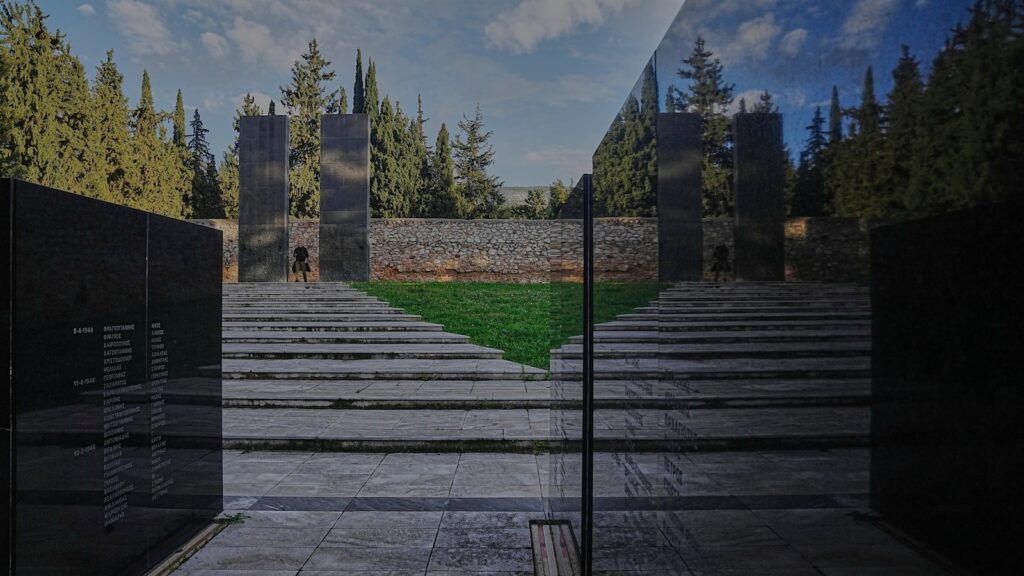
The execution took place at a shooting range in the Kaisariani suburb of Athens. The photographs show men being led through a gateway and down a path, several looking directly at the camera as they walk. Another shows them lined up in front of a wall.
Experts sent by the culture ministry to Belgium to examine the photos found they were part of a much larger collection of images taken by Wehrmacht Lieutenant Hermann Heuer while he was stationed in Greece in 1943-44 during the Nazi occupation of the country. They determined the entire collection of 262 photos, as well as some documents included with the pictures, was genuine.
The Kaisariani executions of 200 communist political prisoners were one of the worst atrocities during the Third Reich’s occupation of Greece and remain a significant moment in the country’s history.
As World War II ended, a vicious civil war between Western-backed government forces and communist fighters broke out and lasted until 1949. Its wounds have still not entirely healed.
Shortly after the photos were posted for sale, a memorial at the site in Kaisariani to those killed was vandalized, with plaques listing their names smashed.
“Historical memory will not be erased, no matter how much it bothers some people,” Kaisariani municipality said in a statement, adding that it would repair the monument. The photos, it said, had caused “a chill of emotion for the heroic, valiant stance of the 200 communist heroes who stood up against the firing squad.”