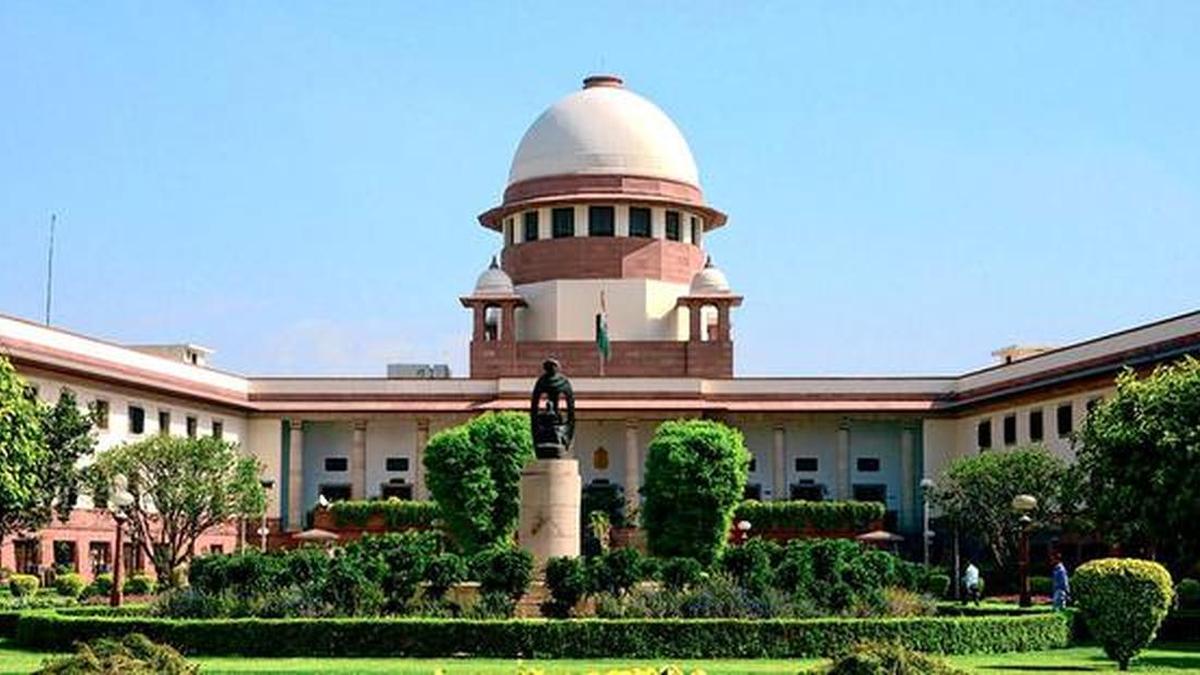
The Supreme Court on Friday (February 27, 2026) assured that judicial officers deployed for verification of claims and objections filed by voters excluded from the electoral roll during the West Bengal Special Intensive Revision would remain objective and accept documents of proof of citizenship and identity listed in successive top court orders.
The court dismissed the ruling All India Trinamool Congress government’s apprehension that the Election Commission was trying to “influence” judicial officers by giving them “training”.
In an oral mentioning made before a Bench of Chief Justice of India Surya Kant and Justice Joymalya Bagchi, senior advocate Kapil Sibal, appearing for the ruling party, said the poll body’s training module may breach the orders of the Supreme Court itself. Mr. Sibal submitted that the module may even include instructions not to receive verification documents approved by the Supreme Court.
“We went beyond our own imagination in this case… There has to be an end to all this. We know our judicial officers. They will not be influenced by anything. A person argues a case before the judiciary, the opposite party counters the arguments, and ultimately we take the decision impartially,” Chief Justice Kant observed, explaining the impartiality of justice administration from the Bench.
Mr. Sibal said judicial officers cannot take instructions from the Election Commission.
“The EC cannot tell judicial officers ‘don’t take that or this certificate’. They are not bound by such instructions,” the senior advocate submitted.
Justice Bagchi pointed out that the EC was authorised to impart training. “Who else will give the training? They are being trained to understand the modalities of the EC Net and the process of verification of documents… We have made it very clear in our orders on the documents which need to be looked into during the verification process. Our orders are as clear as daylight. The EC cannot override our orders,” Justice Bagchi observed.
Mr. Sibal said the judicial officers were told not to accept domicile certificates from Sub-Division Officers. The court, however, said the documents mentioned in its orders had to be accepted.
Chief Justice Kant said verification of documents for the SIR was a “completely alien responsibility” for judicial officers. They were neither trained for it in the judicial academy nor was it part of their daily work. The court reminded that both the EC and the State government were supposed to provide a congenial working atmosphere for the judicial officers.
“Look at the extent to which we have gone in this case… We have almost evacuated the State judiciary…” Justice Bagchi pointed out.
The court further asked the EC to publish and upload supplementary voter lists as soon as they were ready.
On February 20, the top court took an extraordinary decision to deploy serving and retired judicial officers of “impeccable integrity” in West Bengal to take over the quasi-judicial task of Election Registration Officers and Assistant Election Registration Officers in the SIR process.
They were assigned to hear lakhs of voters excluded from the West Bengal electoral roll and who had received hearing notices after the EC found them “unmapped” or detected “logical discrepancies” in their personal details.
Subsequently, on February 24, the top court moved quickly to augment the ranks of judicial officers deployed to aid in the completion of the West Bengal SIR process, even alerting neighbouring Odisha and Jharkhand to spare their judges.
The top court instructed that verification of objections and claims regarding logical discrepancies or unmapping would be based on documents listed in the EC’s October 27, 2025 SIR notification and the court’s subsequent orders, which included Aadhaar and Madhyamik Class 10 admit card along with pass certificate.
The court also allowed the EC to publish a voter list in West Bengal on February 28, 2026. However, supplementary lists are to be published on a continuous basis till nomination for the Assembly elections.