A wind-swept, art-soaked enclave in the middle of the Chihuahuan Desert might seem like the last place you’d find transcendent Italian cooking. Marfa is better known for minimalist installations than fennel-laced salumi. But step inside Bordo, a deli and cafe tucked into a former 1930s mechanic shop, for some of Texas’s best Italian food.
Chef-owner Michael Anthony Serva was raised in a tight-knit Italian family in northern California, where his great-grandfather was a butcher, his grandfather a successful restaurateur, and his father a butcher and fishmonger.
“I grew up in Santa Rosa, a town with its own Italian newspaper, and my favorite place in the world is North Beach, [San Francisco’s] Little Italy,” says Serva. He came up cooking in top restaurants in San Francisco, consulted for Gordon Ramsay, and eventually found his way to Marfa, when a local friend tipped him off to a job opening for head chef at desert-chic Cochineal. It was there that he met his future wife and business partner, Hannah Texie Bailey, behind the bar.
After acquiring a prized wood-fired pizza oven from his chef friend Angelo Emiliani, Serva started dreaming up his own concept. Marfa already had pizza, and he didn’t feel called to a white-tablecloth concept. He wanted to build something more personal: a daytime Italian deli and bakery that would plant his Italian roots in far West Texas.
Bordo, which opened in March 2023, doesn’t feel parachuted into town, but instead carved into the community. Many team members were born and raised in Marfa, which vaulted from historic segregation into rapid gentrification. The restaurant fundraises for neighbors with medical needs, supports local outreach groups, and encourages staff to host pop-ups. Since opening, Bordo’s ascent has felt both inevitable and earned. Serva was named a semifinalist for the James Beard Foundation Award for Best Chef: Texas in 2025 and is a nominee again for 2026.
“When I go home [to California], I have vongole on my lips and macchiato foam in my mustache,” Serva says. “Everyone grows up with some ideal of their culture. I tried to carve out a space for [those feelings] here in West Texas.”
From the outside, Bordo feels quintessentially Marfa: a white adobe facade set against the endless blue sweep of West Texas sky, prickly pear and spindly ocotillo sprouting from the gravelly path outside. The original signage for “Highland Service Station,” lettered across the building, is still faintly visible. But inside the intimate space, desert minimalism gives way to warm Italian sensibilities.
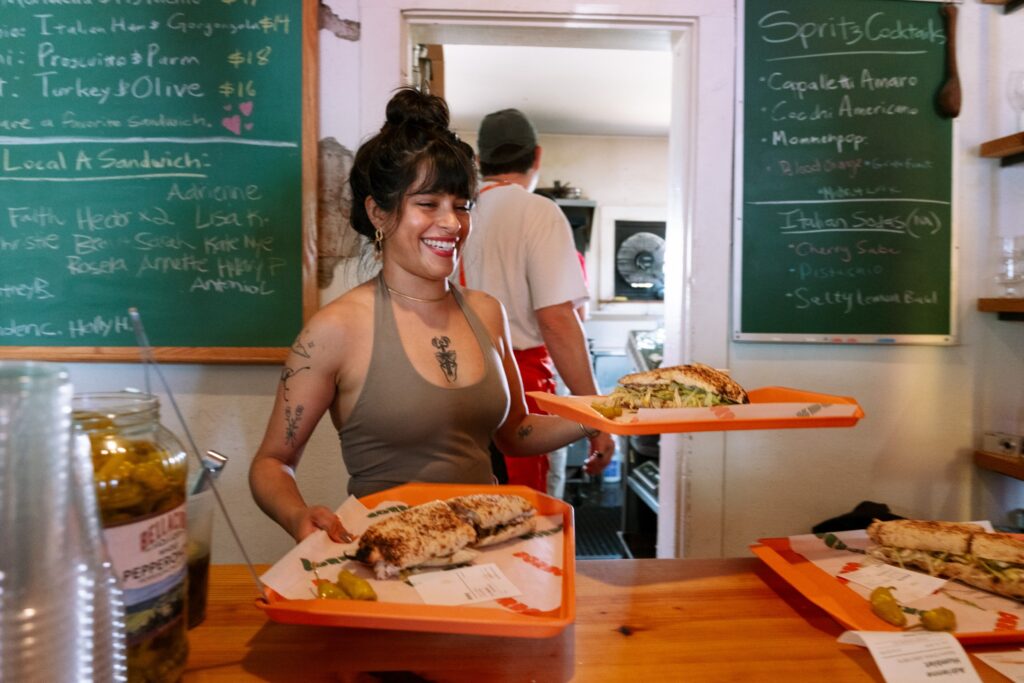
Most days, Serva greets guests and busses tables himself, while Bailey works the counter. “I genuinely want to know my guests for the rest of their lives,” he says.
Filtered sunlight drapes across the exposed brick wall, towel-lined baskets cradle loaves of seeded bread on the green-tiled counter, and rustic links of salumi hang above. Outside, the covered patio is home to the iconic burgundy-tiled pizza oven. Serva credits the design (and most of the behind-the-scenes infrastructure) to his partner, Bailey, who formerly designed boutique restaurants in Houston.
Partner content from Apple Card
Some restaurants are worth building a trip around. When you make the journey to destinations like these, paying with Apple Card using Apple Pay earns you 2% Daily Cash back on your meal. Daily Cash is real cash that is unlimited and available every day. Unlike traditional rewards, it never expires or loses its value. Use Apple Card today and get more back from the meals that make the trip worth it. Terms apply.

Sarah Vasquez
Before opening Bordo, Serva spent months perfecting the bread that would become the foundation of his rotating, meticulously crafted, signature sandwiches. It’s a chewy Puglian bread reminiscent of ciabatta, loosely inspired by puccia, but ultimately something entirely his own.
“My bread is funny, misshapen, and asymmetrical,” Serva says. “not a uniform, classic Little Italy deck-oven grinder loaf.”
Serva stone-mills wheat from Barton Springs Mill, blends it with imported Italian flours, and builds the dough with a sourdough starter gifted by friends at Pelican Bread in Point Arena, California. Each round is shaped by hand, showered with sesame seeds, and baked in a wood-fired oven until blistered and bronzed.
Among the sandwich options, you might see the Cashiola (named after the brothers who built Bordo’s countertop and shelving), a classic Italian layered with Journeyman Meat soppressata and finocchiona, imported bresaola, house-pulled stracciatella, and house-made Calabrian chile oil. The Scott nods to neighboring pitmaster Mark Scott of Sawtooth Projects, showcasing smoked turkey alongside oven-charred olives, chile oil, and red wine. And the Morty Melt is pure indulgence: pan-seared mortadella, molten mozzarella, crispy Parmesan, slow-cooked tomato jam, and pesto aioli.
Serva also mills flour for fresh pasta, shaping and drying it in the desert air before transforming it into rotating specials. French onion lumache might arrive bathed in caramelized onions, French butter, Marsala, Gruyere, and chives; creste di gallo could feature kabocha squash, ricotta, pistachio, and coriander butter. Antipasti shift with the seasons, and a bright, crunchy salad — perhaps a confetti of iceberg, radicchio, olives, butter beans, red onion, chopped cheese, pistachio, and pepperoncini — is essential for balance.
Save room for the house-made gelato and sorbetto, which come in rotating seasonal flavors like strawberry stracciatella, toasted sesame, and El Justicero (black cocoa, candied peanuts, and bay leaf caramel). Scoops can be also added to Italian sodas (in flavors like pistachio cream, cherry saba, and salty lemon basil). Aperitivos, natural wines, and spritzes round out the beverages. Bottles are available for purchase alongside imported Italian provisions and neatly packaged house-made pastas.
Bordo is open Thursday through Sunday from 11 a.m. to 3 p.m. The restaurant doesn’t take reservations, so plan to arrive early (particularly if you are with a group) to secure a table in the dining room, which fills quickly.

Plan to stick around too. In October 2025, the couple opened Dopo, a Roman-style standing bar, down the block. The restaurants are designed as a progression: Linger over savory plates at Bordo, then drift to Dopo for espresso and rotating pastries made in house, like chocolate biscotti studded with anise-oaked cherries, pistachio cream-filled maritozzi, and dark rye pizzelles perfumed with fennel pollen. (Like Bordo, Dopo is currently only open for lunch, but there are plans to serve dinner in the future.) Outside, guests sip digestifs, play bocce on the court Serva built, and watch the pastaio shape fresh strands by hand. If there’s a large crowd, they’re probably partying at Il Nido (“the Nest”), set in between Bordo and Dopo, which hosts private buyouts up to 100 guests.
Marfa sits in a vast stretch of desert just 60 miles north of the Rio Grande. (Bordo translates to “border.”) The nearest major airports are in El Paso, about a three-hour drive northwest, or Midland, roughly three hours northeast. From San Antonio, it’s about a six-hour drive; from Austin, seven hours; from Dallas, eight; and from Houston, nine. The journey may be long, but the effort makes the reward feel special.
From Austin or Houston, you’ll pass through the Hill Country before the landscape flattens into something almost intergalactic. Stretch your legs with a stroll down Main Street in the German hamlet of Fredericksburg, lined with shops and eateries. Stop at Zuly’s for exceptional pastries and organic coffee in the morning, or if it’s closer to lunch, savor Korean-inspired barbecue at Eaker Barbecue.
If traveling from North Texas, a route through Abilene allows a short detour to the iconic Perini Ranch Steakhouse, open for lunch Friday through Sunday. Another path takes you through the otherworldly Monahans Sandhills State Park, perfect for sand sledding (discs are available to rent) and an impromptu photo shoot. Just an hour north of Marfa, Balmorhea State Park boasts the world’s largest spring-fed swimming pool.
What else to do, see, and eat around Marfa
Though small, Marfa rewards wandering (and checking business’ seasonal hours ahead of time). Start your morning at Marfa Burrito, where Ramona Tejada’s legendary breakfast burritos have fueled artists, ranchers, and road-trippers for decades. Coffee lovers are spoiled for choice, but Coyote Coffee stands out for its thoughtful espresso program and house-made pastries and sourdough.
To counteract the dry desert air, book a treatment at Mira Marfa before engaging in some souvenir shopping, which leans artistic and idiosyncratic here. Hunt for vintage treasures at Raba Marfa, then stop by the Wrong Store for artful objects from a range of designers. For something truly elemental, visit Moonlight Gemstones and carry home a literal piece of the desert. And try Marfa Book Co. for a thoughtfully curated selection of titles on art, literature, and the region; check the calendar for readings or performances.

When you’ve had your fill of shopping, climb to the top of the Presidio County Courthouse for a panoramic view of town before dinner at Margaret’s for elevated comfort food. With no reservations and limited seating, you’ll likely find yourself at the horseshoe-shaped bar, the best place in town to strike up a conversation with locals.
After dinner, sample the region’s evolving terroir at Alta Marfa, a tasting room pouring wines made from grapes grown across Texas and New Mexico, or hit Marfa Spirit Co. for drinks crafted from house spirits. And for a different kind of bar hop, book a horseback tour with West Texas Adventure Company to saddle up with a drink in hand.
Many have tried and failed, but you still have to attempt to spot the elusive glow of the Marfa Mystery Lights at the Marfa Lights Viewing Area, nine miles east of town. Whether you succeed or not, the star-splashed sky feels like a reward.
And before you leave town, make time for one last stop at Bordo. Order sandwiches to go, and savor every bite as you point your car toward the vast horizon.