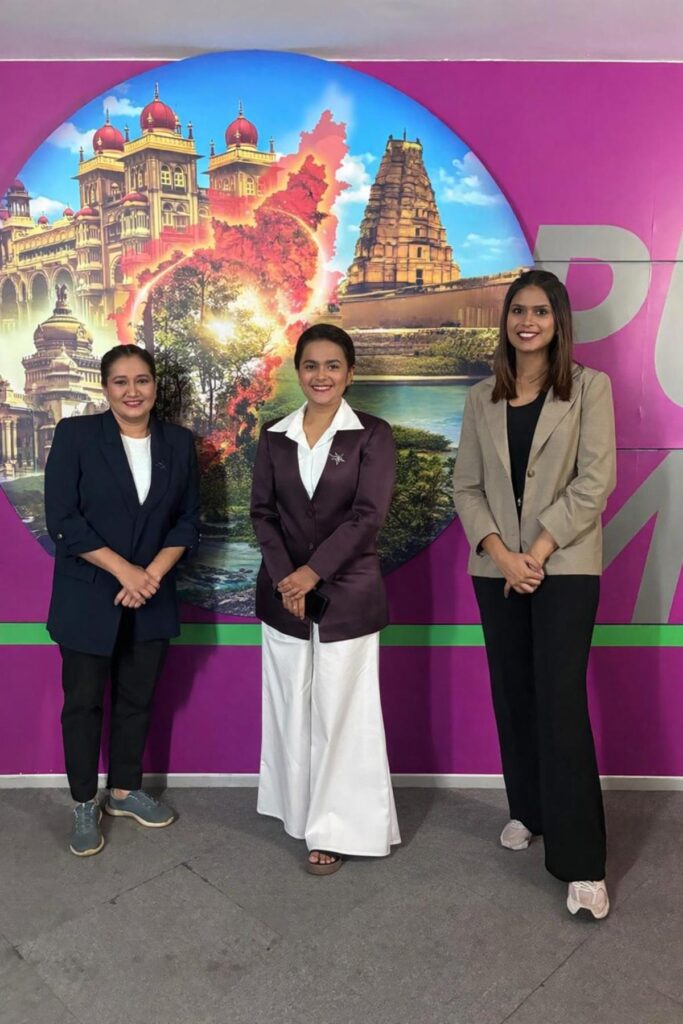
After calling the toss successfully at the T20 World Cup 2026 final on March 8 at Narendra Modi Stadium in Ahmedabad, New Zealand captain Mitchell Santner decides to field first, which brings the Indian openers to the middle. Before the Sanju-Abhishek duo could open with the bat, another duo, Mansi Dharmaraj Ombase and Vicky Shah, had launched into an ‘opening’ act, with gestures.
Standing next to playback singer Kavitha Krishnamurthy who was giving a soulful rendition of the National Anthem, this duo was interpreting it with sign language.
And more than 500 km away in Mumbai, a few of their colleagues from India Signing Hands, a Mumbai-based media and broadcast company, got ready to interpret every proceeding of the match.
For the second time, T20 World Cup was being inclusive in the sense of having sign language interpreters on board, and making the game more exciting for thousands of deaf cricket fans across geographies.
“Standing before a packed stadium to translate the National Anthem in sign language at a cricket stadium was a historic first in T20 and I had goosebumps. Vicky and I rehearsed backstage to give our best,” says a thrilled Mansi, who came from Mumbai, excited about this opportunity.
Since the tournament began, she and her colleagues had their hands full, quite literally, interpreting all the matches that India played thanks to the partnership with India Signing Hands and Jio Hotstar.
The team comprises both hearing interpreters and deaf interpreters who worked from the Jio Hotstar studio in Mumbai to translate every line of the descriptive commentary into Indian Sign Language (ISL) before it is transmitted through different digital platforms.
A novice in cricket, Mansi, who is a CODA (Children of Deaf Adult), had to learn the rules of cricket three years ago. Initially, she says, it was a challenge to keep pace with the commentary but now they have become adept at it.
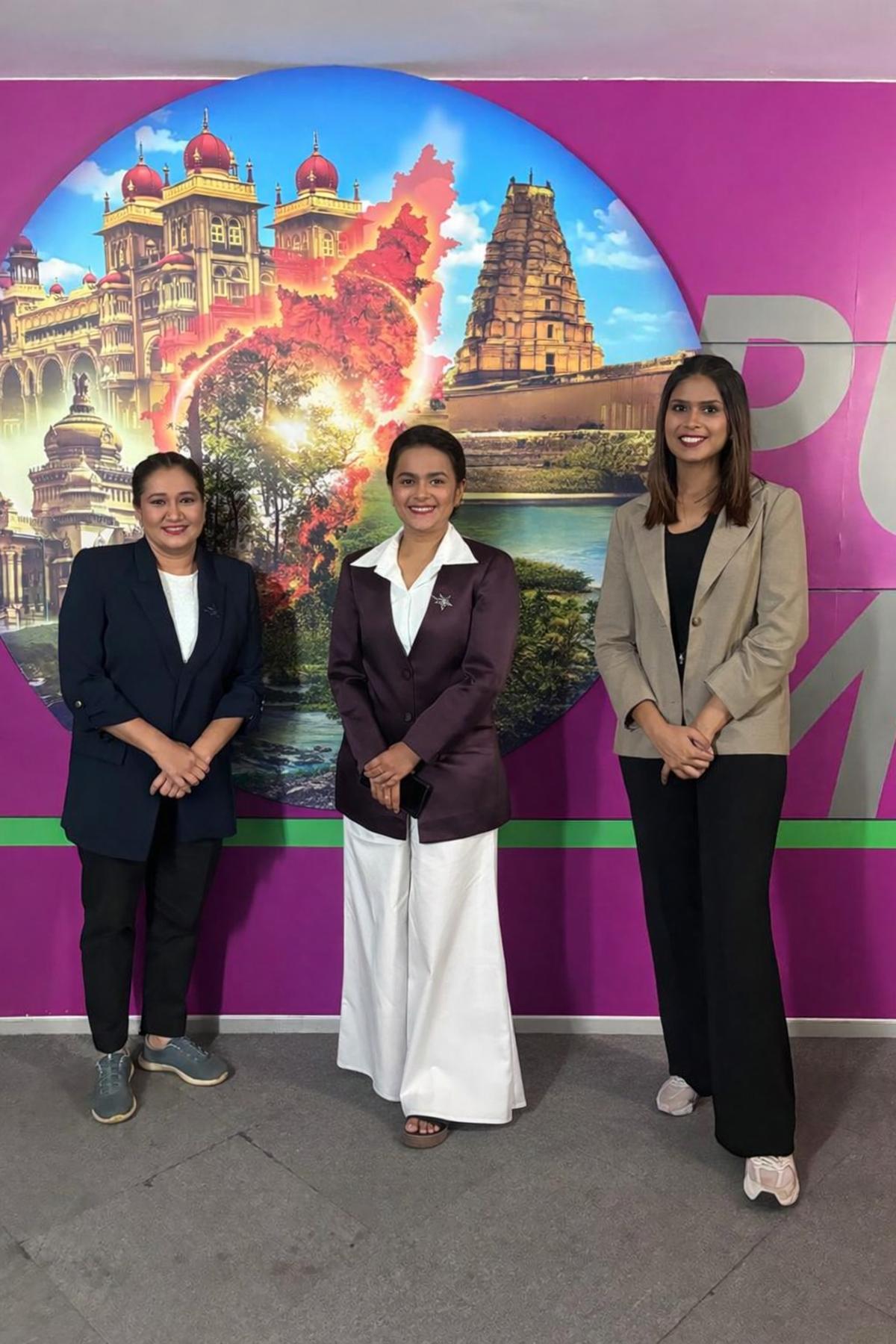
(left to right) Kinjal Jayesh Sureja, Mansi Dharmaraj Ombase and Priyadarsni Sundaram
Before the ISL was introduced in cricket, starting with the IPL 2024, the team at India Signing Hands had brought out a “dictionary” of signs relevant to different cricketing formats.
“Sign language is contextual and you need to know what to say when and be quick at it,” says Kinjal Jayesh Sureja, a non-CODA interpreter married to a hearing impaired person. She did a diploma in Indian Sign Language and makes it a point to upskill. “To be an interpreter, we are required to renew our registration periodically from the Rehabilitation Council of India,” says Kinjal.
Cricket commentaries are fast-paced and emotionally charged, and integrating sign language into live matches has its own set of challenges.
For Mansi, translating idioms in Hindi uttered by commentators, especially those that involve praising someone, was tricky. “In Hindi, you would complete the phrase in five words whereas in ISL it has to be explained in lines depending on the phrase. Translating and catching up with what the commentator said can at times be challenging,” says Mansi.
She adds that they are helped by deaf interpreters sitting in the studio who guide them when they miss a certain boundary/shot.
Priyadarsni Sundaram, also a CODA, says the semi-final match was crazy, especially the last part of the match when they had to give ball-by-ball commentary, and capture the excitement and tension. “When it is a new commentator at the stadium one has to get used to his/her style and speed,” says Priyadarsni adding that eye control is divided between the television screen, camera and others in the studio.
Winning praise
Besides the inclusive experience that T20 World Cup offered fans, social media is all praise for the role played by the interpreters. The interpreter switches after every five overs, their animated gestures and expressions conveying the thrill of the game.
Priyadarsni shares an Instagram post by Sidharth Manoj that shows her translating a match with full gusto. He captions it saying, “Yes, India won and my “man of the match” is the ISL interpreter.”
The post praised the anchor’s energy and expression to get every hit to the fence as well as fall of wicket celebrated.
What is more heartening is the number of able-bodied who have commented on this post, which is a big push to ISH and the awareness that it deserves, adds Priyadarsni.
Accessible stadiums
Pranay Shah, who leads partnership for India Signing Hands, says in the last three years they have adapted the ISL coverage based on feedback from the audience. “For instance, some wanted the post-match presentation to be translated. Likewise, many asked for pre-match analysis,” he says, and adds.
“We are next working with BCCI to see what it is that stops a person with disability from purchasing a ticket and watching a match at a stadium.”