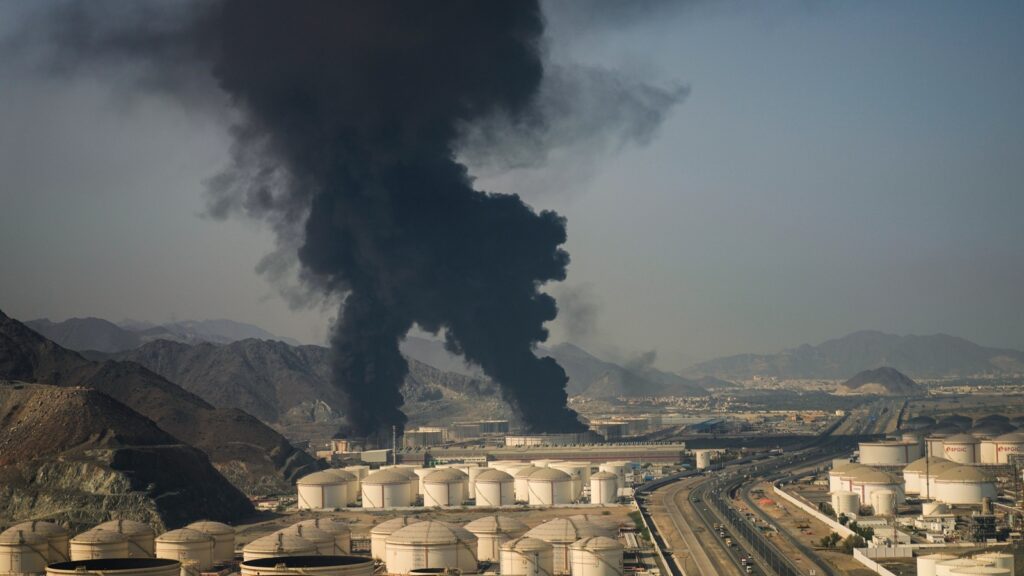
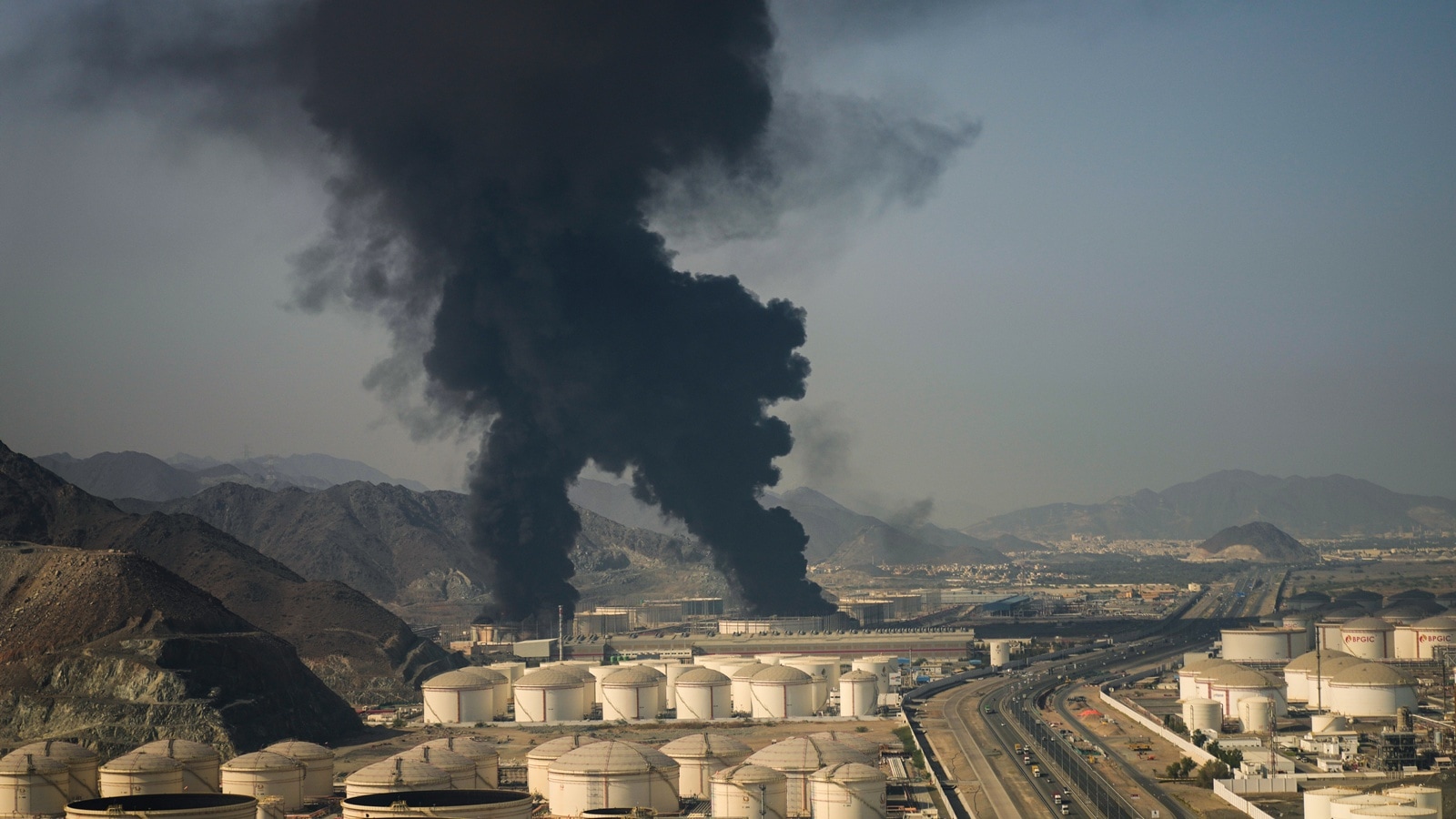
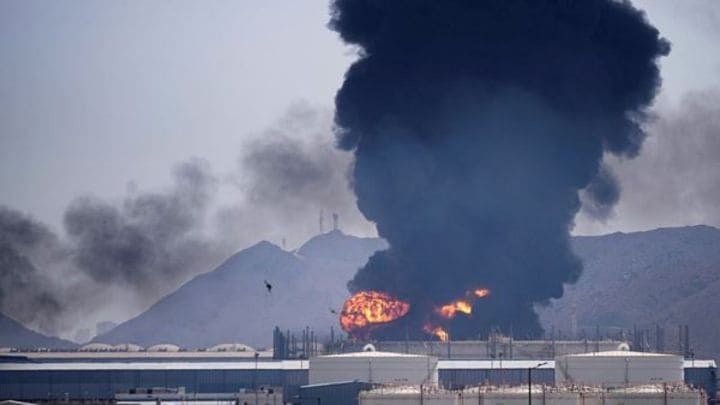
 Plumes of smoke rise from an oil facility in Fujairah, United Arab Emirates. (AP Photo)
 Iran on Sunday threatened to “irreversibly destroy” critical infrastructure and energy facilities in the Middle East region if Tehran’s power plants are targeted, Iran’s Parliament Speaker Mohammad Bagher Ghalibaf said in a post on X.
Iran’s parliament speaker’s comments came after US President Donald Trump earlier warned Washington will “obliterate” Iran’s power plants if Tehran fails to fully open the Strait of Hormuz in 48 hours as missiles from the Islamic nation struck two cities near Israel’s main nuclear research center, injuring several people and damaging apartment buildings.

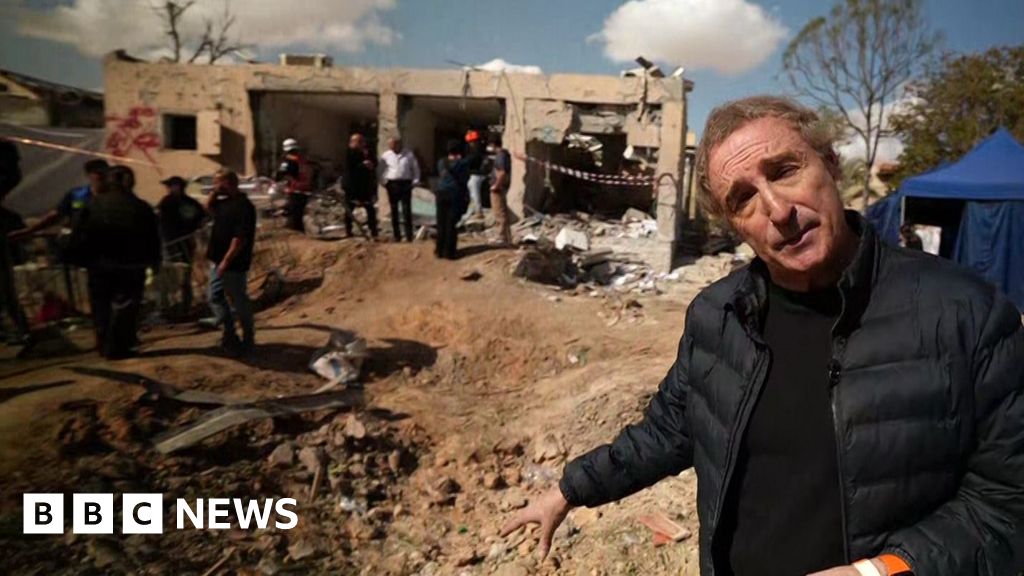
The recent developments, which come as the conflict in West Asia entered its fourth week, suggest that it was moving in a dangerous new direction. After Iran launched a new barrage of missiles on Sunday, sirens blared across Israel. Southern Israel’s residents in the cities of Dimona and Arad faced devastation.
بلافاصله پس از هدف قرار گرفتن نیروگاههای برق و زیرساخت در کشورمان، زیرساختهای حیاتی و زیرساختهای انرژی و نفت در سراسر منطقه اهداف مشروع تلقی شده و به نحو بازگشتناپذیر منهدم خواهند شد و قیمت نفت برای مدتها بالاتر خواهد رفت. وألقِ ما في يمينك تَلْقَفْ ما صَنَعوا.
— محمدباقر قالیباف | MB Ghalibaf (@mb_ghalibaf) March 22, 2026
Iran Parliament Speaker Ghalibaf said that regional infrastructure would become “legitimate targets” if Iran’s facilities are struck and added that Tehran’s retaliation could increase the prices of oil.
— Rapid Response 47 (@RapidResponse47) March 21, 2026
Trump, in a post on Truth Social, had said the US would destroy “various POWER PLANTS, STARTING WITH THE BIGGEST ONE FIRST!”
The Iranian state media and semiofficial outlets, citing an Iranian military spokesperson, reported that Tehran would strike US and Israeli energy and infrastructure assets, specifically information technology and desalination facilities in the region if their energy facilities are attacked.
“If the Israeli regime is unable to intercept missiles in the heavily protected Dimona area, it is, operationally, a sign of entering a new phase of the battle,” Ghalibaf said.
Story continues below this ad
Israel’s rescue workers stated that at least 64 people were injured after the missile directly hit Arad, which is around 35 kilometers (22 miles) north of the nuclear research center.
The UN nuclear watchdog later informed that it didn’t receive any reports of damage to the Israeli center or any abnormal radiation levels.