
The India Meteorological Department (IMD) has forecast normal to below-normal minimum temperatures in parts of Telangana during the summer season from April to June, even as most regions across the country are expected to record above-normal night temperatures.
According to the IMD’s updated seasonal outlook, Telangana stands out as one of the few regions where night-time temperatures may remain relatively moderate, in contrast to the broader national trend of warmer-than-usual minimum temperatures.
For daytime conditions, the outlook does not indicate any strong anomaly specific to Telangana. Nationally, maximum temperatures are expected to be normal to below normal in many regions, although parts of central and peninsular India could see above-normal temperatures. The outlook suggests that Telangana falls within a mixed zone, without a clear signal of extreme deviation from normal maximum temperatures.

A vendor displays inflatable pools and swim rings at a roadside stall in Raidurg, as demand rises with the onset of summer heat.
| Photo Credit:
SIDDHANT THAKUR
In April specifically, minimum temperatures across most of India are likely to remain above normal, though some isolated pockets in the southern peninsula, including areas near Telangana, may experience normal conditions, indicating relatively milder nights compared to other regions.
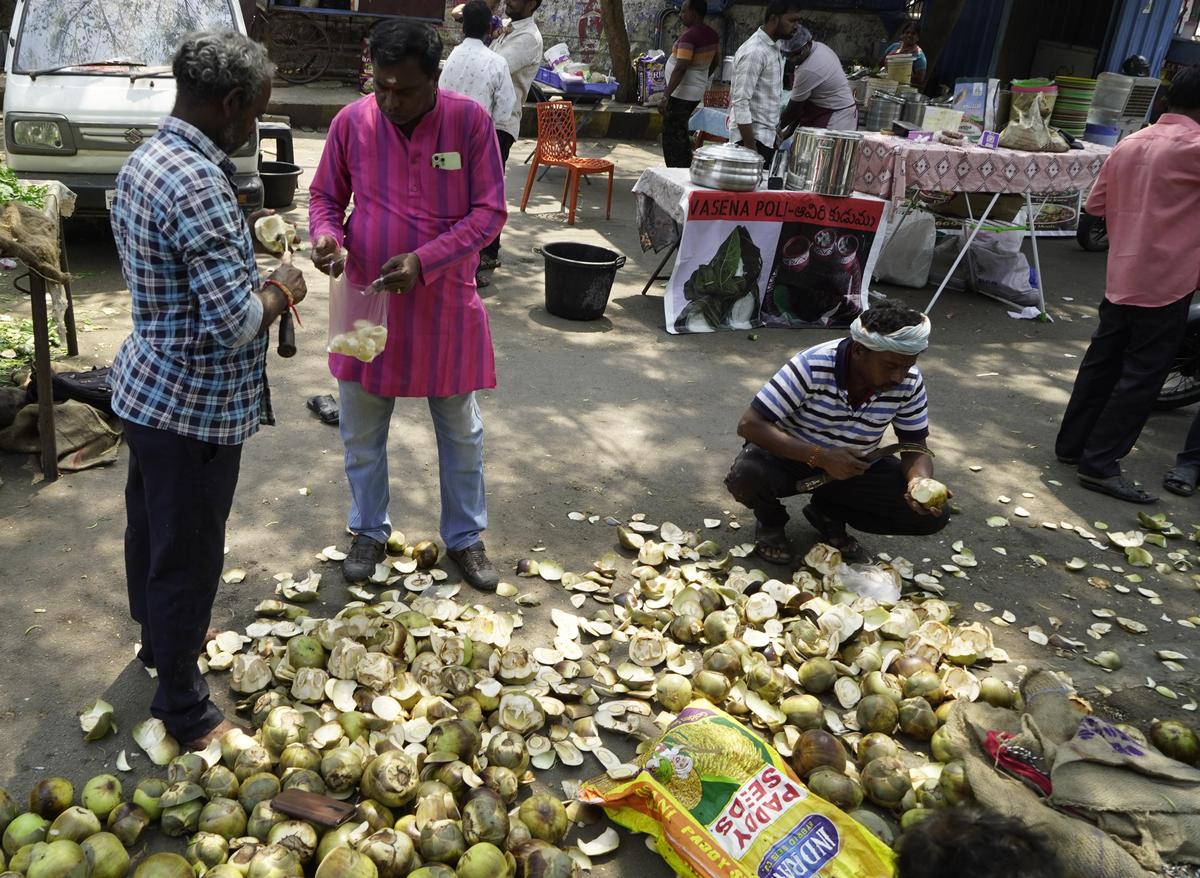
A vendor sells Munjal (Ice Apple) near Indira Park in Hyderabad as the summer season begins.
| Photo Credit:
SIDDHANT THAKUR
On heatwave trends, the IMD has not flagged Telangana as a major hotspot. The outlook indicates above-normal heatwave days primarily over east, central, northwest India and parts of the southeast peninsula, while coastal Andhra Pradesh and other States are more directly at risk in April. The heatwave anomaly in the outlook further shows that Telangana is not among the most intense zones of projected heatwave increase.
For rainfall, the IMD has projected normal to above-normal rainfall across most parts of the country in April, which includes Telangana, as the below-normal rainfall trend is largely confined to the northeast.