Kolkata’s March heat had struck the city brutally once again, yet nothing affected the sales of Bhaarer Chaa (tea in clay cups) at a corner shop of College Street or Boi Para (book neighbourhood). And as a 12th board examinee then, who couldn’t solve a certain equation at their physics tuition came out discouraged; I decided to head to the nearest Chop er Dokaan (street side cutlet stall) to satiate my hunger and thirst. In between all the chaos, blaring horns, book sellers’ calls – Asha Bhosle’s ‘Ektu Bosho Chole Jeo Na’ whispered from another direction, and it worked like a magnet instantly taking me straight to my destination.
As the stall’s Kaku (uncle) lip-synced to Asha ji’s voice while packing a piping hot fish chop with sliced onions and kasundi (mustard sauce) in a thonga (paper bag) for me, it all then hit me together. Asha Bhosle’s Bengali tunes made their way into my ears as I ate my chop to merriment, nearly forgetting my failure at physics, her voice almost worked like a chilled glass of Aam Pora Shorbot (a Bengali raw mango cooler) – sweet, tangy and refreshing. That’s how Asha ji’s Bengali songs entered the playlist, late in life (as many other households had children listening to these songs early on) yet thankfully soon enough.
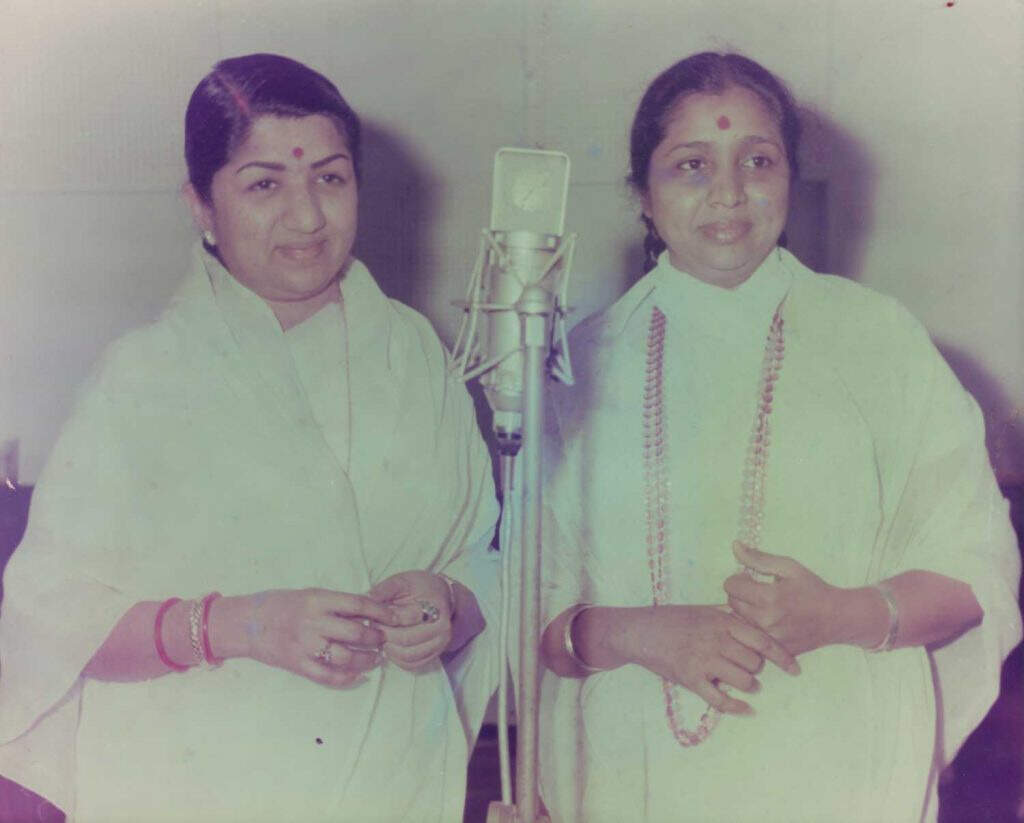
Bengalis’ love for culture and the arts lies in the likes of Rabindra Songeet, Uttam Kumar and Suchitra Sen duo films, legacy food recipes and most definitely their undying love for Asha Bhosle’s hit collaborations with RD Burman, Manna Dey, Sudhin Dasgupta, Bappi Lahiri and Nachiketa Ghosh. The legendary voice behind ‘Kotha Hoyechilo’ and ‘Tumi Chalar Pathe’ mesmerised listeners, dominating most of the ’80s – ’90s Bengali mainstream music scene, quite effortlessly despite having her roots in a Maharashtrian family of the Mangeshkars. While her elder sister Lata Mangeshkar’s Hindi as well as Bengali songs echoed from music players and radios across houses, local shops and even inside public buses, Asha Bhosle’s songs began to co-reside as that younger mischievous sibling who was growing up resonating with the newer generation of listeners.
The era of boomers, millennials to even Gen-Zs all are marked by Asha Bhosle’s iconic songs, each almost aptly paired with seasons, festivities, heartbreaks, hope and all things about love. For instance, Asha Bhosle’s Emon Madhur Sandhyay from Ektanta Apan (1985) does complement an evening of Kalboishakhi (storms of the Nor’westers) while the evergreen lyrics of Mohuaye Jomechhe Aaj Mou Go from Asha Bhosle-RD Burman album of Pujo songs have been reverberating across generations, merging into the city’s fragrance during Durga Pujo days and nights.


Recalling a core Durga Pujo memory from her childhood, singer Iman Chakraborty says, “I was a toddler when songs like Machher Kanta Khonpar Kanta were playing during Pujo, it were these songs of Asha Bhosle ji that interested me and went on to seep deep inside, shaping the singer in me today.”

And so if one thinks about it, Asha Bhosle and RD Burman’s Pujo songs (starting 1968 onwards) would have topped our Spotify playlist if released today given the frenzy and popularity of these Bengali modern songs back then. The musical duo, later partners in life, contributed to nostalgia, celebrations as well as cemented themselves as a staple in Bengali households with songs like – Jete Dao Amaye Deko Na, Phire Esho Anuradha, Jabo Ki Jabo Na and Mone Pore Ruby Roy.
Anirudha Bhattacharjee, author of biographies based on RD Burman, SD Burman and Kishore Kumar draws the timeline for the same, “Interestingly, RD Burman’s journey of composing Pujo songs or the non-filmy songs began with Lata Mageshkar’s Amar Malatilata Dole, Ami Boli Tomaye Dure Thako around 1965 and later towards ’69 or ’70 Asha started singing for him. Then it was only RD and Asha, there was an influx of RD Burman and Asha Bhosle Pujo’r gaan (songs for Pujo)”
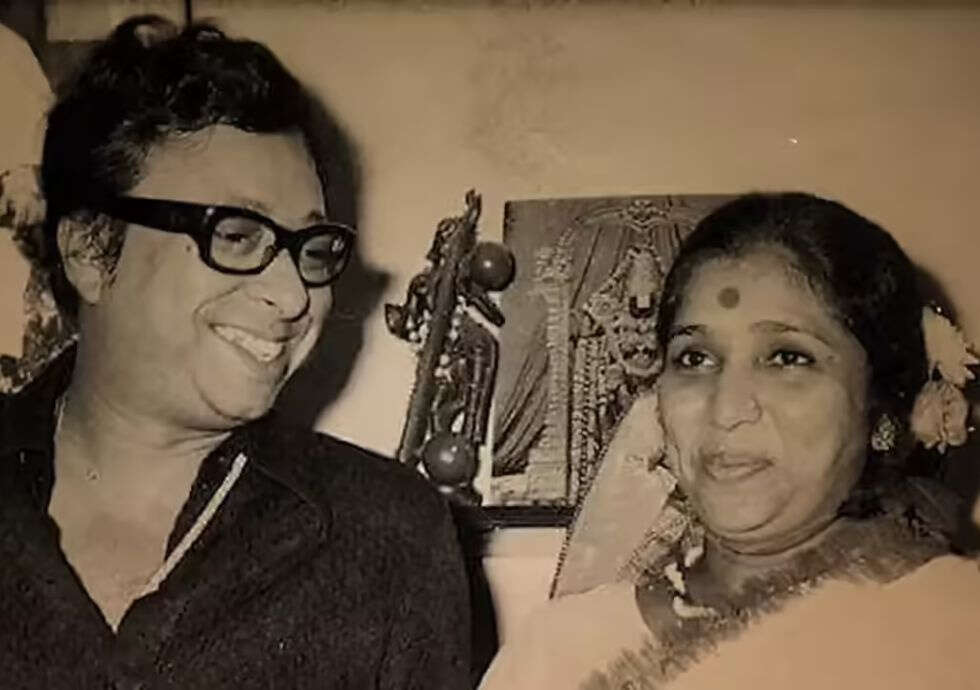
RD Burman’s Bengali roots enabled him to compose music in his mother-tongue with much ease as he understood the pulse of the ’70s – ’90s listeners. While for Asha Bhosle, a complete Marathi Mulgi, it took her some time to perfect the phonetics of Bangla before successfully making a mark in Rabindra Sangeet. In a 1993 DD Bangla interview titled Katha o Surey with music director, Salil Chowdhury, Asha Bhosle describes her origin of love for Rabindranath Thakur and ‘Kalkatta’, which later became her ‘Shoshur Bari’ (In-laws’ house) too.
“I love Rabindra Sangeet, I respect Rabindranath babu, because when I was little, I happened to read his novel Gora and after reading his opinions in Gora we gradually became bhakts of Kalkatta, Rabindranath babu and Sarat Chandra Babu (Bengali novelist Sarat Chandra Chattopadhayay) all of Maharashtra are their bhakts…”

This was the kind of in-depth love and association Bhosle felt for the culture and people of Bengal. And so, with patience and practise, she went on to record more than 10 Rabindra Sangeet songs for the album Baro Asha Kore Esechhi in 1980, namely, Amar Bela Je Jay, Tumi Kon Kananer Phul, Eso Shyamal Sundar and more. But her first Rabindra Sangeet was a duet with music composer and singer Hemanta Mukhopadhyay in the 1969 film Mon Niye where Uttam Kumar seen in a suit plays the piano and lip syncs to Hemanta’s voice and Asha Bhosle sings for Supriya Devi for the song – Ami Pathbhola Ek Pathik (I have come as a traveller having forgotten the path).
And so, Anirudha Bhattacharjee puts it rightly that – “we grew up understanding that she is Bengali”, her finesse with the language was such that one couldn’t imagine Asha Bhosle to not be a ‘Bangali’. She on the other hand lovingly equates the sweetness of the language to Nolen Gurer Sandesh (jaggery infused sweet) – a very Bengali thing to do.

Asha Bhosle floated effortlessly between a ghazal like Dil Cheez Kya Hai to a cabaret number like Piya Tu Ab Toh Aa Ja and then also Mera Kuch Samaan – a heart wrenching song from Gulzar’s Ijaazat. She evidently brought the same versatility within the Bengali music range while singing nuanced Rabindra Sangeet, Nazrul Geeti (songs composed by poet Kazi Nazrul Islam) compositions and also popular songs like Ekta Deshlai Kathi Jwalao and Chokhe Chokhe Kotha Bolo with an extra oomph. The homework for every kind of song was done with all sincerity and so she went an extra mile to ask who the actress is that she is singing for when it came to the film songs as noted by music director Jeet Gannguli. While in Hindi Cinema she lent Madhubala, Rekha, Helen, Mumtaz, Urmila Matondkar her voice, back in Bengali Cinema it was named like Debashree Roy, Shatabdi Roy, Tanuja, Aparna Sen, Rituparna Sengupta that dominated their eras by lip-syncing to Asha Bhosle.
Actress Rituparna Sengupta fondly recalls, “I am extremely lucky and privileged that I could lip sync her voice Balo Na Balo Na, Nupurey Baje Runjhun, then Ektu Khani Dhorley Hatey Dosh Ki Tatey and many more. Her voice was so powerful yet very romantic, nuanced.
As a performer, the expressions had to match her voice which was timeless…” In the song Bolo Na Bolo Na Amar Holo Ki (Tell me what’s happened to me) from the 1998 film Tomar Amar Prem, Sengupta, draped in colourful cotton sarees, is seen along lush green fields in Bengal, portraying a young woman feeling the first pangs of love and is trying to seek an answer for her confusion about it from her lover on screen. On the other hand, in the song Ektu Khani Dhorley Hatey Dosh Ki Tatey (what’s the harm in just holding hands) starring Chunkey Panday from the film Meyerao Manush, in a bright red, thigh slit dress Rituparna is seen mischievously seducing Panday in a room as she dances to the upbeat tunes of the song. Such songs made for many memorable moments in Bengali pop culture especially the ’90s – along with the songs, the actresses, their characters and fashion were discussed significantly.

There was also a synergy between the music worlds of Bollywood and Tollywood (comes from the area Tollygunge, where the Bengali industry is based) when popular Bengali tunes composed by RD Burman got passed on to mainstream films in Hindi Cinema. For instance, one saw Tanuja in the black and white 1970 Bengali film Rajkumari singing Aaj Gun Gun Amar Kunje Amar in Asha Bhosle’s voice, which later became popular in Bollywood as Pyar Diwana Hota Hai picturised on Rajesh Khanna from Kati Patang and sung by Kishore Kumar; the common thread being RD Burman as the music composer. Further elaborating on this, music director Jeet Gannguli remembers, “I used to ask my father as a kid, who used to be an accordionist for Asha ji for many of her songs, that how come a melody happens to be the same in both Bengali as well as in Hindi [songs] he would then tell me that a melody has no language, a tune is simply a tune. It can remain the same despite the changing of words.”

This smooth transition of familiar melodies from Bengali to Hindi later on happened for Jeet Gannguli’s music too. Author Anirudha Bhattarcharjee mentions more such ‘Bangla to Hindi’ versions of hit songs, “Besides Rajkumari’s Aaj Gun Gun (1970) song there was another Asha solo song from the same film Se Ki Elo a cabaret song performed by Helen which later became Yeh Jawani Hai Deewani and the famous Kishore Kumar song E Ki Holo, became Yeh Kya Hua Kaise Hua. Ironically, these songs became hits only after it was re-released around 1978 or 1980.”

So rightfully, Asha Bhosle’s songs seamlessly entered the hearts of her listeners with her unique way of making any and every kind of song her own – across languages, cultures and eras. Rituparna, while thinking about other upcoming artistes who aspire to be singers like Asha ji, says, “Women of all ages found her songs to be easily sung and performed, she became the inspiration for so many singers, they started performing on stage as Asha Konthi like an aspirational Asha ji singer. So many girls earned their living still do, by singing her songs. That’s how magical she was.”
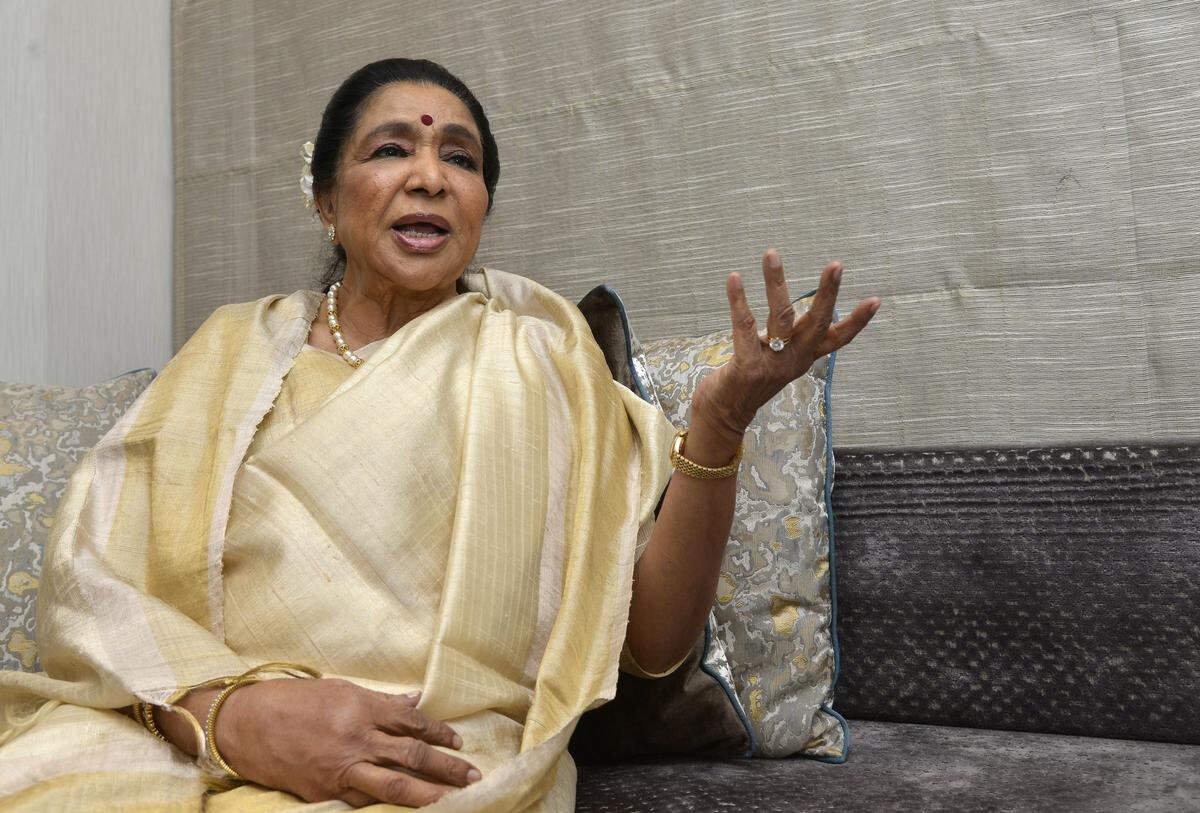
Besides Bhosle’s identity as a singer she was also like any other woman who loved her quintessential Lal Par Sada Saree (red bordered white saree) as much as her Shorshe Bata Diye Maach (fish prepared in mustard paste). In the same interview for DD Bangla, she chuckles like an excited schoolgirl talking about how staying for a while in London or America makes her miss Kolkata – “Bada bada jageh mein ghumti ho aur bolti hoon ke wapas jaake Kalkatta jana chahiye zara New Market mein hoke aana chahiye…” (I travel across big cities and feel like visiting Kolkata’s New Market when I am back in the country). Her gold and cream, floral and rich silk sarees did become a fashion statement giving many iconic stage looks.
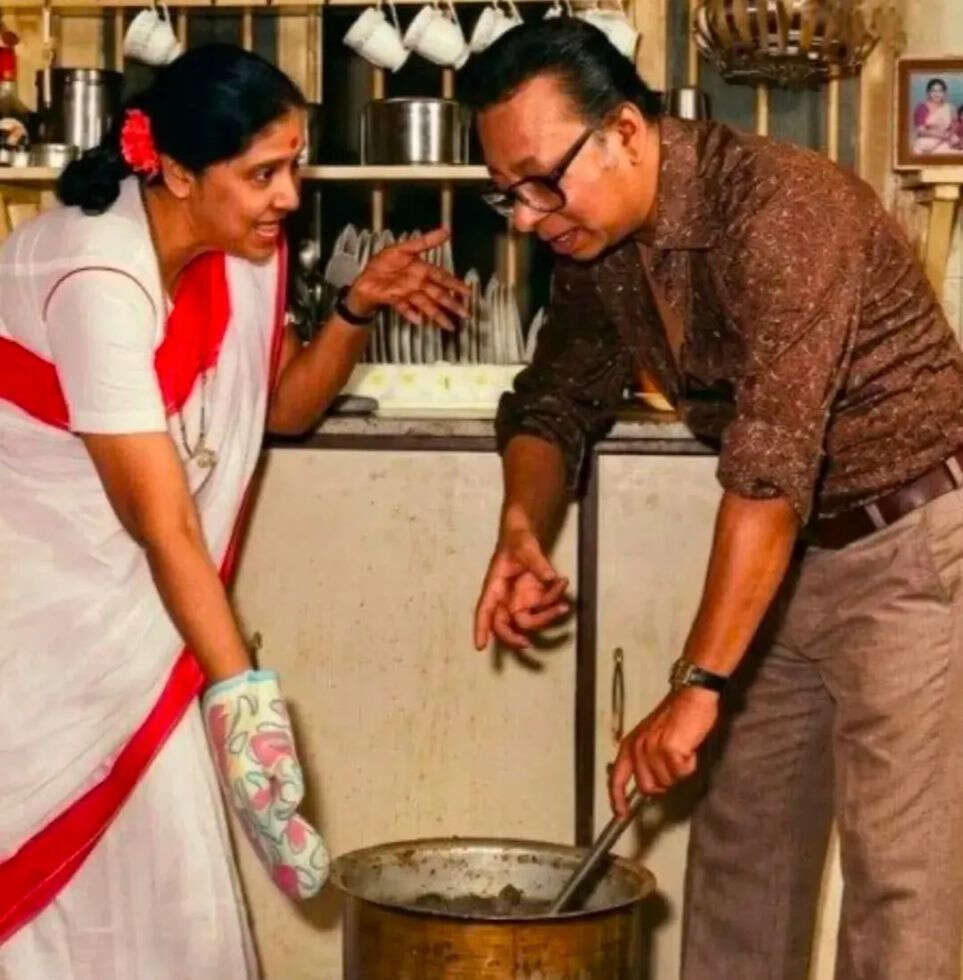
Bhattarcharjee remembers how big a foodie Asha Bhosle was, and so was RD Burman. “In North Calcutta, there was a shop called Malancha, and from there RD Burman would get fish fillets ordered, which would then fly across to Bombay to their house, in ice-packed boxes. Asha ji and Pancham da would then fry them and relish it together with guests like Kishore Kumar and Rafi Saab. Gradually, Asha ji also learnt how to cook Shorshe Illish Maach, she was naturally a good cook.”
Through her music, love for people and communities and food recipes, Asha ji continues to live on. There won’t be another Asha Bhosle for the next 100 years. For different seasons, we may discover a different tune of hers. In and out of nostalgia, she remains etched in our memories.
Asha ji beautifully summarises her magnetic force towards Bengal in her conversation with Salil Chowdhury, “Kalkatta mein hum shayad janam liya aur dusra janam hum Maharashtra mein liya…” (I might have taken birth in Kolkata in my previous life and the second time I took birth in Maharashtra).