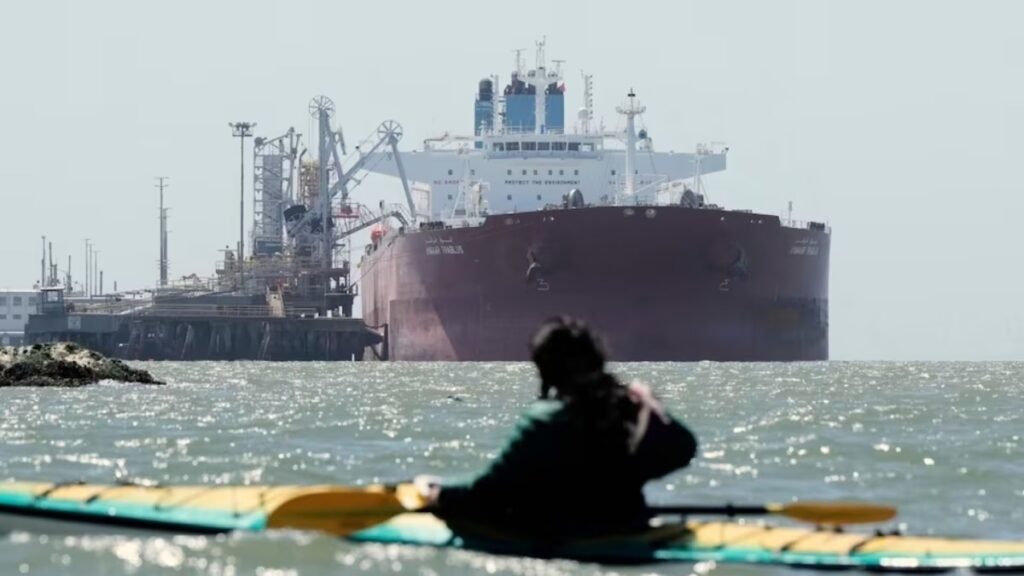
With the Hormuz facing disruption amid the ongoing Iran-Israel-US conflict, India is working on parallel tracks. Securing its vessels at sea while preparing for costly alternatives to keep energy supplies steady.
Nearly 45 per cent of India’s energy needs depend on supplies passing through the Gulf, making the situation a direct challenge to the country’s energy security.
The Indian Navy has expanded its deployment across the region, positioning additional warships in the Arabian Sea and the Gulf of Oman.
According to sources, around seven ships, including support vessels, are now being deployed. This is in addition to two task forces sent earlier to escort vessels from the North Arabian Sea to Indian ports.
These deployments build on Operation Sankalp, under which naval ships have been present in the Gulf of Oman and Gulf of Aden since 2019.
The aim is clear – ensure safe passage of ships carrying LPG and fuel, while remaining prepared for any escalation near the Persian Gulf.
ESCORTS AND VESSELS AT RISK
Three Indian LPG carriers have already been escorted safely to Indian ports. However, more than 20 Indian merchant vessels remain west of the Strait of Hormuz, according to the Ministry of External Affairs.
Officials are in touch with Tehran to ensure safe movement of these ships.
The increased naval presence also reflects the need for a quick response if the situation worsens, with ships unlikely to remain in harbour for long.
NO EASY ALTERNATIVE TO HORMUZ
Veteran maritime expert Commodore Ranjit Rai said India does not have an immediate substitute for the Strait of Hormuz.
“India depends on the Gulf for 45 per cent of its energy requirements,” he said.
He pointed to possible alternatives. Increasing imports from Russia, sourcing oil from the United States and Venezuela, or rerouting supplies, but added that each option comes with significantly higher costs.
“The energy from the Gulf is cheaper. Alternatives will be expensive, especially with transportation,” he said.
EXPLORING ALTERNATE ROUTES
One option under consideration is transporting Saudi oil from Jeddah by land and then shipping it through the Gulf of Aden. However, feasibility and cost remain key concerns.
Any shift away from the Hormuz route is expected to push up prices, adding pressure on domestic energy supply.
India is already facing LPG shortages due to restricted movement of ships in the region.
WIDER NAVAL GRID IN PLACE
The Indian Navy’s Mission-Based Deployment spans six regions globally, with continuous presence since 2017.
Apart from the Gulf of Oman and Gulf of Aden, deployments are positioned near Seychelles, Maldives, Andaman and Nicobar Islands, and the Bay of Bengal near the Myanmar-Bangladesh border.
These deployments support escort operations, joint exercises with friendly navies, and response to piracy or maritime emergencies.
Preparing for an uncertain phase
With the conflict showing no clear direction, the Navy remains on high alert.
According to Commodore Rai, future action will depend on how the situation evolves and whether Iran offers assurances for safe passage through the Persian Gulf.
For now, India’s strategy balances diplomacy, naval readiness and contingency planning, even as the cost of securing energy supplies is set to rise.
– Ends
Published By:
Sonali Verma
Published On:
Mar 21, 2026 12:06 IST
Tune In