This time, the BJP government is going to be formed in West Bengal. In the last election, too, I had the opportunity to go there for some time. In India, this is the only province left where political violence is carried out by the ruling party. Two days ago, in Behala, they vandalised our stage. Bengal, at this time, wants to come out of political violence completely. People brought in Mamata Banerjee’s government with quite some expectations but she has completely failed to meet them. If we look at the per capita income of the country, Bengal is in the lowest income category. Second is the subject of the lack of safety for women. Looking at the incident at RG Kar College and at Sandeshkhali, it shows that women are not safe. Third is that during Mamata Banerjee’s tenure, 6,500 industries have officially closed down. Unemployment and migration are very high. They have fertile land of the delta and so many sweets are made in Bengal. Despite that not a single dairy industry exists there. India’s first women’s college was opened in Bengal (Bethune College). The first graduates were from the University of Bengal in 1858 and the first medical graduates were from Calcutta Medical College in 1839. But today the situation of girls’ education is the worst. In medicine, the Centre’s schemes are not being implemented. The state of health care is also bad. There was a scam of 25,000 teachers (jobs-for-bribes recruitment scandal, which led to the Supreme Court invalidating the appointments of over 25,000 teaching and non-teaching staff in April 2025). In thousands of schools, there is not even a single teacher. So in education, health and industry, Bengal is completely a victim of misgovernance. We have filed a chargesheet because whatever they have said in the Assembly in the last five years is not on the ground. Each section of society is unhappy and people in Bengal want good governance, administration and development. Therefore, this time, under the leadership of the BJP, a full majority government will be formed.
Liz Mathew: You had said the same things last year too. But the people in West Bengal voted for Trinamool Congress (TMC). What has changed and what are you doing differently this time?
Things have worsened. Governance has become worse, cases of lack of security of women have increased. People are completely ready for change, for an anti-incumbency government. We are going among people. India’s oldest presidency town is Kolkata. In terms of urbanisation, it is the oldest example of modern urbanisation in India. Today, we want to work with regard to the vision of Kolkata.

Liz Mathew: Recently, there was SIR, and multiple other issues that were raised, including the exclusions. You are saying there is no governance, poor education and health, so why is the BJP still coming up with issues like polarisation and illegal immigration in elections?
Polarisation was done by Mamataji. She did the minority appeasement, besides other things, to protect the infiltration. She mixed polarisation, communalism and infiltration, all three. And the people of Bengal are going to give an answer to this.
Liz Mathew: One area which is going to be very deeply affected due to the withdrawal of the US government from the treaties is climate change. How big is that crisis for India?
In the COP30 (UN Climate Change Conference) in November 2025, we put forth the views of all the countries in the world. The subject of climate change is not created by a single country. It is a global problem and everyone should solve it together.
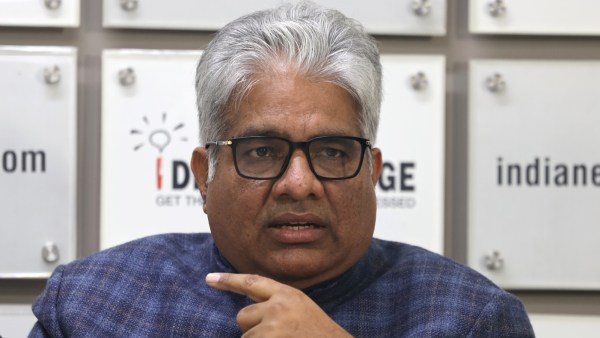
On elections in West Bengal
People brought in Mamata Banerjee’s government with quite some expectations but she failed to meet them. This time, under the leadership of the BJP, a full majority government will be formed
Liz Mathew: Even if the biggest partner is not there?
If any country has had a personal stand, then this has been happening in climate negotiations. I don’t want of speak to any individual. But collectively, India wants to become a part of the solution to the climate change problem.
Nikhil Ghanekar: As for the Aravalli issue, should the Supreme Court’s stay and its review of the matter be seen as a setback to the recommendations made by the court-appointed committee, which was headed by the secretary of your ministry? Also, about the definition it has been claimed that a larger area would have been protected. However, in court, there was no specific expansion or elaboration of this argument. On what basis did you claim that this definition would lead to the protection of more area?
This needs to be seen in two parts. First, the Supreme Court’s order, dated May 9, 2024, constituted a committee and the secretary of our ministry was a member of this committee, along with officials from the Forest Survey of India. The Supreme Court’s Central Empowered Committee (CEC) was also part of it, as were representatives from the Geological Survey of India, since geological aspects fall under their domain. Subsequently, a technical committee was formed and met on several occasions. Along with a letter from the Forest Survey of India, the report was submitted. The report stated that the nature of hills differs across terrains, and therefore, applying uniform criteria of slope and relief across the entire region is extremely difficult. Based on the report, the court then delivered its decision. The court noted that due to different definitions adopted by different states, different yardsticks were being applied while granting permissions for mining activities. In some states where restrictions existed, mining could not be permitted beyond 100 metres. Hills were permitted to be mined up to a height of 100 metres from all four sides, leaving the remaining portion as a pillar, which was susceptible to collapse. The court stated that what was essentially required was a policy decision regarding the definition of the Aravalli hill. It was clarified that the purpose was not the entire Aravalli range, but the mining area, which they themselves defined. Beyond this, I do not wish to comment further on the court’s observations. I would like to reiterate that our government has made two clear commitments. We have been actively working on conservation of the Aravallis. We launched the Aravalli Green Wall project, under which greening work has been carried out over approximately 2.45 lakh hectares of land in the Aravalli region.
Story continues below this ad
What I stated after the judgment was strictly in the context of mining: that no mining would take place in the protected areas of the Aravallis. Third, in areas where water resources exist, including Ramsar sites and locations from where water sources originate, no mining in the Aravalli region is permitted within a 500-metre radius. We are absolutely strict on this.
Regarding the definition that emerged through the court-appointed committee, if any doubts have arisen about it, I welcome the formation of a high-powered committee.
Nikhil Ghanekar: You said that because of this definition, more area would be protected
I had said that within the 1,43,000 sq km, under this definition, what the court has stated is that the protected areas will remain protected. No new mining leases will be granted. For a long time, illegal mining continued in the Aravallis and that has been a concern for everyone. People felt distressed about it.
For the first time, recently, 100 sq km of revenue land was converted into forest land. For the first time, 10,000 hectares of land was given to NCR, which needs space to breathe through compensatory afforestation. In the history of compensatory afforestation, you will not find such an example.
Story continues below this ad
Nikhil Ghanekar: There were several statements made about the Nicobar project and the safeguards that were imposed while granting clearances. Can you talk about the factual position regarding the final forest clearance? Also, do you not see a potential conflict of interest that the same people who are part of the clearance and regulatory mechanism are also involved in implementing the mitigation measures? ?
If within the NCR we declare a 97-sq km area as a permanent green forest, will it not be beneficial? Regarding Nicobar, for the two local communities there, the Nicobari and the Shompen, their habitation is not being disturbed anywhere because of this project.
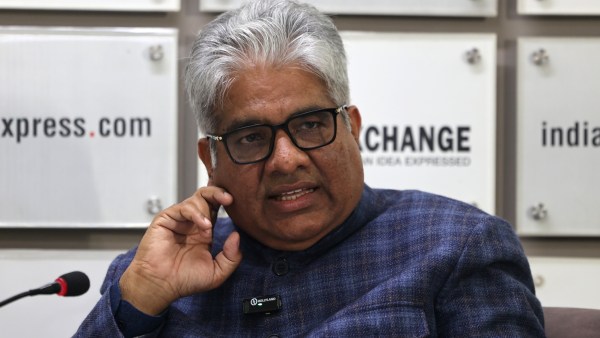
On Air Pollution
In Delhi NCR I am acknowledging the issue of air pollution emergency with sensitivity. We are a regulatory ministry but I’m taking this responsibility… We are working on short-term and long-term measures
Nikhil Ghanekar: Just last week, the Tribal Council disputed this.
The project areas — New Chingenh and Rajiv Nagar — have not been proposed for displacement. In 2004 and 2005 a committee was constituted, and the Anthropological Survey of India was involved. They were mandated to address three aspects: the safety, protection, and well-being of the Particularly Vulnerable Tribal Groups, and, in that context, the holistic development of the Great Nicobar Island area. That process was completed in full. The total area of Great Nicobar Island at present is 751.07 sq km. Out of this, the total area proposed for development is 166 sq km. Within this, 84 sq km constitute a tribal reserve. Of this 84 sq km, 11 sq km have been inhabited since 1972 and are part of the revenue area. Therefore, the effective tribal reserve area affected is 73 sq km. To compensate for this, an area measuring 76.98 sq km is being re-notified as a tribal reserve. Effectively, there will be a net addition of 3.912 sq km to the tribal reserve area. There is thus an addition to the tribal reserve area of Great Nicobar Island. The total area involved amounts to 1.78 per cent, covering strategic and national security requirements and other purposes.
Overall, even if we take the maximum estimate, the project involves only about two per cent of the total area of the Andaman and Nicobar Islands. No facts were hidden, no ecological disturbance was caused, and no rights were taken away.
Story continues below this ad
Nikhil Ghanekar: What amount and what percentage of this project is actually meant for defence and strategic purposes? Besides logistical needs, there is also a tourism plan. How much area is for defence?
National security, national sovereignty, and economic security are interconnected issues. As for the percentage of the area for defence, it can be discussed when the time is right.
Amitabh Sinha: What is the problem with air pollution that, despite being a solvable issue, it has worsened?
I will not deny that this problem concerns all of us. We are working on both short-term and long-term measures. In 2022, the number of days with AQI in the severe category — based on average PM2.5 and PM10 — was 209. In 2023, this was reduced to 204. In 2024, it again went up to 209. This time, it has come down to 201. While there has been marginal improvement, it has not been satisfactory. Now, how do we move forward? When it comes to AQI, the primary reason for emissions is vehicles. BS1 vehicles emit about 31 per cent more. We were in the process of phasing them out. Now, the court has again given an order, and there are about 1 crore 12 lakh vehicles involved. Now we will be able to improve on this front. The second aspect is smart traffic management. The third is public transport. Metro expansion has taken place on a large scale, but the end-use benefit of the metro has not been fully realised. With a single card, metro fares and Rapido fares can both be deducted. If this experiment succeeds and end-to-end connectivity improves, metro usage will increase. Then there are electric buses. In Delhi, by next year, only a few CNG buses will remain, and we will transition almost entirely to electric buses. The second major issue is industrial pollution. We have rapidly shifted around 240 industrial parks to CNG. Even after this transition, we instructed industries, particularly those in the red and orange categories, to install online monitoring mechanisms. The third major source is solid waste management. Very soon, new solid waste management rules will be notified. In Ghaziabad, legacy waste has already been eliminated. I am personally involved in this issue in multiple meetings. Earlier, there was no clear policy on landfilling. We have now implemented one and made time-bound remediation of legacy waste mandatory. This is a major component of our efforts to tackle pollution.
Liz Mathew: When was the last time you spoke to the Delhi Chief Minister for managing what you are seeing around?
Ten days ago. A detailed meeting happened. In the last one month, I went to Ghaziabad, Noida, Faridabad, Gurgaon, Manesar, Sonipat, Panipat, Bhiwadi and Haryana. In Punjab and UP, our officials just went. Today a meeting is going on in Rajasthan. We have now made one complete plan for NCR, in which we have set targets for the whole year.
Amitabh Sinha: Air pollution is a health emergency. Is it one for the government as well?
I am acknowledging the issue of air pollution emergency with sensitivity. We are a regulatory ministry but I’m still taking this responsibility and following up.
Story continues below this ad
Harikishan Sharma: You spoke about dust management, particularly by construction sites. Has your ministry flagged that the Central Vista project has contributed to a lot of the dust?
Regarding Construction and Demolition (C&D) waste, there were no regulations, but now we have made these regulations. In Delhi, every 5 km we have made one site for C&D waste.
Nihal Koshie: At the recent India Open badminton championship in Delhi, the Danish world number three player Anton Antonsen, didn’t come because of pollution. India’s top athletes are not able to train. So has this begun to alarm the ministry? Will we be able to sort this out?
We will get better with every year. Things will not change overnight.We have been improving continuously on an average 20 per cent every year.
Asad Rahman: At the winter session of the Parliament, Opposition wanted a conversation on pollution but a consensus couldn’t be formed. Wasn’t this the government’s responsibility?
Story continues below this ad
The government was ready. But people from the Opposition climbed up on tables and chairs.
Liz Mathew: How do you see this issue of minorities, especially Muslims, in this country?
All faiths should have the right to religious freedom. Pluralism is a part of our culture. We are a part of a civilisation in which equality has been given to all thoughts and therefore, if we are citizens of this country, then citizenship is important for us. There should be no religious discrimination. Everyone has the freedom to believe their faith and everyone has the right to put their point across.
Deeptiman Tiwary: In political discourse today, there are communal overtones and no sense of togetherness. Do you think it is your responsibility to change this?
The statements in Parliament are our official statements. So with our civilisational values, we will have to stay together and will have to take everyone along. Only then will the country become ‘developed India’.