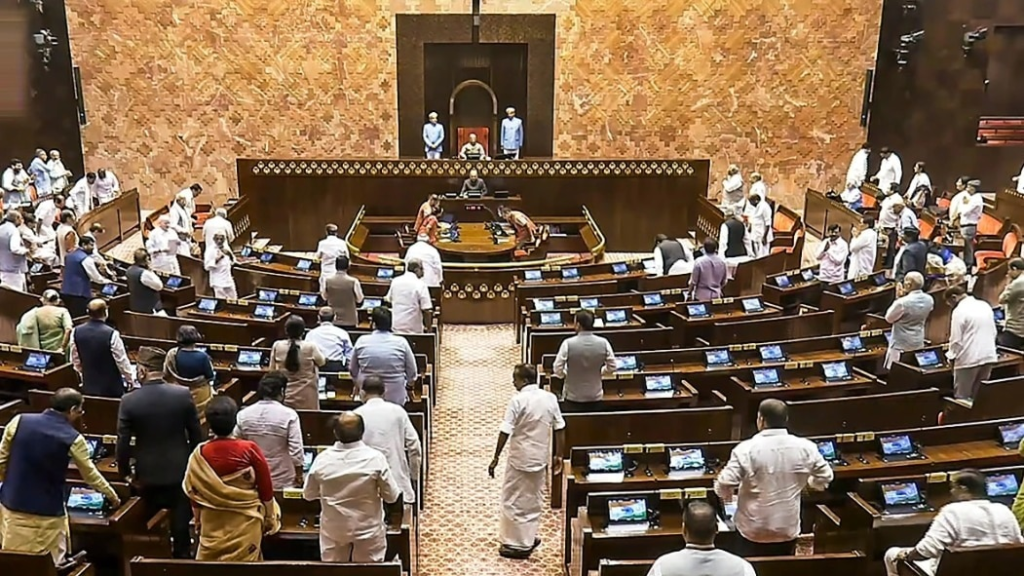
A shifting political equation is taking shape in Bihar following the recent Rajya Sabha elections, with developments tilting in favour of the BJP. At the centre of the churn is cross-voting by three Congress MLAs, who backed the BJP candidate despite the party holding six legislators in the state.
The situation is further complicated by the absence of both a leader and a whip in the Congress Legislature Party, weakening internal discipline.
This vacuum has opened up the possibility of a split within the Congress ranks. Under current circumstances, if these MLAs formally switch sides, they may not attract disqualification under the anti-defection law.
Another Congress MLA is also under scrutiny, raising the prospect that as many as four of the party’s six legislators could break away.
The numbers underline the potential impact. The BJP currently has 89 MLAs, along with the support of 28 legislators from its allies, taking its tally to 117—just five short of the majority mark in the Assembly without the Janata Dal (United).
Should four Congress MLAs join the BJP, the ruling coalition would move to within a single seat of a majority even without the JDU’s backing.
Such a scenario could significantly reduce the BJP’s dependence on its ally in the state.
However, the dynamics at the national level remain different.
At the national level, the Centre remains reliant on the JDU, with its 12 MPs playing a key role in sustaining the ruling alliance in Parliament.
In the March 16 Rajya Sabha elections, the National Democratic Alliance (NDA) won all the five seats in Bihar, while also securing two seats in Odisha following cross-voting. In Bihar, the ruling NDA’s candidates included Chief Minister Nitish Kumar and BJP national president Nitin Nabin.
– Ends
Published By:
Karishma Saurabh Kalita
Published On:
Apr 1, 2026 08:56 IST
Tune In