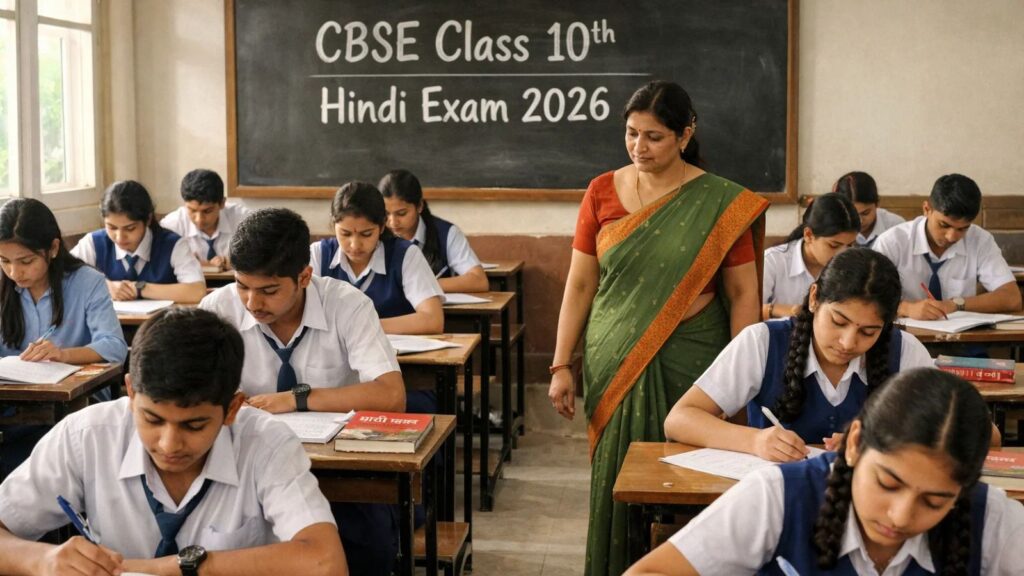
The Class 10 Hindi examination evaluates students’ reading comprehension, analytical thinking, grammatical accuracy, and creative expression. Rather than testing rote memorisation alone, the CBSE paper assesses how effectively students understand, interpret, and present ideas. A close analysis of recent board question papers reveals that certain topics, chapters, and question patterns are frequently repeated. Focused preparation in these key areas can significantly enhance performance.
The Unseen Passage section is compulsory and carries considerable weight. It examines students’ ability to comprehend unfamiliar text and respond logically. Questions generally include assertion–reason, factual, and interpretative types.
To perform well in this section, students should read the passage and questions carefully before answering, underline key words and ideas to identify the main focus, and divide long or complex questions into smaller parts for clarity. A systematic approach ensures accuracy and better time management.
What to do a day before the exam?
–The day before the examination, students should revise only important points and avoid beginning new topics.
–They should avoid writing answers without properly reading the question, using incorrect formats in writing tasks, ignoring grammar rules, including idioms and muhavare, and exceeding the prescribed word limit.
Story continues below this ad
–Prioritising NCERT content and the past five years’ question papers not only improves performance but also builds lasting confidence in language skills.
Grammar: Application of language rules
The Grammar section, largely based on the NCERT syllabus, assesses students’ practical command of grammatical rules. Frequently asked and important topics include Samas (compound words), Padbandh, sentence types based on structure, and idioms and Muhavare in both lesson-based and contextual usage.
Rather than memorising rules mechanically, understanding grammatical concepts through examples and contextual application helps students avoid errors and score consistently well.
Literature: Interpreting prose and poetry
The Literature section evaluates students’ interpretative, analytical, and expressive skills through prose and poetry from both the Sparsh and Sanchayan textbooks.
Poetry (Sparsh)
Story continues below this ad
Poems such as Atmatran, Parvat Pradesh Mein Paavas, Manushyata, and Sakhi are frequently repeated in board examinations. Questions assess understanding of the theme, message, emotions, and poetic values. Students are expected to explain meanings in their own words rather than reproduce memorized lines.
Prose (Sparsh)
Several chapters carry high weightage. Bade Bhai Sahab is often examined through character sketches, humour, and comparison. Tatara–Vamiro Katha focuses on the theme of love and sacrifice. Teesri Kasam ke Shilpkar Shailendra features biography-based questions, while Kartus emphasises the character of Wazir Ali and the relevance of the title. Ab Kahan Doosron ke Dukh Se Dukhi Hone Wale regularly features value-based questions.
Prose (Sanchayan – Part 2)
Chapters such as Harihar Kaka and Topi Shukla regularly feature value-based and analytical questions. A clear understanding of the plot, characters, and social message, supported by relevant textual references, strengthens responses.
Creative writing
The creative writing section is a major scoring opportunity when handled correctly. It includes formal letter writing, paragraph writing, notice and advertisement writing, email writing, and short story writing based on given cues. Correct format, concise language, adherence to word limits, logical sequencing, and neat presentation are essential for success in this section.
Story continues below this ad
Guidelines for answering difficult questions
–Students should read each question at least twice before answering, identify and underline key words to understand the exact requirement, and break lengthy or complex questions into manageable parts.
–Answers should relate to textbook content and classroom discussions, and must maintain clarity, simplicity, and relevance in expression.
–In poetry-based questions, students should explain the idea rather than merely rewrite lines from the text.
Focused preparation on frequently asked lessons from Sparsh and Sanchayan, important poems, grammar topics including muhavare, and prescribed writing formats — combined with the right answering strategy — makes it entirely possible to score excellent marks in the Class 10 Hindi examination.
Story continues below this ad
Sharma and Bhanot both teach Hindi to Classes 9–10 in Shiv Nadar School, Faridabad