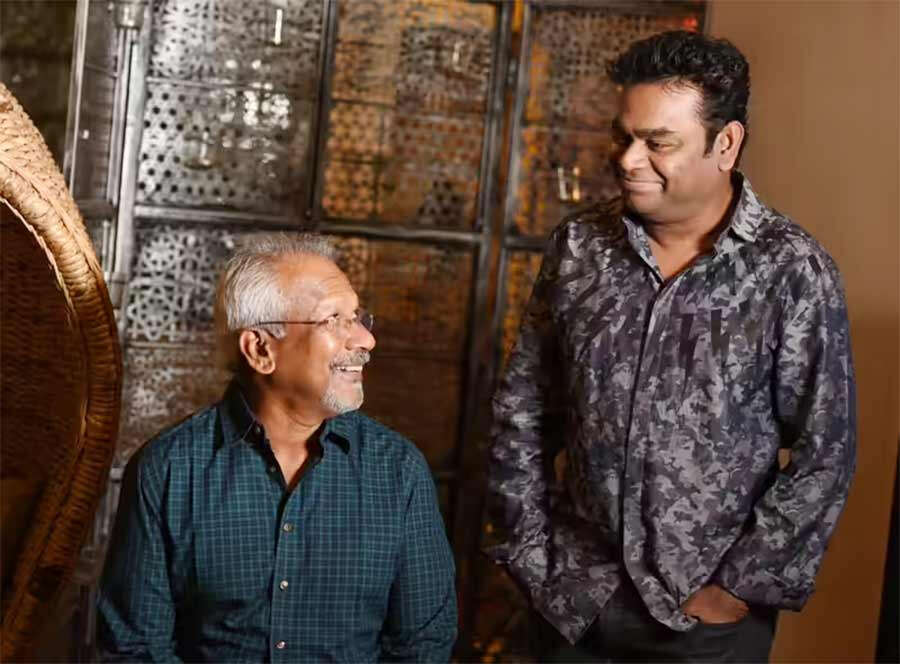
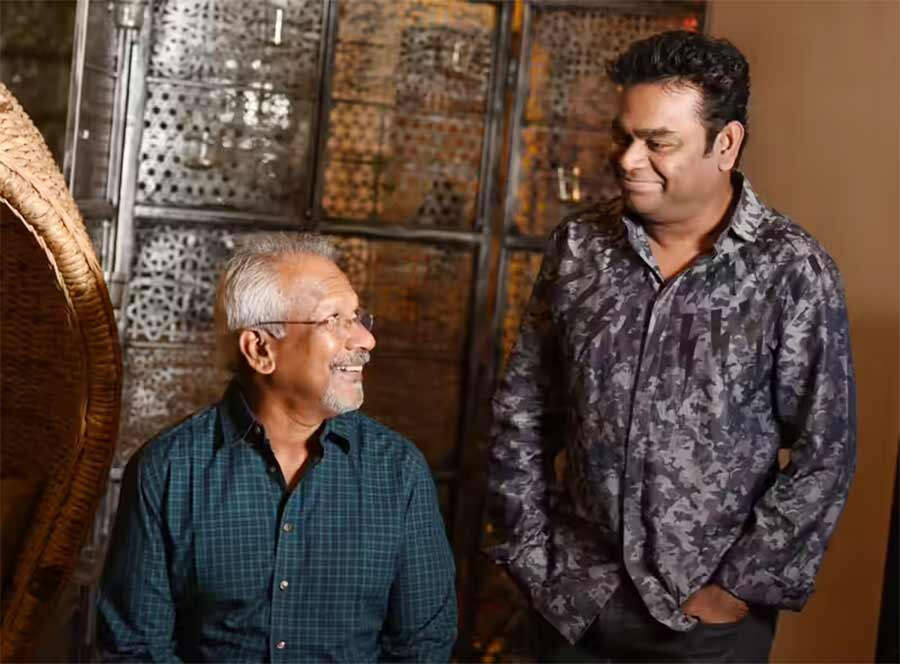
Filmfare’s Editor-in-Chief, Jitesh Pillai, reflects on the quiet brilliance of Mani Ratnam, an elusive auteur whose cinema speaks louder than his words. From Roja to Alaipayuthey, his films capture fleeting moments of love, conflict and longing, crafted with soul, music and unmatched finesse. A storyteller who turns imperfection into poetry, Mani Ratnam remains a master we keep returning to.
In Jitesh Pillai’s words…
Flashback to one of those rare encounters with Mani Ratnam. The reticent filmmaker keeps slipping from my radar. Distance isn’t helping either, and his media-shy nature doesn’t help. I had done a brief interview with him during Bombay, where one did try to get a glimpse into the filmmaker. I have been a Mani Ratnam fan ever since I accidentally saw Roja. We had actually gone to see Thevar Magan, but since we don’t read Tamil, we slipped into the wrong theatre. What a happy accident it was.
Alaipayuthey (2000)
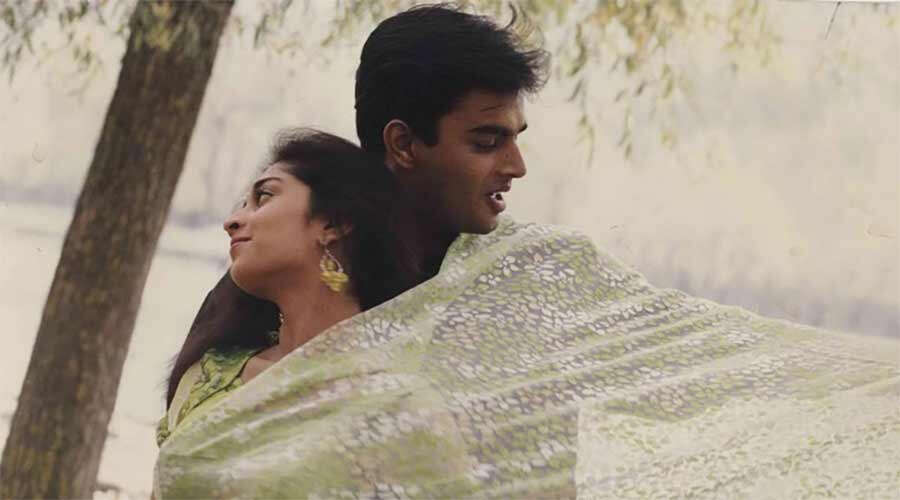
Mani Ratnam has been one of the most seminal influences in my life. It’s probably the moments he creates. He makes you aware of what you’re missing in your life. He makes you yearn, and therein lies his success. When a filmmaker creates a world like Alaipayuthe, you want to inhabit it. It isn’t a perfect world, but it comes pretty close. There’s love at first sight, there is reticence, there is separation, there is marriage, and there’s estrangement.
Sure, there are cross references and repetitive tropes throughout his movies, and sometimes the politics are suspect, but when it comes to magic, there’s none like Ratnam. If life is lived in the moments, Ratnam gives you those moments. To hope, to love, to transgress, to seek redemption.
Nothing is perfect in Ratnam’s world, and that’s why it’s so beautiful. In imperfection, we find our greatest joy. In Ratnam, we find our finest storyteller yet.
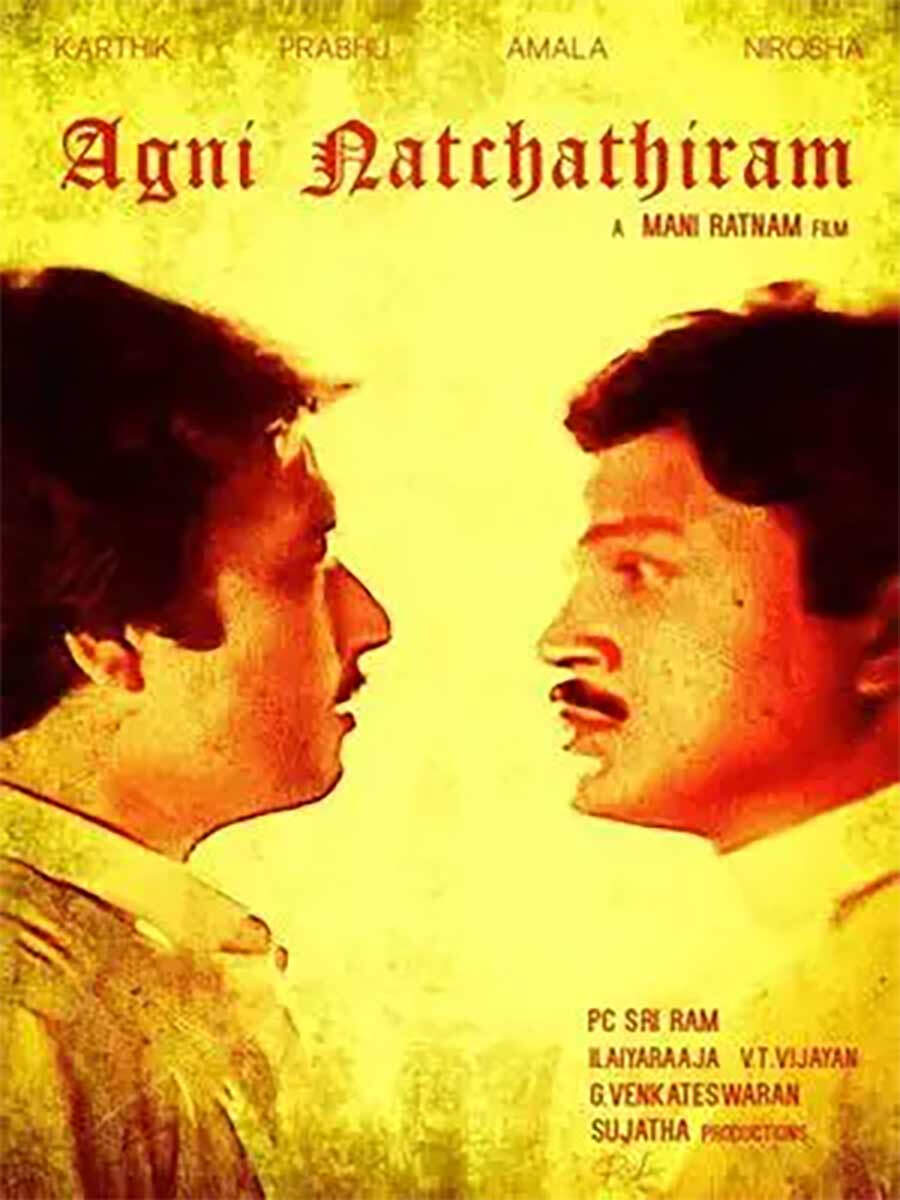
Cool is a much-abused word these days but way back in 1988, when Agni Natchathiram was released, it really redefined cool things. Before the AR Rahman wave hit us, Ilaiyaraaja revolutionised South Indian music. And when he composed for Mani Ratnam, it seemed that they were hand in glove to create some seriously experimental yet hugely accessible music. Sample Mouna Raagam, Nayakan, Thalapathi.
Now they’re all doing the Mani Ratnam way. But he showed us how to do it first. Thank you for the music, Raja sir…yet again.
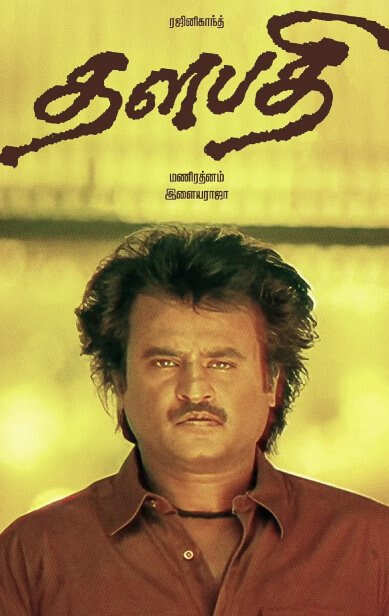
At a basic level, Thalapathi was a friendship between two friends. About love and bonding in the world of crime, expertly played by Mammootty and Rajinikanth. But Mani Ratnam goes deeper and, through familiar tropes, revisits the Mahabharata and the Karna story. I still tear up watching the masterful Srividya and Rajinikanth share a mother-son moment in the temple precincts. Srividya was filled with remorse at having to give away her firstborn. The images Mani Ratnam conjures up, about lost love, about filial affection, about loyalty, are memorable.
It could be said that Mani Ratnam made every Ilaiyaraaja song into an event, every event into a memorable sequence. And that’s perhaps his greatest strength as a filmmaker. He could dissemble with flourish, and he could move you with simplicity. If he stunned you with his technical flair, he could also write scenes with soul. His combination of mind and heart is what makes films like Thalapathi soul food.
Mouna Raagam (1982)
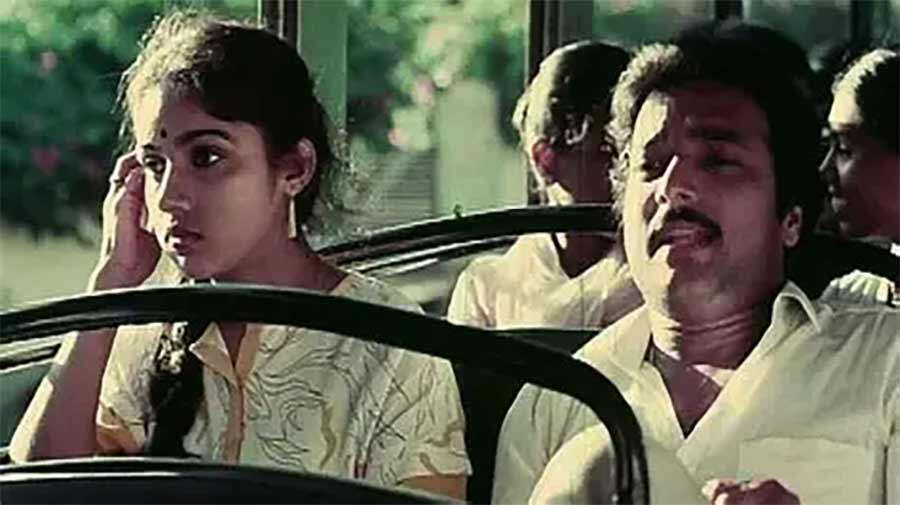
This still remains my favourite Mani Ratnam movie. A young, sprightly college girl sings in the rain, ready to take on life… within moments, she’s married off by her parents, much to her chagrin. The boy in question is a nice guy. But not good enough for the girl. Or so she thinks. The heroine Divya has a past, she was in love with a sort of revolutionary who got gunned down.
The Delhi sequences are charming and you can clearly see which direction Ratnam is headed and that his skills lay in the interplay of human relationships. Mouna Raagam is a directorial triumph and it holds up a mirror to the audience to see bits of their lives on screen. In empathy lies Ratnam’s greatest success.
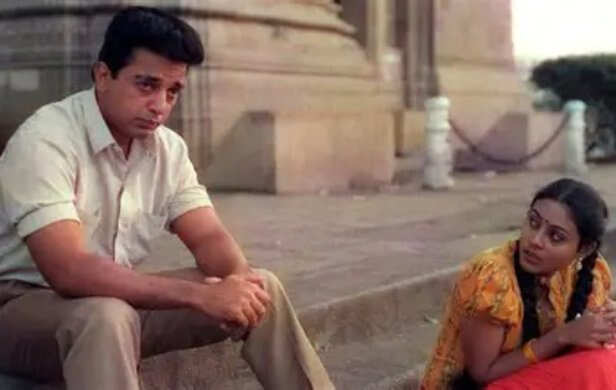
Ratnam packs in layers and layers of drama in this Godfather-inspired movie. Ratnam also showed us how a biopic should be made. He didn’t deify his protagonist, he humanised him. Kamal Haasan’s scene with his grandson just before his death is masterful storytelling as it is the portrait of a consummate artiste. The daughter asking her father to go away… rescuing the girl from the brothel are fine touches, the emotional wallop heightened by Ilaiyaraaja’s supreme background score.
Movies about fallen heroes always impact us. The scars they leave behind make for memorable storytelling. It’s always the greys that will continue to intrigue us.
Thiruda Thiruda (1993)
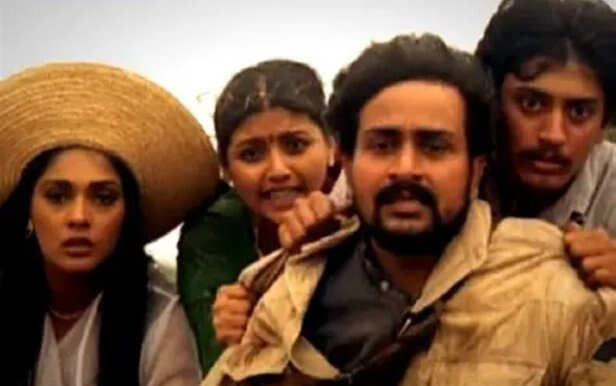
In what is arguably AR Rahman’s best musical score Thiruda Thiruda blew all our minds. Every song suited every palette. Then there were those who went crazy over the love ballad Puthu Puthu Bhoomi, there were the others who loved jazzy and sexual Thee Thee. Most rooted for the rumbustious Veerapandi Kottayile.
Rahman experimented with form and rhythms and came up with mother of all scores. P. C. Sriram’s incredible lighting made Mani Ratnam’s over the top road movie pleasure to watch. Critics baked Ratnam for his film which came in the wake of the much loved Roja.
And for that extra bit of Bombay zing, there was the sultry Anu Aggarwal beautifully lit like a diva in Konjum Nilavu. The sexy Heera Rajagopal was quite a find. Wonder where both these girls are today?
Thiruda Thiruda was a mad hatter romp which not many got. Ratnam was playing his audience, teasing them. The audience wasn’t so sporting and rejected this heist flick. Rahman always reserved his special something for Ratnam. Like he did in Iruvar, Dil Se, Bombay and Alaipayuthey.
Iruvar (1997)
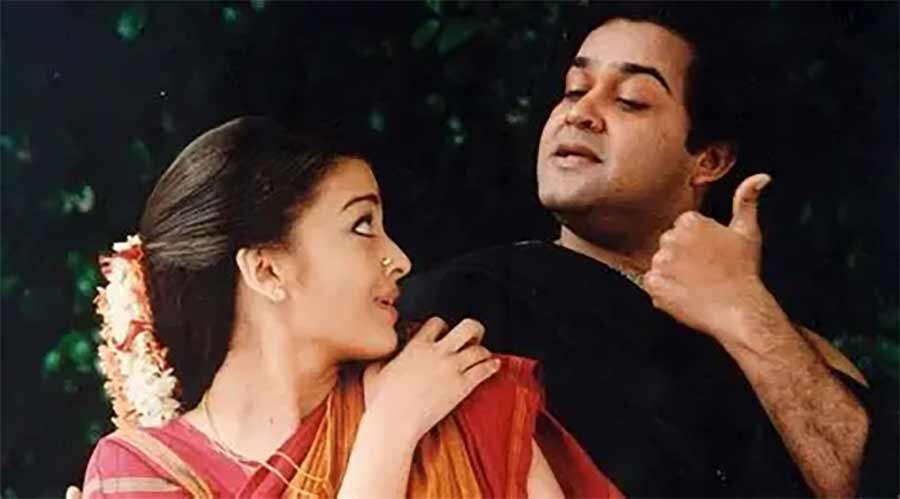
The jury’s still out on whether Iruvar is Mani Ratnam’s most accomplished work. As good if not better than Mouna Raagam or Nayakan.
A director is only as good as his team. And look at the team Ratnam gathered. Santosh Sivan’s stunning grading to depict the various eras made the film look like a painting. Do you recall the 360 degree camera angle shot when Prakash Raj recites a poem to Tabu? A great movie is made up of many such poetic moments.
Loosely based on the MGR–Jayalalithaa dynamic with the Karunanidhi friendship thrown in, Iruvar was ripe for controversy and debate and had to pay a price.
But make no mistake, the dramaturgy was unmistakable. Aishwarya Rai making her debut in a double role was riveting. For a first timer she “got” her part. Mohanlal brought gravitas to a role that was tailor made for him. He gave it a haunting tragic quality, almost like a fallen hero. Also haunting in a briefly abbreviated role was Tabu. Especially her opening act. And of course Prakash Raj shorn of any mannerisms was outstanding.
Iruvar deserved better, compelling me to believe in the argument that we are only as good as the films we get. If we reject a nuanced film like Iruvar, it surely does reflect on our sensibilities as an audience.
For sure Iruvar is not an easy watch, but once you navigate the politics, it’s easy to identify with the romance. It resonates long after you’ve walked away from the theatres. Notch up a hurrah for AR Rahman’s incredibly layered soundtrack. We want that Rahman back.
Iruvar brings back memories of struggle and hope. And that can only be a good thing.
Also Read: Editor’s Take: Jaya Bachchan, A Quiet Riot of Authenticity