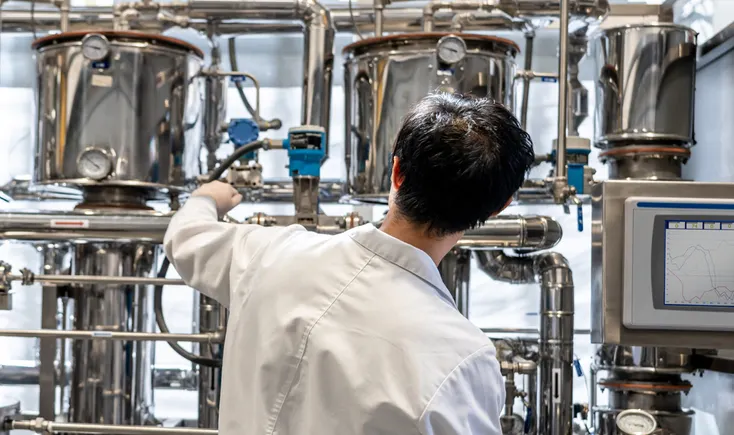
Fermented foods continue to gain momentum as consumers seek natural gut-friendly and immunity-supporting ingredients across a wide range of categories. With the global fermented foods market valued at 585 million USD in 2024 and projected to grow steadily through 2031, producers face growing pressure to scale output while preserving quality, safety and consistency. As fermentation activity expands, shortening process time without sacrificing performance has become a critical focus. Advances in processing technologies and the growing use of AI are helping manufacturers optimize cycle times and improve control. These improvements support more reliable and scalable fermentation outcomes.
The need to increase throughput while maintaining consistent results affects both traditional food fermentation and emerging areas such as novel foods. Producers must manage risk, maintain repeatability and ensure that transitions between stages remain stable as they scale from development to full production.
What does faster fermentation look like
Fermentation is already recognized as a faster and more efficient route for producing certain ingredients such as dairy or egg proteins compared to their animal-based counterparts. For example, a 48hour fermentation run compared with a sixmonth animal production cycle is roughly 90× faster on a timetoprotein basis. Achieving faster fermentation involves more than reducing the time needed to reach a target specification. It also requires efficient activity at each stage of the process, stable transitions between steps and downstream operations that can keep pace with upstream output.
Reducing delays, improving changeover efficiency and maintaining steady conditions throughout a run all contribute to shorter cycle times and better use of equipment.
What commonly slows fermentation at scale
As production volumes grow, even small inefficiencies can create bottlenecks or contribute to variability. Common challenges include:
Addressing these constraints helps reduce time from inoculation to final ingredient and supports smoother overall processing.
How processing technologies support faster and more consistent fermentation
Clarification and filtration
Clarification and filtration help maintain stable and predictable recovery and yield. Early particulate removal reduces variability, protects equipment and supports smoother transitions to downstream steps. The right combination of filtration and membrane technologies can maintain consistent flow, reduce fouling and support longer run times. This contributes to more reliable cycle times.
Closed and hygienic systems
Closed sanitary system designs upstream and downstream help limit exposure and reduce contamination risk. Minimizing open handling supports repeatability and reduces batch interruptions. Hygienic design principles can also simplify cleaning and changeovers. This supports more efficient operations and helps shorten process time.
Automation and monitoring
Digital monitoring tools provide real-time visibility into critical process parameters. Automated controls allow operators to set predefined conditions and make timely adjustments that keep processes on track. AI-enabled analytics can identify early deviations or trends such as predictive modelling and anomaly detection to support proactive decision-making and helps improve consistency in fermentation performance.
Scalable downstream operations
As fermentation output grows, downstream processes must scale with it. Flexible concentration and polishing steps help prevent bottlenecks and maintain continuity between upstream and downstream operations. Modular designs can help producers adapt to changing volumes without significant disruption.
How faster fermentation supports food safety and quality
Faster production is most effective when paired with strong process control. Technologies that support hygienic operation and consistent performance help producers:
This combination of speed and control helps producers meet rising demand without compromising food safety or quality.
How efficiency supports sustainability goals
Efficiency often correlates with energy and resource reduction as microbial cells double within hours instead of days and sometimes month in conventional animal protein production. Shorter fermentation cycles could lower energy used per batch and improved consistency reduces the likelihood of reprocessing or material waste. Together these gains support broader sustainability and operational goals.
Where novel foods fit in
Growth in novel foods including alternative proteins, flavors, colors and other biomacromolecules reflects a broader trend toward efficient scalable fermentation. Producers in this segment depend heavily on process control, contamination reduction and reliable separation steps to maintain consistency as they scale. Their challenges closely mirror those of traditional food fermentation. This reinforces the industry-wide need for technologies that support speed, quality and predictable performance.
What successful implementation looks like
Producers who achieve measurable improvements in fermentation speed and consistency often focus on:
These practices help manufacturers improve throughput and resilience while maintaining strong process control across production.