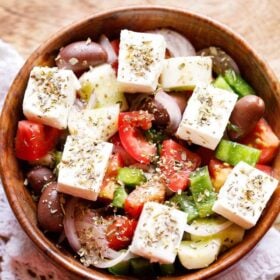
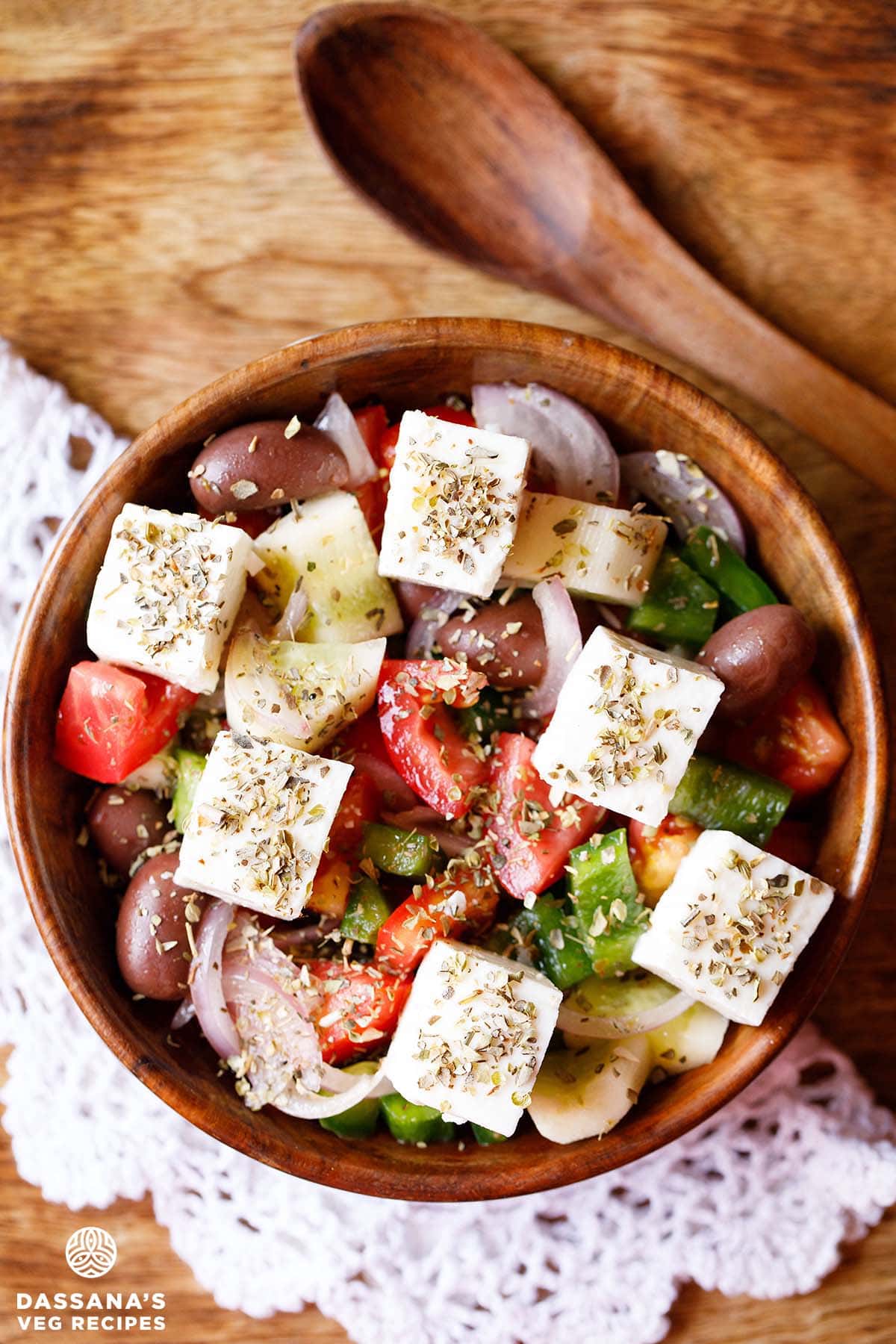
Greek Salad, also known as Horiatiki Salad, is a traditional Mediterranean salad made with fresh vegetables, olives and feta cheese. It is prepared with tomatoes, cucumbers, onions and green bell peppers tossed in olive oil, red wine vinegar and oregano. Chunks of feta cheese add a creamy and slightly salty flavor. Greek salad is usually served fresh as a light meal or a simple side dish.
About Greek Salad Recipe
Greek Salad is a rustic Mediterranean salad that comes from the villages of Greece. In Greece it is called Horiatiki, which simply means “village salad.” It is made with a handful of fresh vegetables like tomatoes, cucumbers, onions and green bell peppers.
Kalamata olives are traditionally added to Greek salad. These olives are dark purple in color and have a rich, slightly tangy taste that is stronger and more robust than green or black olives. They are usually added whole or pitted.
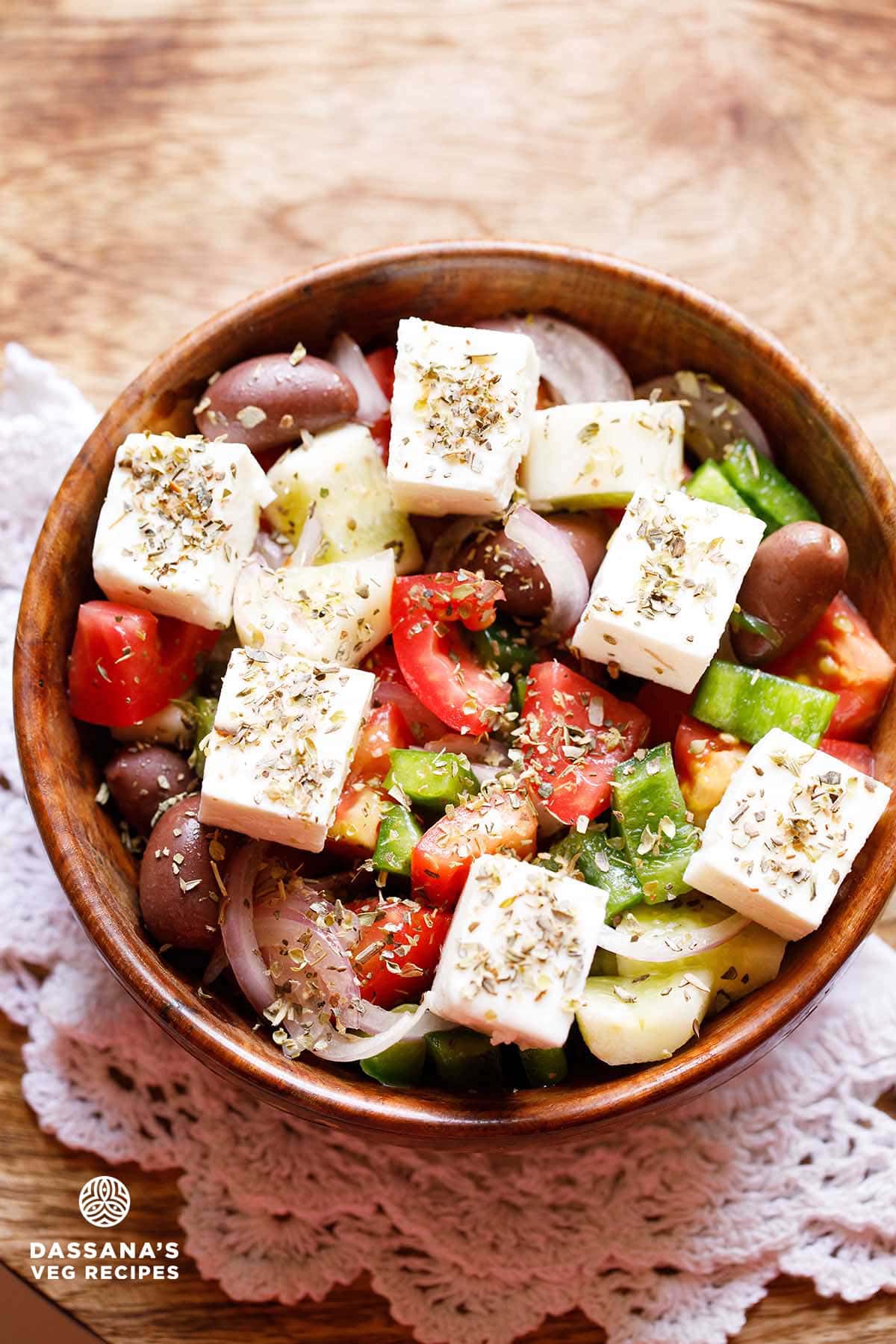
Feta cheese is another key ingredient. The cheese is added in chunks or cubes and gives the salad its creamy and salty flavor.
The vegetables are simply tossed with dried oregano, salt, extra virgin olive oil and red wine vinegar. This light dressing keeps the salad fresh and bright. The salad is served immediately after assembling so that the vegetables stay crisp.
Greek salad tastes fresh, tangy and slightly salty, with juicy tomatoes, crisp vegetables, briny olives and creamy feta cheese. The olive oil and oregano bring everything together with a light and aromatic flavor.
Some variations may include lettuce, capers or different types of olives. While the classic version uses green bell peppers, you can also add vegetables like radish, avocado or cherry tomatoes if you like.
Greek salad is commonly served as a side dish with grilled foods, Mediterranean meals or with crusty bread.
If you enjoy fresh and simple salads, you can also try Green Salad, Caesar Salad, Waldorf Salad, Russian Salad or the classic Potato Salad.
For something different with bold flavors, Som Tam, the popular Thai papaya salad, is another interesting option.
How to Make Greek Salad (Step-By-Step)
Prep Vegetables
1. Rinse the cucumber, green bell pepper and tomatoes very well in water. Drain the water and keep them aside.
Peel the onion and rinse it once or twice in water to remove any strong taste.
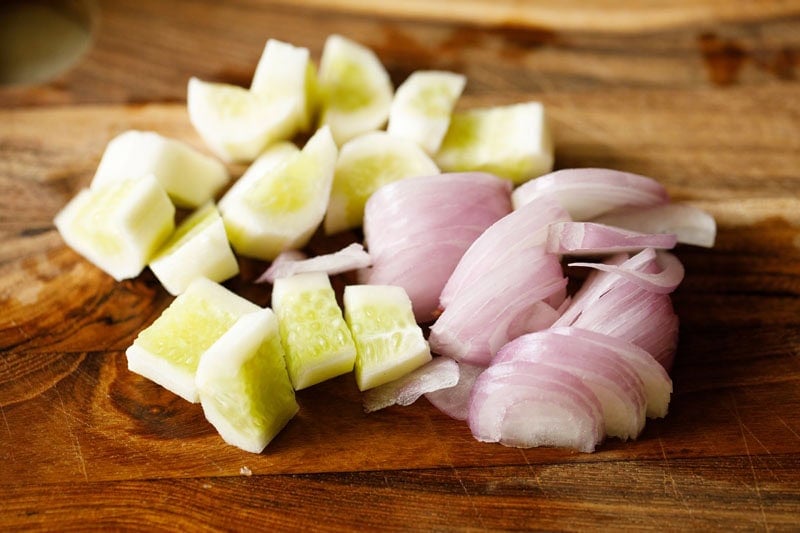
Slice the onion thinly after halving it. Peel the cucumber and chop it into small cubes as well.
You will need ½ cup thinly sliced onions and ½ cup chopped cucumber.
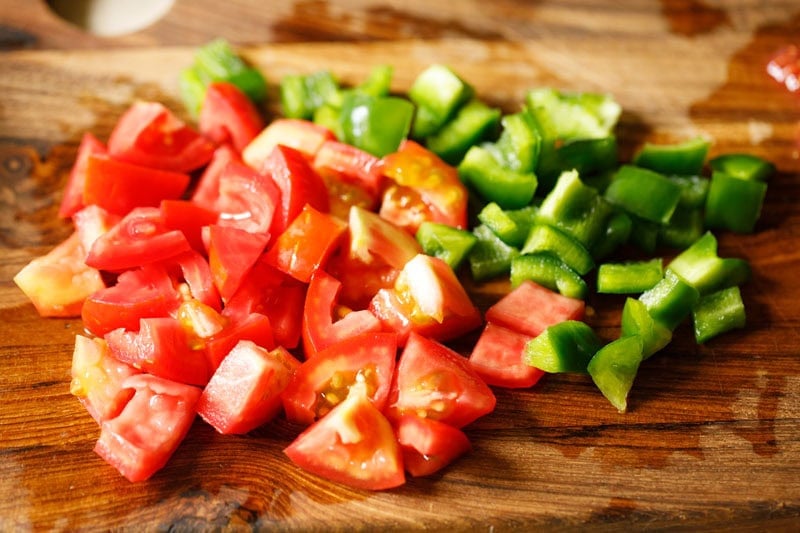
2. Chop the tomato and green bell pepper into small cubes. You can remove the tomato seeds if you prefer.
You will need 1 cup chopped tomato and ½ cup chopped green bell pepper.
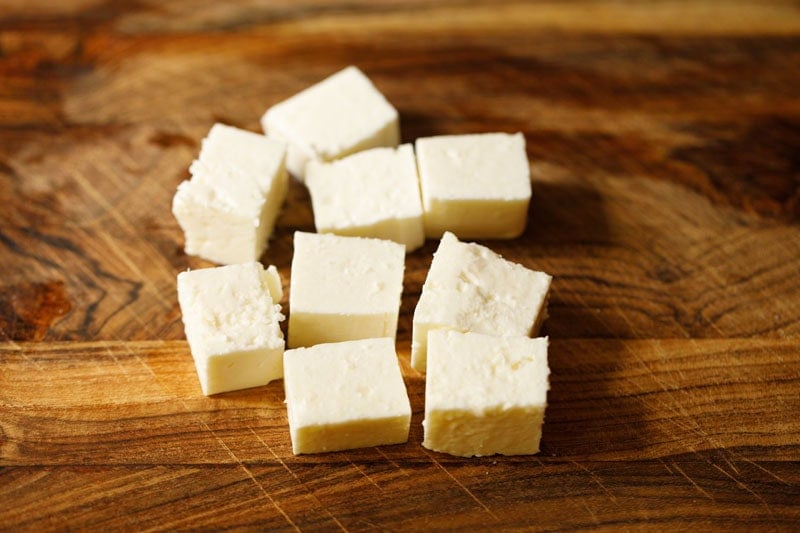
3. Cut 80 grams feta cheese into small cubes or bite-sized chunks.
Assemble & Make Greek Salad
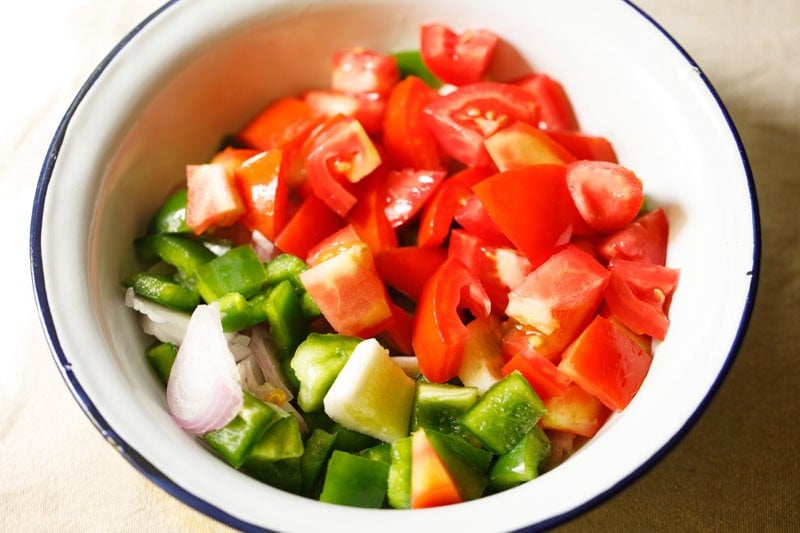
4. In a mixing bowl, add the chopped cucumber, tomatoes, green bell pepper and thinly sliced onions.
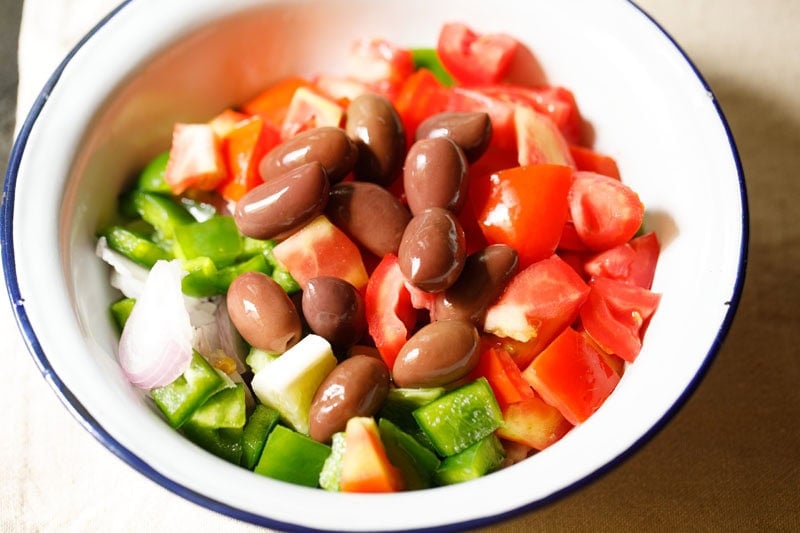
5. Add 12 Kalamata olives. If using whole olives with seeds, keep them whole or remove the pits if you prefer. If using pitted olives, you can keep them whole or halve them.
Tip: If Kalamata olives are not available, you can use green olives or black olives instead.
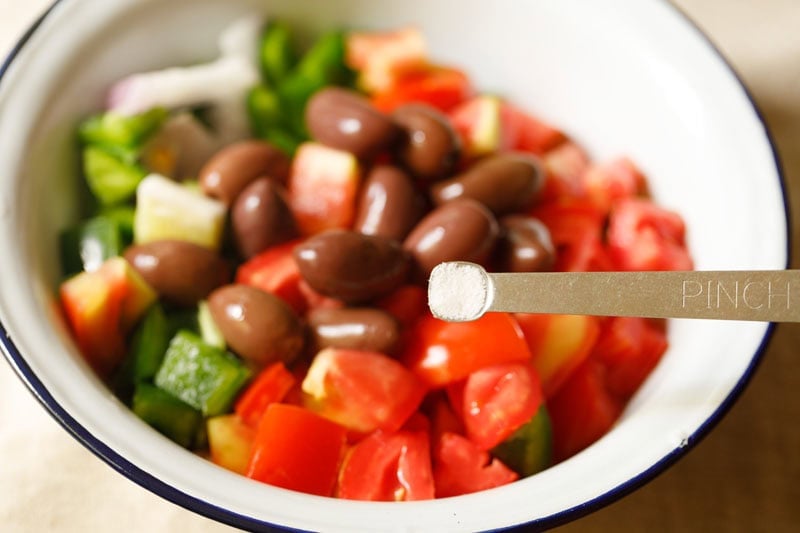
6. Add a pinch of salt or according to taste.
7. Sprinkle about ¼ teaspoon dried oregano over the vegetables.
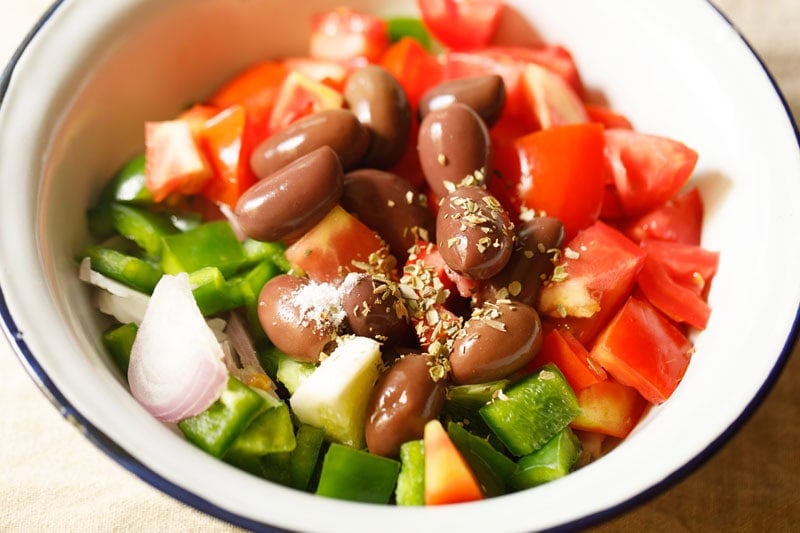
8. Mix the vegetables with the seasonings.
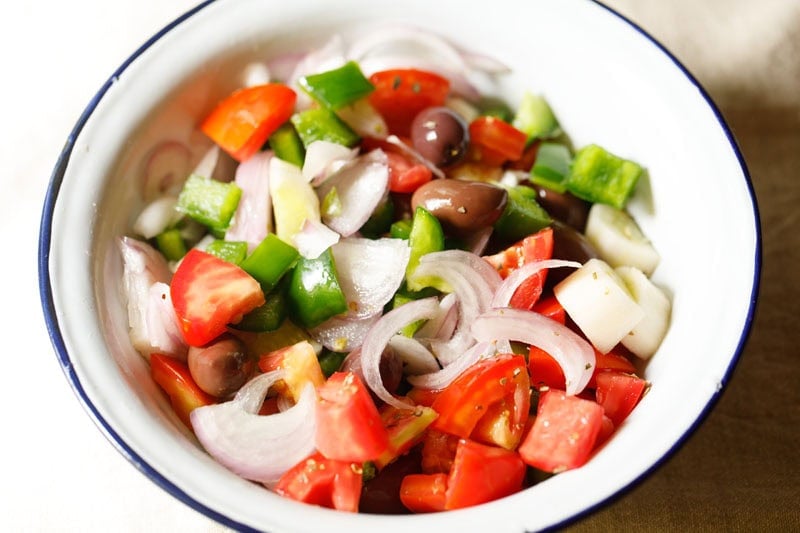
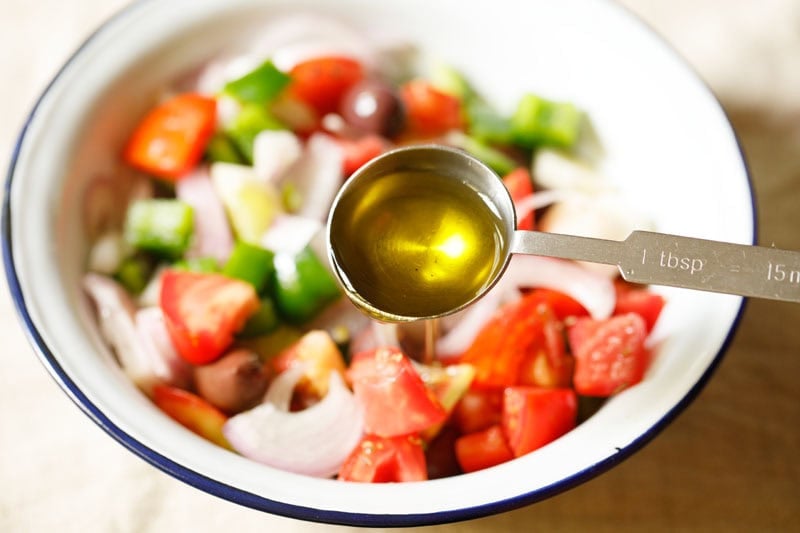
9. Drizzle 2 tablespoons extra virgin olive oil.
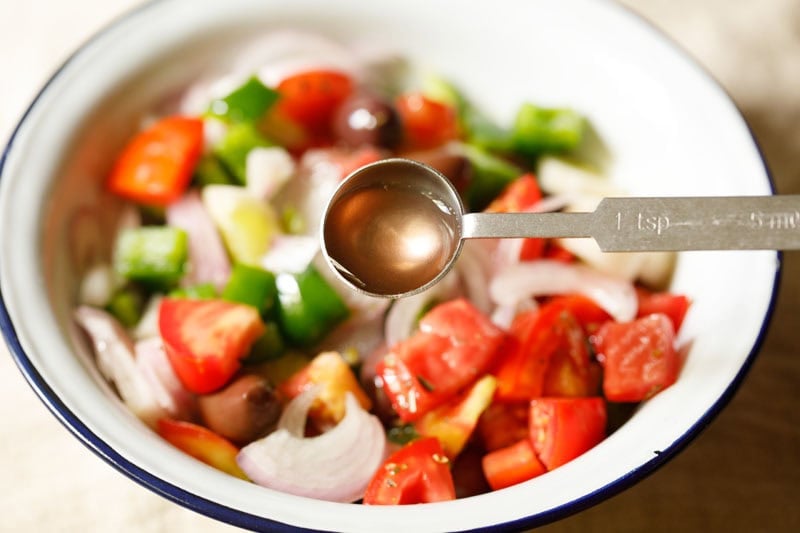
10. Add 2 teaspoons red wine vinegar.
Tip: If you do not have red wine vinegar, you can use apple cider vinegar or white wine vinegar. Fresh lemon juice also works well and gives a light and fresh taste.
11. Mix and toss everything gently so the vegetables are coated with the dressing. Do not mix too much.
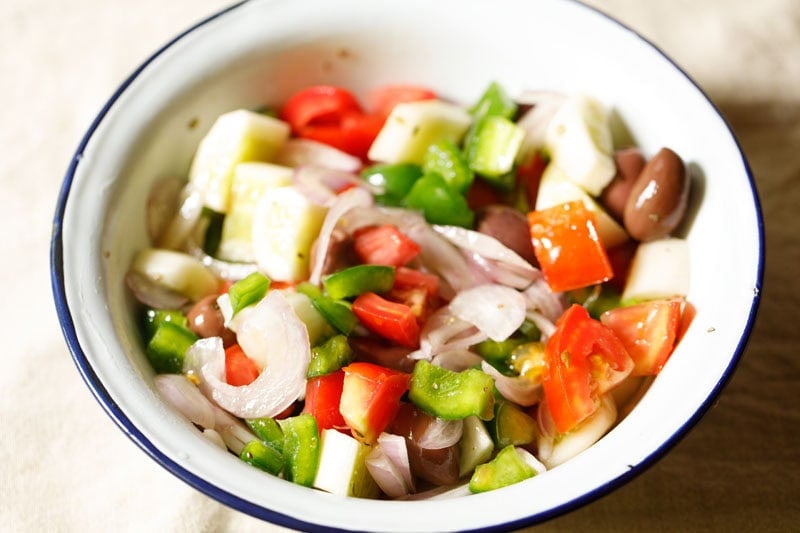
12. Transfer the salad to a serving bowl. Place cubes or chunks of feta cheese on top.
Sprinkle ¾ teaspoon dried oregano over the feta cheese and salad.
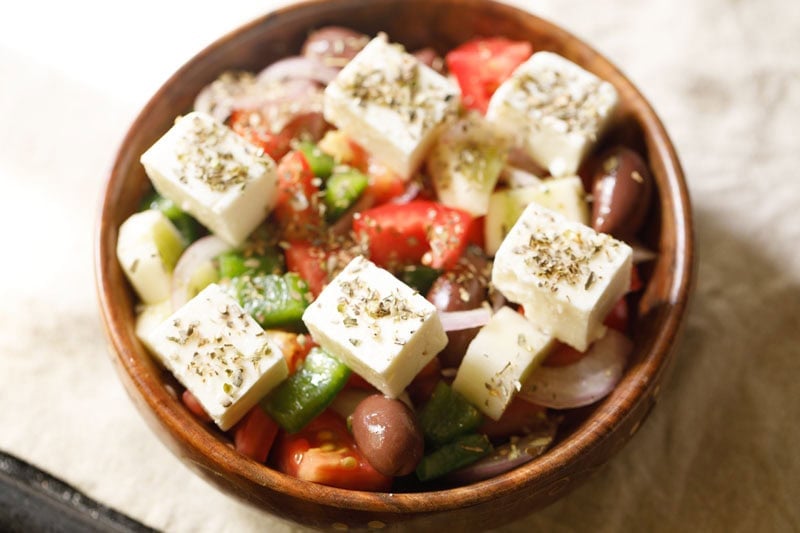
13. Serve Greek salad immediately as it is or with crusty toasted bread. You can also drizzle 1 to 2 teaspoons extra virgin olive oil while serving.
Avoid refrigerating the salad after assembling. It tastes best when served fresh.
Serving Suggestions & Storage
Greek salad pairs well with toasted bread, grilled vegetables, Mediterranean meals or a bowl of soup like Lentil Soup, Tomato Soup or Minestrone Soup.
If you like enjoy vegetable sides, try serving it with Roasted Potatoes, Sautéed Mushrooms, Roasted Brussels Sprouts, or Sautéed Broccoli.
You can also serve it with Pita Bread, grilled halloumi or Baked Potatoes.
This salad is not ideal for long storage because the vegetables release water and lose their crisp texture.
If needed, you can chop the vegetables ahead of time and keep them refrigerated. Assemble the salad with dressing and feta cheese just before serving.
Dassana’s Recipe Tips
- Lettuce: Throw in some lettuce if you like for a slightly bulkier salad.
- Tomatoes: Use ripe, firm tomatoes for the best flavor. Cherry tomatoes can also be used. Simply halve them before adding to the salad.
- Bell Peppers: Green bell pepper is traditionally used in Greek salad, but you can also use red, yellow or orange bell peppers if you prefer.
- Olives: Pitted Kalamata olives can be kept whole or halved. Traditionally, Kalamata olives are added whole, often with the pits.
- Olive Oil: Use good quality extra virgin olive oil since it forms the main flavor of the dressing.
- Vegetables: Make sure the vegetables are fresh, firm and crisp for the best taste.
- Mixing: Do not mix the salad too much after adding feta cheese as the cheese can crumble.
Quick Help
Can I use another cheese instead of feta in Greek salad?
Yes. If feta cheese is not available, you can use goat cheese or ricotta salata as alternatives. They have a similar salty taste and crumbly texture.
Do I need to peel the cucumber for Greek salad?
Peeling the cucumber is optional. If the cucumber has thick or waxed skin, it is better to peel it. For tender cucumbers with thin skin, you can keep the peel.
Can I add lettuce to Greek salad?
Traditional Greek salad does not include lettuce. But if you prefer salad with more greens, you can add a handful of chopped lettuce.
What kind of tomatoes work best for Greek salad?
Use ripe, firm and juicy tomatoes. Salad tomatoes, Roma tomatoes or vine-ripened tomatoes work well because they hold their shape and add good flavor.
-
Prep the vegetables by rinsing the cucumber, tomatoes and green bell pepper well in water. Drain and set aside.
-
Chop the tomatoes and green bell pepper into small cubes. Peel the cucumber and cut it into small cubes.
-
Peel the onion and rinse it once or twice. Slice the onion thinly.
-
In a mixing bowl add the chopped cucumber, tomatoes, green bell pepper and sliced onions.
-
Add the Kalamata olives. The olives can be whole, halved or chopped if they are pitted.
-
Sprinkle about ¼ teaspoon dried oregano over the vegetables. Add salt as needed.
-
Gently mix to combine the salt and oregano with the chopped vegetables.
-
Drizzle extra virgin olive oil and red wine vinegar on the vegetables.
-
Mix and toss gently so the vegetables are coated with the dressing.
-
Transfer the salad to a serving bowl. Add cubes or chunks of feta cheese on top.
-
Sprinkle the remaining ¾ teaspoon oregano over the feta cheese and the salad.
-
Serve the Greek salad immediately. You can also drizzle a little extra olive oil before serving.
- Use fresh and crisp vegetables for the best flavor and texture.
- Kalamata olives are traditional, but black or green olives can also be used.
- Use good quality extra virgin olive oil for an authentic taste.
- If red wine vinegar is not available, use apple cider vinegar, white wine vinegar or fresh lemon juice instead.
- Do not overmix the salad after adding feta cheese.
- Serve the salad immediately after assembling.
Calories: 206kcal | Carbohydrates: 8g | Protein: 5g | Fat: 18g | Saturated Fat: 5g | Polyunsaturated Fat: 1g | Monounsaturated Fat: 10g | Cholesterol: 24mg | Sodium: 572mg | Potassium: 263mg | Fiber: 2g | Sugar: 3g | Vitamin A: 709IU | Vitamin B1 (Thiamine): 0.1mg | Vitamin B2 (Riboflavin): 0.3mg | Vitamin B3 (Niacin): 1mg | Vitamin B6: 0.3mg | Vitamin B12: 0.5µg | Vitamin C: 29mg | Vitamin D: 0.1µg | Vitamin E: 2mg | Vitamin K: 18µg | Calcium: 167mg | Vitamin B9 (Folate): 29µg | Iron: 1mg | Magnesium: 22mg | Phosphorus: 121mg | Zinc: 1mg