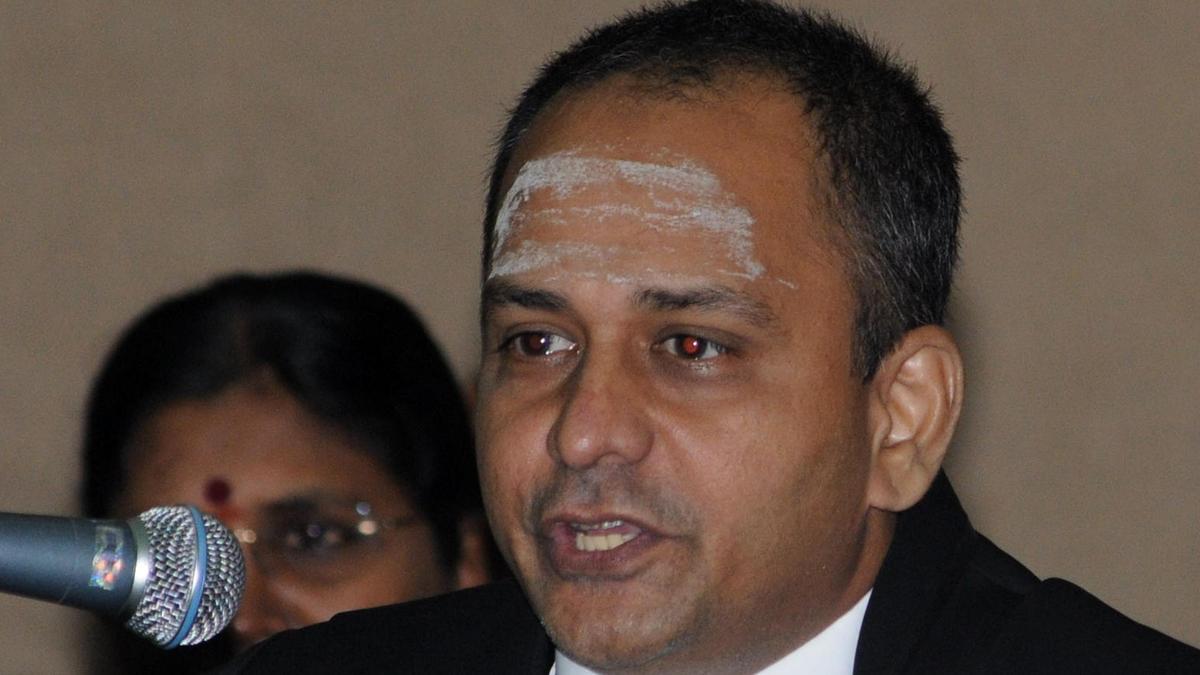
Four months before the Thirupparankundram row, MPs of the INDIA bloc wrote separately to President Droupadi Murmu and then Chief Justice of India B.R. Gavai about the conduct of Madras High Court judge, Justice G.R. Swaminathan, accusing him of favouring advocates from the Brahmin community and those associated with “right wing ideologies”.
The identical letters were dated August 11, four months before the Opposition sought a motion in the Parliament to remove Justice Swaminathan, a judge on the Madurai Bench of the High Court.

These letters said Justice Swaminathan’s conduct amounted to “proved misbehaviour and gross misconduct”, affecting the impartiality, transparency and the secular functioning of the judiciary.
“During his tenure as a Single Bench Judge, Justice G.R. Swaminathan is perceived to have consistently prioritised listings and time slots for a specific group of advocates, particularly those from the Brahmin community and those aligned with right wing ideologies,” the letters said.
The MPs said the pattern of the judge’s conduct showed a “caste-based preference”, contributing to a perception of exclusivity and caste alignment in judicial functioning.
The spotlight is trained on the judge after his recent order directing the authorities of the Subramaniya Swamy Temple at Thirupparankundram, Madurai, to ensure that Karthigai Deepam was lit at a deepathoon (pillar) near a dargah atop the hill.
“Several rulings and observations by His Lordship reflect a discernible ideological leaning right-wing political philosophy. While judges may hold personal beliefs, these must not influence judicial reasoning, particularly in cases involving fundamental rights and minority protections as enshrined in the Constitution,” the letters said.
The letters quoted several instances which, according to them, displayed the “ideological partisanship” of the judge. One of them, the letters said, was in a case to permit ‘Annathanam’ (donating free meals to the devotees) and ‘Angapradakshinam’ (rolling over plantain leaves left by devotees after eating) at a temple in Karur.
“His Lordship’s order permitted this uncivilised practice, superseding a prior Division Bench judgment which had banned the same practice at the same temple as inhuman… This perception of ideological partisanship undermines public trust in judicial neutrality and challenges the expectation that courts remain independent of political or social affiliations,” the letters had said.