Wars are not decided by statistics alone. Nor by perception, or claims of dominance. They are decided by whether strategic objectives are set, pursued, and ultimately achieved.
What is unfolding in the West Asia war is far more complex than a conventional win or loss. If the fighting were to stop today, identifying a clear victor would not just be difficult; it would be misleading. The more accurate answer may well be: none.
We have all the cards; Iran has none. They have been “eviscerated”, US President Donald Trump said, claiming Iran’s navy is gone, its air force in ruins, and much of its leadership eliminated.
But if that assessment holds, a deeper question emerges. What, then, is Washington still chasing, and why the push, as indicated by Marco Rubio, to extend the conflict by weeks?
If everything for Washington has been as smooth and successful as Donald Trump suggests with his “we are winning so much” remark, then which nation fires its Army chief in the middle of a war? Such decisions have occurred before, but typically when things are not going well.
This raises a critical question: Does Washington itself sense setbacks? That concern is reinforced by the move from Pete Hegseth, who on April 2 removed the US Army Chief of Staff, Gen. Randy George, along with two other senior generals, as the Iran war continues.
To answer all this, India Today’s Open Source Intelligence (OSINT) team conducts a mid-war assessment, not just tracking battlefield losses, but examining the original strategic goals of both sides, how those goals have evolved, and what metrics, beyond raw numbers, will ultimately define the outcome of this conflict.
What defines the United States’ strategic endgame in Iran?
The United States had a clear set of strategic objectives when it came to Iran. At the forefront is preventing Tehran from becoming a nuclear weapons power. Closely linked to this is the long-standing goal of curbing Iran’s missile capabilities, particularly any pathway toward an intercontinental ballistic missile system that could reach the American homeland.
Washington’s adversarial relationship with the Ayatollah Khamenei-led regime, along with the need to secure its strategic assets across the Gulf Cooperation Council (GCC) region, further shapes its posture. Protecting these interests remains central to US policy in West Asia.
However, at its core, the objective has always been nuclear containment.
The US aspired regime change in Iran. Was the goal achieved?
Regime change, by definition, is the deliberate effort to replace or fundamentally alter a country’s governing leadership or political system. Setting aside questions of legality or morality, has the United States achieved this, even after Iran lost at least 15 members of its key leadership within the first 30 days of the war?
The answer is: the objective of regime change remains unfulfilled, with continuity of power firmly intact.
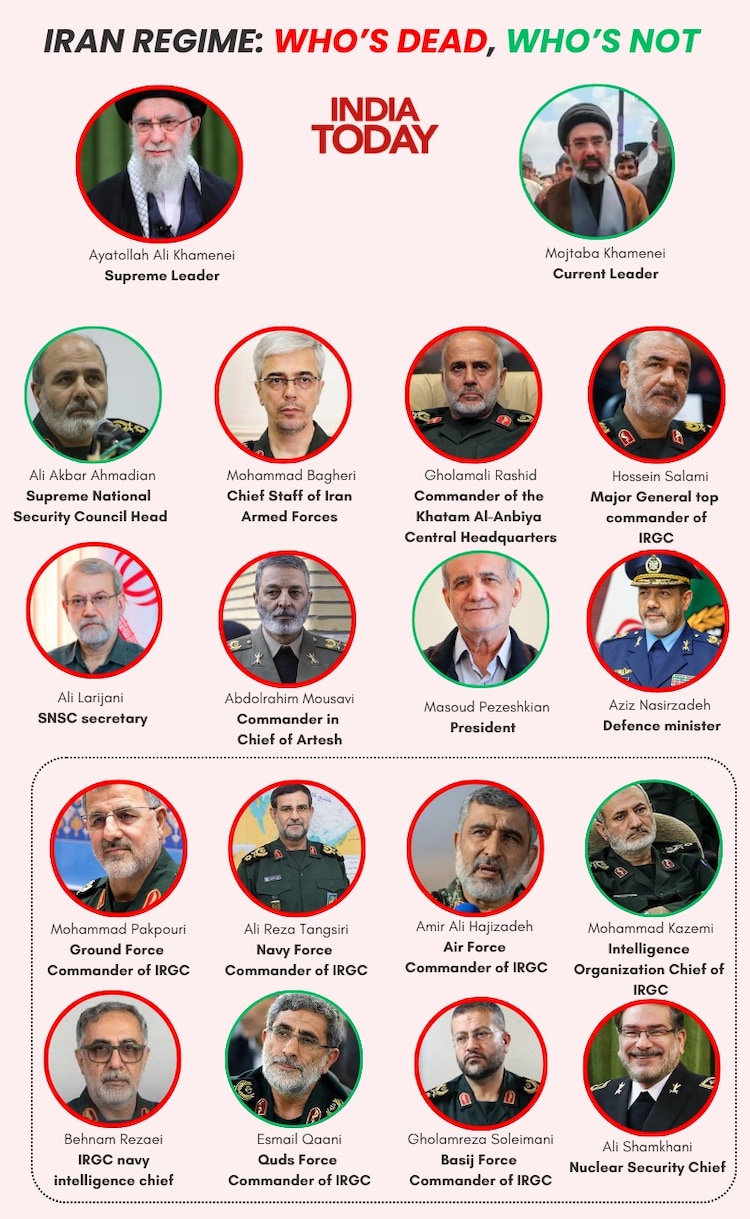
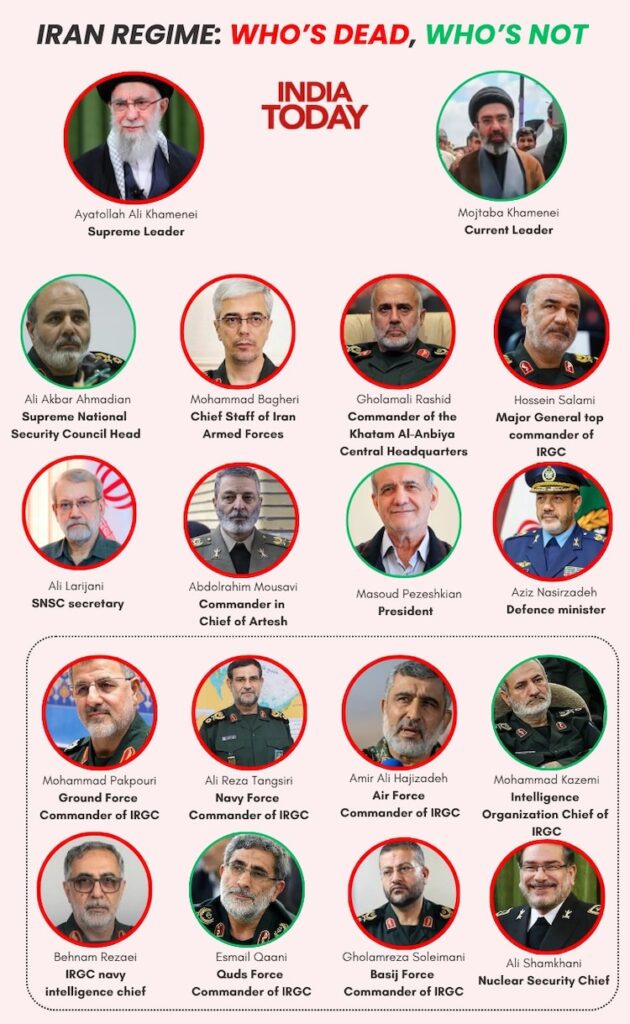
On February 28, the very first day of the war, the US and Israeli coordinated strikes launched a decapitation campaign targeting the top leadership of Iran’s Islamic regime. Among those eliminated were Supreme Leader Ayatollah Ali Khamenei and key figures across the military and security establishment.
In the days and weeks that followed, additional high value targets were eliminated, including Mohammad Pakpour, commander in chief of the IRGC, Ali Shamkhani, a close adviser to Khamenei, Aziz Nasirzadeh, Iran’s defence minister, Ali Larijani, secretary of the Supreme National Security Council, Behnam Rezaei, the Revolutionary Guards’ navy intelligence chief, and Esmail Khatib, Iran’s intelligence minister, among others.
Leaders have been eliminated, but they have also been replaced. From the Supreme Leader to the intelligence apparatus, the next line of leadership appears constantly prepared, ensuring continuity. As a result, the US has failed in its objective of regime change even after 1 month and 4 days into the war. Those who are today ruling Tehran are in no way even slightly favourable to either Washington, Tel Aviv or, for that matter, the entire West.
Has the US neutralised Iran’s air force and navy?
At this front, the answer appears to be yes. While the Iranian navy retained some operational substance, its air force never posed a credible deterrent in the first place.
Operationally, the US has neutralised Iran’s air force and navy.
US Central Command reports 12,300+ targets struck and 13,000+ combat flights. At sea, 150–155+ Iranian vessels have been damaged or destroyed, including 25+ ships sunk and 16 mine layers eliminated. Admiral Brad Cooper stated 92% of Iran’s largest naval vessels have been degraded, while two-thirds of its missile, drone, and naval production facilities and shipyards have been damaged or destroyed. One naval district, Bushehr, has been heavily hit, and Iran’s navy chief has been killed.
US Defense Secretary Pete Hegseth said Iran’s “surface fleet is no longer a factor” and that its submarines, “they once had 11, are gone.” These were largely mini and diesel-electric submarines, designed for shallow waters like the Strait of Hormuz, used for mine laying and torpedo attacks.
Additionally, most Iranian attacks, whether missiles or drones, are being launched from land, with little to no evidence of sea-based launches. There is also no confirmed damage to US assets at sea. Taken together, this suggests the Iranian Navy has little operational role left, indicating severe degradation from US-Israel strikes.
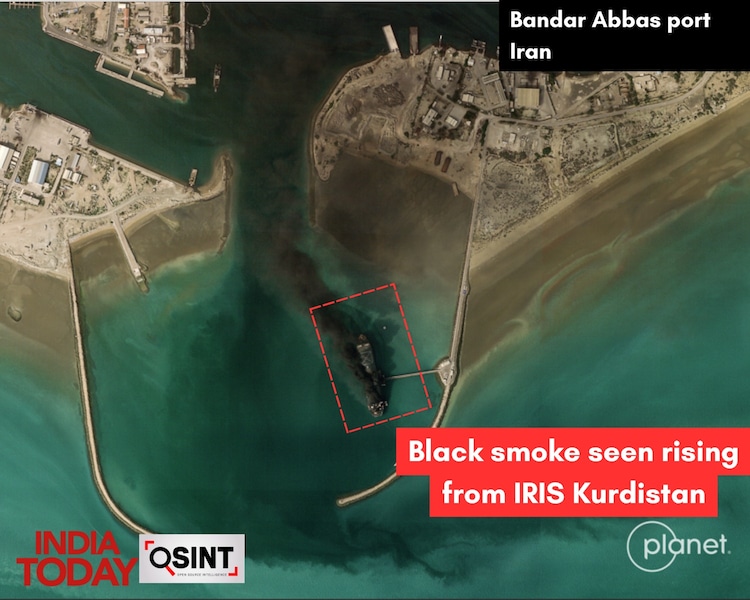
In the air domain as well, there has been no significant aerial activity from Tehran. Whatever limited air power Iran had, including ageing jets from the pre-Islamic Revolution era, some of them US-made, has barely been visible. Since the war entered its second week, aerial activity has remained isolated and almost negligible.
The lack of credible data does not allow precise quantification of losses, but the damage is clearly real, and its effects are visible.
Radar and SAM systems have been destroyed based on satellite imagery, over 70 per cent of air defence systems are assessed to be degraded, and launch activity has dropped by more than 90 per cent.
Iran’s missile and drone threat: degraded but not decimated
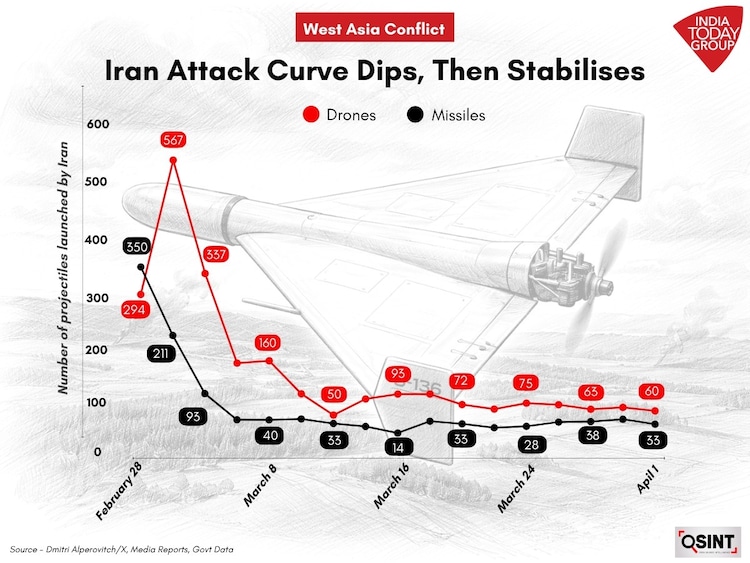
Despite sharply reducing Iranian launches by nearly 90%, US operations have failed to eliminate Tehran’s missile and drone threat. At its peak on March 2, Iran fired 778 projectiles, including 567 drones, marking a saturation phase aimed at overwhelming defences.
Within two weeks, daily launches dropped to around 100 and have since stabilised in the 80-100 range, indicating a shift to controlled, sustained strikes rather than full disruption.
Iran is now launching nearly 90% fewer projectiles than it did at the start of the war. If Washington’s assessment is to be believed, this decline reflects a significant degradation of Iran’s launch capability.
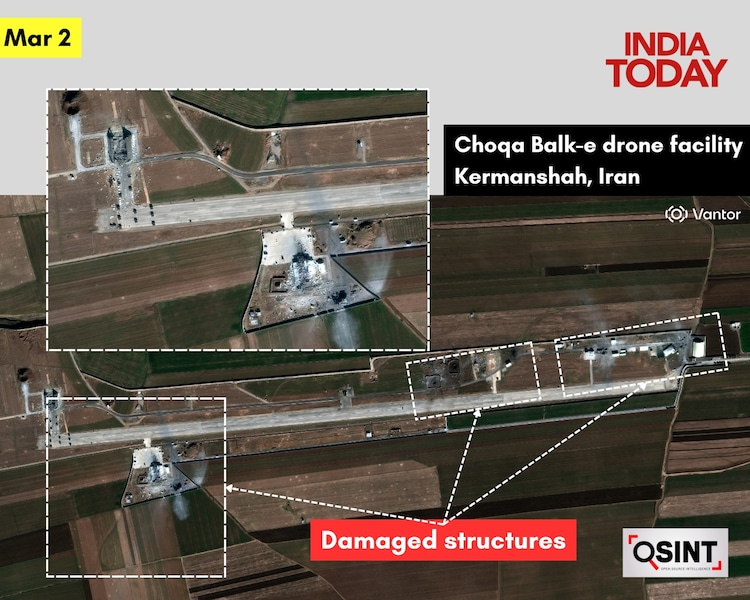
But, despite degradation, Iran continues to respond consistently, suggesting the objective remains unmet. Assessment by the US intelligence community suggests that roughly half of Iran’s missile launchers remain intact, and thousands of one-way attack drones are still available despite weeks of strikes. “They are still very much poised to wreak absolute havoc throughout the entire region,” one source said, adding that some launchers may be buried but not destroyed.
The pattern is striking. The UAE, owing to its proximity to Iran, has borne the brunt, accounting for over 40% of Tehran’s projectiles, with a significant share landing next door.
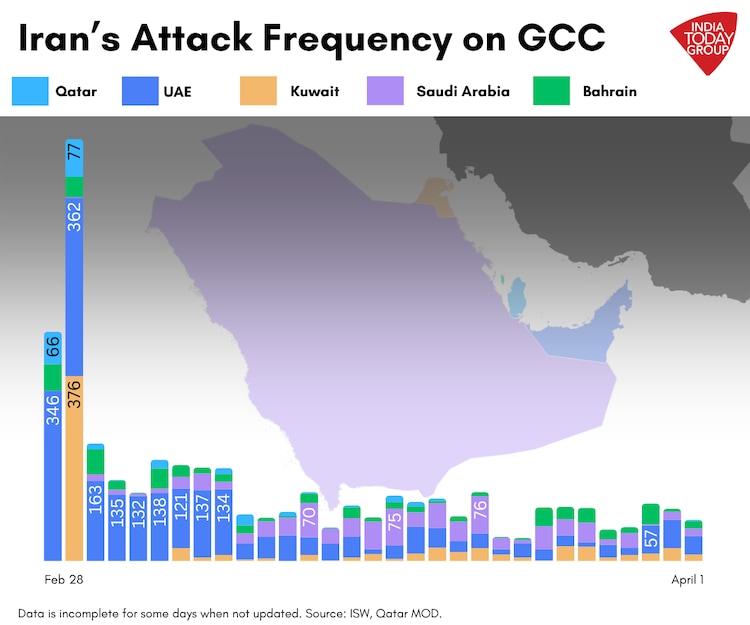
So far, Iran is estimated to have launched over 6,000 projectiles, including missiles and drones, of which the UAE alone has faced more than 2,400.
When combined with strikes across other Gulf countries, a clear picture emerges. In terms of exposure to incoming fire, it is not Israel, but the UAE that has been at the forefront of absorbing the bulk of these attacks.

Even after 34 days of nonstop targeting, the US and Israel don’t have complete control of the Iranian airspace, thanks to the Iranian Man-Portable Air Defence System (MANPADS), which have been difficult to spot and eliminate by air strikes. Iran has domestically produced Chinese versions of MANPADS, which don’t rely on radars and can be used to target low flying aircrafts by a single person.
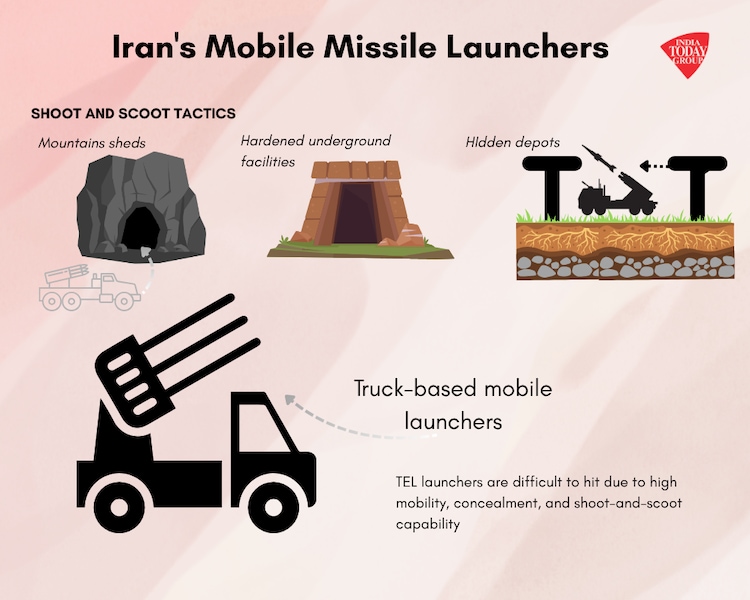
Another element is Iran’s use of dispersed transporter erector launcher (TEL), which has been difficult to map and target for the US and Israeli air forces.
Iran’s ability to project power beyond its borders
All the data points and statistics are valuable analytically, but the real picture emerges from how reactions and conversations have shifted on the ground. Today, global energy disruption sits at the core of the conflict, with the Strait of Hormuz as its axis.
The US has failed to limit Iran, as it continues to impose tangible economic and strategic costs on the region and beyond.
At least 20 energy sites across 8 countries in the region, a minimum of 25 vessels in the Strait of Hormuz arc, and one critical energy rerouting facility, the Abu Dhabi Crude Oil Pipeline, also known as ADCOP or the Habshan Fujairah pipeline, have been targeted by Iran so far.
Tehran appears to have turned geography into a weapon, one that, for now, has no clear interceptor. It has not just threatened the chokepoint, but also strained the entire energy supply chain flowing through the region. With strikes on vessels, pressure on shipping routes, and attacks on energy infrastructure across the Gulf, Iran has imposed a tangible cost, not just on direct participants but also on those indirectly involved, using economic risk as leverage against Washington.
This disruption is backed by sustained strikes. Iran has launched thousands of missiles and drones across the Gulf, targeting US bases, energy infrastructure, ports, and industrial hubs.
Open-source data suggests that at least 17 US-linked sites have been damaged, including air bases, radar systems, naval facilities, and diplomatic compounds, many struck multiple times. Even a single strike on the US Navy’s Fifth Fleet headquarters in Bahrain caused around 200 million dollars in damage.
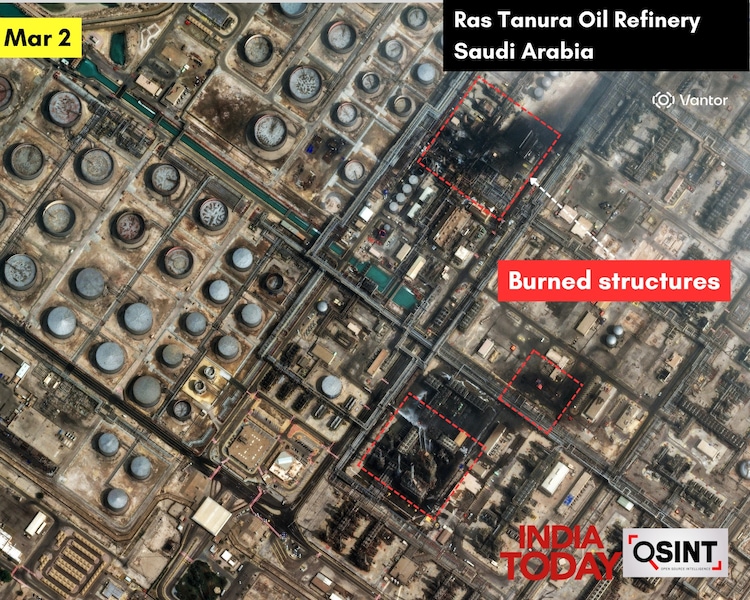
Oil and gas infrastructure, particularly in the UAE and Saudi Arabia, has also been targeted, with strikes near sites like Al Ruwais pointing to efforts to disrupt export capacity.
Destroying Iran’s nuclear program was a US strategic goal, but it has only been derailed
The evidence suggests that Iran’s nuclear program has been degraded and delayed, but not neutralised. Had it been fully eliminated, there would be little reason for Washington to push for an extension of the conflict by weeks.
So far, the US appears to be failing at the nuclear containment front, yet again.
All of the US offensives against Iran have always been about the nuclear question. From Iran signing the Nuclear Non-Proliferation Treaty as a non-nuclear weapons state in 1968, to the emergence of Natanz in 2002, and the 2015 Joint Comprehensive Plan of Action, later scrapped under Donald Trump, the objective has remained consistent.
US and Israeli strikes have inflicted significant damage on key sites such as Fordo and Natanz last year, targeting underground enrichment infrastructure and setting the program back. However, the core capability appears to endure.
An analysis by the Bulletin of the Atomic Scientists suggests that possibly 540 kilograms of enriched uranium, which Iran has, may have been moved to safer, heavily shielded locations around Isfahan, likely even before the 2025 strikes. Combined with the deeply buried and dispersed nature of Iran’s nuclear infrastructure, this limits the effectiveness of conventional airstrikes.
Much of this infrastructure is designed for continuity, not vulnerability, making complete destruction difficult to verify.
This is why the focus has now shifted. The United States remains in pursuit of Isfahan, where both material and infrastructure are believed to be more secure and far harder to neutralise. Failure on this front would mean a prolonged war, not the lasting peace many seek in the region.
US could not rally NATO and allies in the fight against Iran
Has the US secured support from allies and partners? The answer is a clear no.
Donald Trump has repeatedly pushed allies to join the war, then scaled down that ask to logistical support and access to bases, before moving to pressure and public criticism. From urging partners to help secure the Strait of Hormuz to openly questioning their resolve, the messaging has shifted from persuasion to frustration.
The latest remark underscores that strain. “I was never swayed by NATO. I always knew they were a paper tiger, and Vladimir Putin knows that too,” Trump said in his address to the nation while hinting that he is seriously considering the US’ ouster from the dedicated collective security alliance.
Even Gulf Cooperation Council countries facing direct attacks have largely stayed out of the conflict militarily. Despite absorbing missile and drone strikes, none have actively participated in offensive operations. At most, a few have pushed Washington to act more decisively against Tehran, driven by their own strategic objectives.
If the US is not the victor, neither is Iran
It is not a zero-sum game, at least for now. This war sits in a space where both sides have had their moments, yet neither has achieved its core strategic objectives.
Iran was not the initial aggressor and did not enter the conflict with a clearly defined objective. But once attacked, the burden shifts. A state must define not just what it seeks to gain, but what it cannot afford to lose. On that count, Iran appears to be falling short across multiple fronts.
Within the first phase of the war, over 15 members of Iran’s top leadership were eliminated, including Supreme Leader Ayatollah Ali Khamenei on the very first day, February 28, in a coordinated decapitation strike. The impact was significant enough to alter the visible face of the regime, even though the Islamic regime itself has endured through rapid succession and institutional continuity.
Last year, two of Iran’s nuclear facilities were heavily struck, and this year, the city of Isfahan, which reportedly houses enriched uranium, has witnessed multiple strikes.
Alongside this, Iran has suffered over 1,900 casualties, its navy has been degraded to a level where it is no longer considered a credible threat, and its air capability has been severely reduced. Launch capacity has dropped by nearly 90 per cent, while its missile and drone arsenal, barring isolated incidents, has largely failed to penetrate Israeli defences or cause meaningful damage across GCC countries hosting key US assets.
In effect, while Iran has demonstrated reach, it has struggled to translate that into decisive impact.
– Ends
Tune In