It was the pen-drop heard around the world — or at least, the web.
Recently, the popular dine-in theater chain Alamo Drafthouse announced that it would be “retiring the pen and paper order card model and call buttons” in February 2026, and “shifting to only taking orders via QR code.” For fans of Alamo, the news didn’t quite feel like what CEO Michael Kustermann declared “a custom, smart, and flexible way to strengthen [the business].” It felt like a nail in the coffin of another analog dream — the kind that differentiates “going to the movies” from just watching a film on a streaming service. One of Alamo Drafthouse’s most beloved qualities was its sense that you were at the cinema, but also in a restaurant.
Reddit threads lit up with hundreds of comments, with most objectors citing that they would miss the “phoneless, talkless movie going experience,” with many concerned that they didn’t “get the best cell reception in some of the theaters.” The new system assumes all customers are carrying a smartphone, and one Alamo line cook chimed in to say that “the QR codes have been almost universally negative in the Raleigh kitchen. Less flow to the orders coming in, more mistakes.” The Austin Film Critics Association also shared a lengthy statement condemning the change, which it called “the antithesis of what made the Drafthouse what it is.” The letter was reposted on X by Elijah Wood, who called Alamo’s decision a “misguided blunder.”
All of this is also happening on the heels of the company’s post-pandemic bankruptcy declaration, and amid more whispers that AMC and IPIC are “winding down” dine-in theater operations, the question emerges: Where does the dine-in movie experience go from here? With movies on our minds in awards show season — as we currently are, with the Oscars taking place on March 11 — will we still get our Alamo drafthouse Lord of the Rings feast?
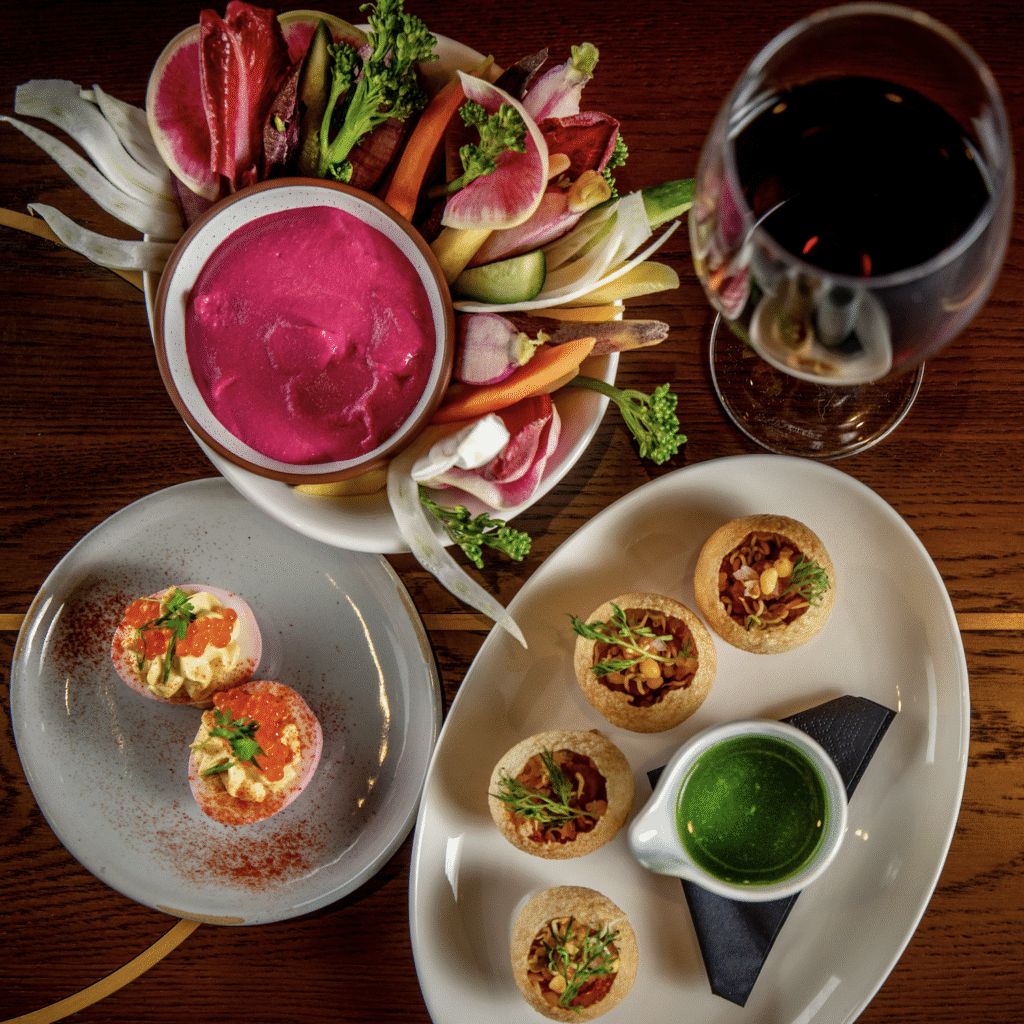
The next step seems to be a move towards more intimate and curated dine-in experiences. This past October, Alamo’s owners opened Metro Private Cinema in Chelsea, which offers private movie theater “suites” for groups of four to 20 people. The menus start at $100 per person and include themes to celebrate events such as Valentine’s Day and the Academy Awards, the latter of which will include dishes inspired by this year’s biggest films, such as deviled eggs with chicken chicharrón and dill (Sinners) and kvæfjordkake, a vanilla sponge cake with diplomat cream and almond (Sentimental Value). As Eater editor Melissa McCart noted when the theater opened, the price of the experience adds up quickly. “Say you wanted to book a screening for late November: The initial booking for a room for four to six people is $300 at 7:45 p.m.,” she wrote. “Then you’d choose among themed dinners or the fall menu for a family-style experience, plus $25 to $50 per person for beverage pairings or a la carte drinks.” In total, that’s roughly $1,200 for dinner and a movie for a party of six.
Metro Private Cinema isn’t alone in this endeavor to create a high-end dinner-and-a-movie experience that’s on a more luxurious tier than, say, ordering curly fries during Avatar. As Eater reported in March of 2025, Cannes Cinema, the former private theater run by Fouquet’s New York in Tribeca also started selling tickets at $100 a head for two drinks and movie, or $165 for the movie plus a prix fixe dinner at the hotel’s French fine dining spot, Brasserie Fouquet’s. The multicourse, dine-in theater concept Fork N’ Film began in LA in 2023, and now operates in several more U.S. cities (including San Francisco, Las Vegas, and Scottsdale), as well as in London, England. Its founders explain that during COVID lockdowns they felt inspired to start a theatergoing experience where viewers dine on “dishes [recreated] from iconic nostalgic movies” that are timed and “[served] exactly as they appear on-screen.” Guests can experience “Remy’s ratatouille and Tiana’s beignets” from The Princess and the Frog, with tickets going for about $200 a head.
While these iterations of cinematic dining may be the most luxurious we’ve seen thus far, dine-in theaters have been around in some form for nearly a century in the United States. Great Depression-era theaters discovered that food sales provided lucrative profit margins for struggling ticket sales (the invention of mass-produced paper plates and cups also helped), and when Alamo was founded in 1997, it was with a preciousness over the sanctity of a moviegoing experience that was “by fans, for fans” per the founder and former CEO Tim League. The Austin, Texas-based chain expanded to a slew of major cities in the 2010s, including New York and San Francisco (there are currently 40 locations), and helped catalyze a dine-in theater renaissance in the United States that included AMC Dine-In (formerly “Fork & Screen,” established in 2008 in Buckhead, Georgia); the Florida-based IPIC Theaters, whose dine-in services started in 2010; and Brooklyn’s Nitehawk (founded in 2011) and Syndicated (opened in 2016).
Like Alamo Drafthouse theaters, Nitehawk and Syndicated offer small dining tables at every seat where movie-viewers can order full meals during their showing — from short ribs and nachos to cheeseboards and craft cocktails. Metrograph cinema in Manhattan was founded in 2016, and while its menu is notably more elevated than your typical movie theater snack selection (think small plates of cod cakes and steak tartare), it exists in an adjacent restaurant, not as a dine-in experience. When asked about this decision, the Metrograph publicist Kaila Hier told Eater, “We really pride ourselves on being committed to separating the dining and viewing experiences at Metrograph. Not to give any shade to our dine-in peers, but Jeanne Dielman was not meant to be watched alongside the sounds of someone’s lips smacking on a burger in the dark. ”
Operating dine-in theaters is expensive, and movie theaters in general have been struggling to boost attendance numbers for years, even before the pandemic began (recent data cites the popularity of streaming services as a primary culprit). The pressing consolidation and monopolization of studio ownership has also raised concerns that the fate of big-screen cinema hangs in the balance, especially in light of last week’s news about Paramount’s $111 billion proposed buyout for Warner Bros. Discovery. But there are hopeful signs: Gen Z’s frequency of attendance grew by 25 percent in 2025 — the largest increase of any age group, and a sliver of hope for cinephiles.
Is this the new, gilded direction a positive or negative sign for the survival of dine-in theaters? As lofty as their price tags may be, their existence reflects a response to a desire for in-person experiences, and clearly, an enhanced level of menu curation and, sometimes, exclusivity. Whether or not you get a seat at the screen-side table, however, will depend on just how much you’re willing to pay to eat the chocolate cake from Matilda.