Makki Ki Roti is a rustic, traditional Punjabi flatbread made from cornmeal/maize flour (makki ka atta), kneaded into a soft dough and patted or rolled into rounds. Cooked on a hot tawa or tandoor, it develops a golden, slightly crispy exterior with a tender, earthy bite. Traditionally paired with Sarson ka Saag and a dollop of White Butter, this hearty and flavorful unleavened bread is a winter staple in Punjabi cuisine.
About Makki Ki Roti
Makki ki roti is an unleavened bread made with maize flour. Traditionally cooked in a tandoor or on a tawa (flat skillet), it is a well-loved flatbread from Punjab. The name comes from the Punjabi word for maize flour – makki ka atta.
While maize means corn, makki ka atta differs from what is known as “cornflour” in India. Cornflour is actually cornstarch, whereas makki ka atta is finely ground cornmeal.
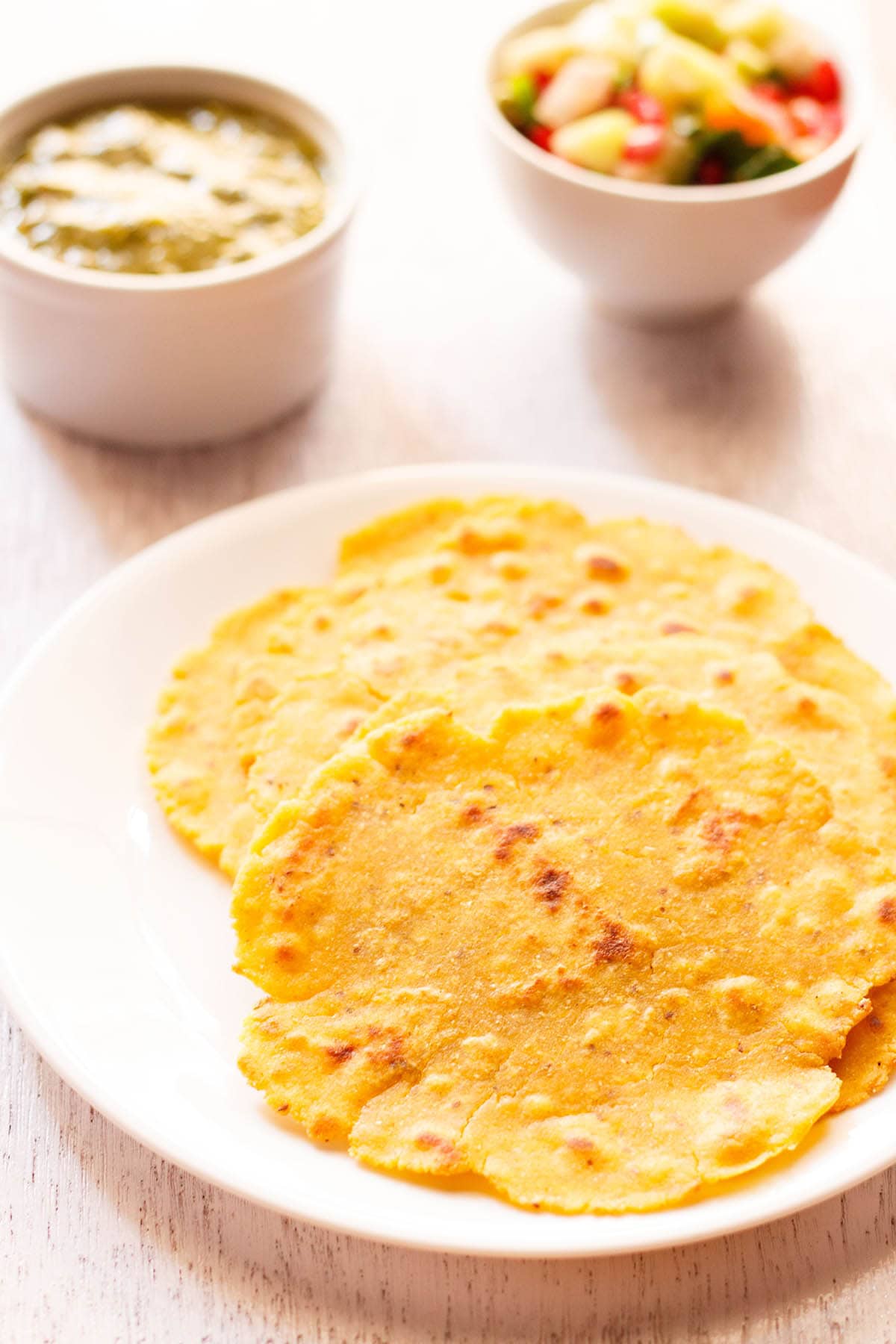
Makki ki roti is most often served with Sarson ka Saag (sautéed and spiced mustard greens) and a few jaggery cubes; this delicious combo is quite famous and is very healthy.
Makki ki roti goes well with any saag, including Palak Saag (made with spinach), bathua saag (cooked with goosefoot leaves) or Chane ka Saag (prepared with chickpea greens). While saag can also be served with Paratha, these maize-flour flatbreads are always the first choice.
Makki ki roti can also be served plain for breakfast with a cup of Chai. You can also make these flatbreads with some chopped greens like fenugreek (methi), spinach (palak) or goosefoot leaves (bathua) to the maize flour and make parathas. I usually make this for breakfast in the winters.
Makki di roti is a bit heavy on the stomach when compared with other flatbreads, so I like to add carom seeds (ajwain) to help with digestion.
Maize flatbreads have to be cooked properly, or else you might get stomach pain. I learned how to make makki ki roti from my Punjabi mother-in-law, and the method shared here is exactly the way we make it at home.
Hot water is added to the dough to make the makki ka atta more pliable and easier to roll. If you are having difficulty, adding a bit of whole wheat flour (atta) can also make the roti easier to roll.
These maize flour roti can be a little difficult to work with when you first start. As such, I have shown two methods of rolling makki ki roti in the step-by-step photos; use whichever method makes the most sense to you.
I also suggest that you start by making small roti that are easier to handle and then slowly increasing the size of the makki di roti as you become more comfortable.
How to make Makki ki Roti
Making makki ki roti takes a little practice, but once you get the hang of it, the process is straightforward. The first step begins with preparing a smooth and pliable dough from maize flour.
Make Maize Flour (Cornmeal) Dough
1. In a mixing bowl, take 2 cups maize flour or fine cornmeal (200 grams), 1 teaspoon carom seeds (ajwain) and salt to taste. Mix everything together with a spoon.
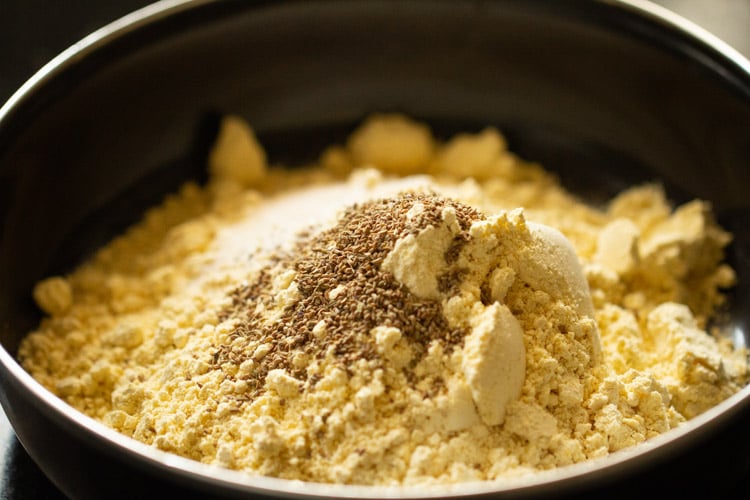
2. Heat 1 cup water in a separate pan till it comes to a boil. Add this hot water to the flour mixture.
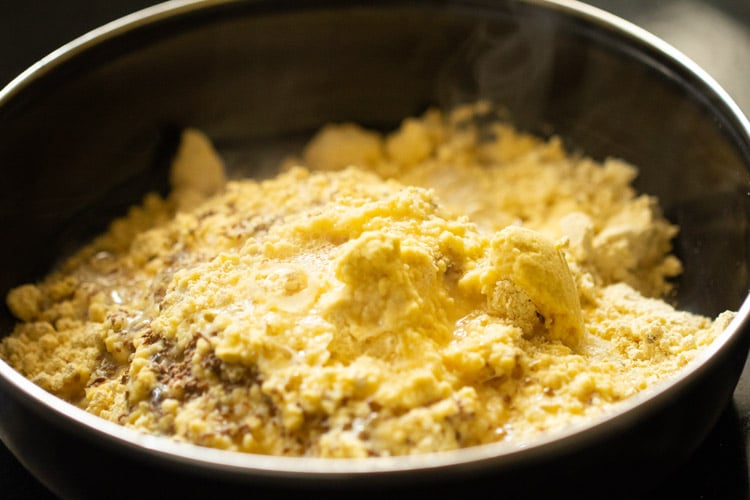
3. Mix with a spoon. Cover and keep aside till the dough cools enough to handle.
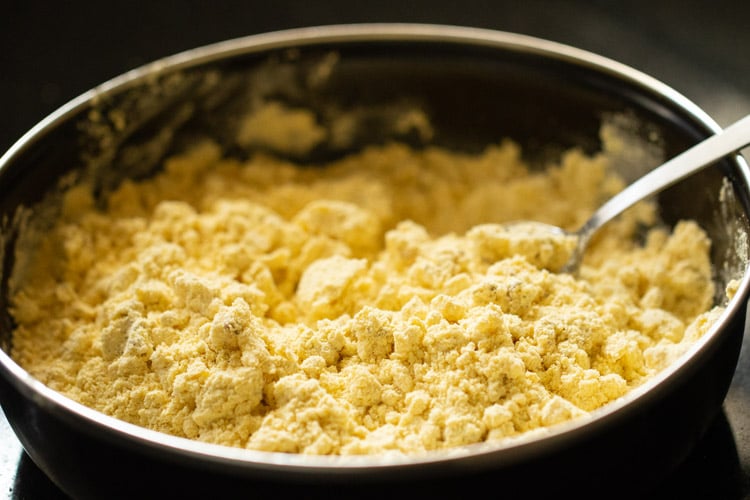
4. When the mixture is cool enough to handle, begin to knead to a smooth yet firm dough.
Troubleshooting Tip: If the dough looks or feels dry, then add some warm water. If the dough feels sticky, then add a few tablespoons of maize flour.
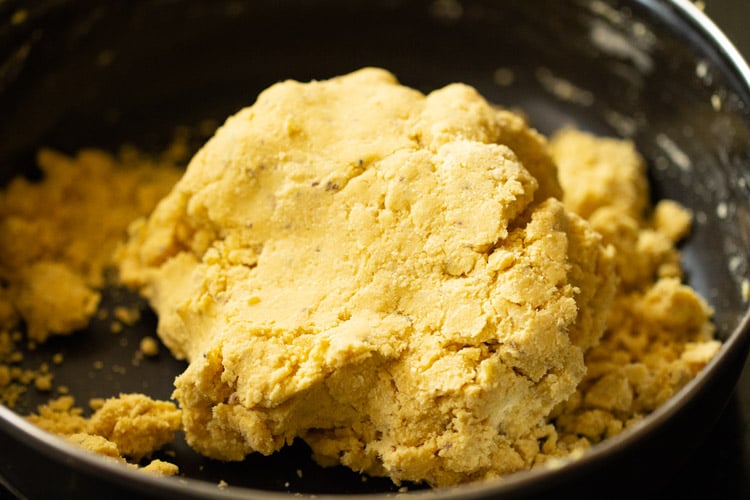
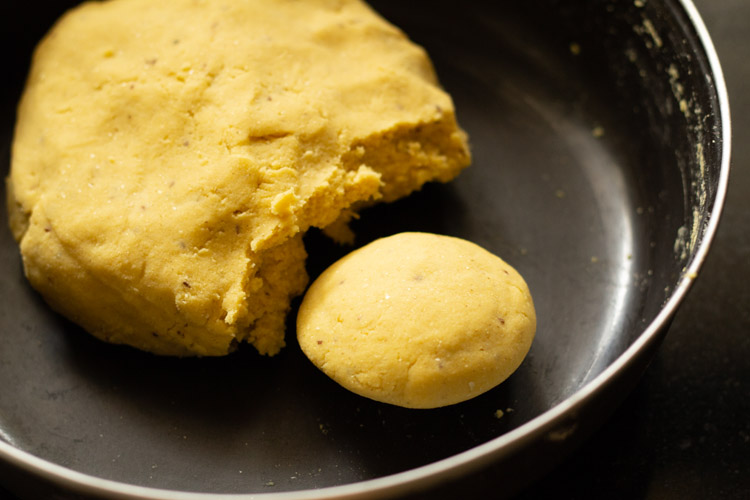
5. As you can see in the photo below, the final dough will have some fine cracks present. This is to be expected.
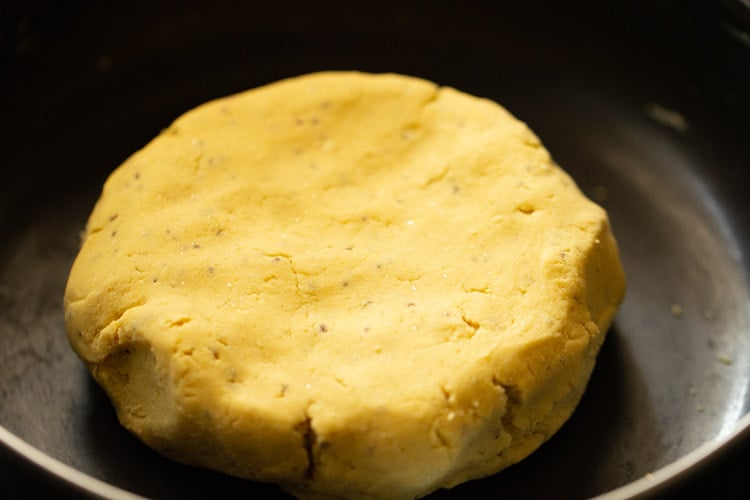
6. Make medium sized balls of dough, shaping them into a neat balls and flattening them slightly with your palm.
Rolling Method 1 – Rolling Pin
7. Sprinkle some maize flour on the rolling board. Place the dough ball on the rolling board. Then sprinkle some maize flour on the dough ball also.
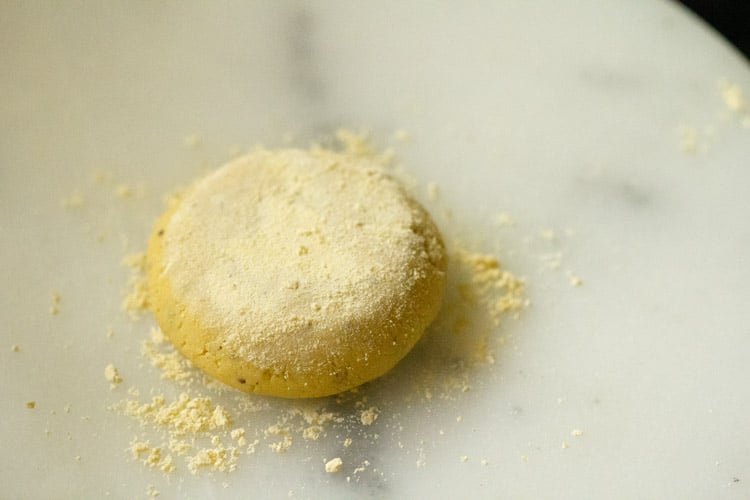
8. Begin to gently roll with a rolling pin (belan). Sprinkle some flour. Now with the rolling pin (belan), slowly roll.
Using ziplock bag: If you don’t have a rolling pin, you can also “roll” the makki ki roti using a ziplock bag. Place the bag on a cutting board, back of a metal tray, or on a surface you can move.
Place the dough ball in the bag. Press it slightly with your hands until flat. The using the rolling pin roll gently to about a size as thin as a tortilla. Move the rolling board and roll again. This is to ensure that all the sides of the makki roti are evenly rolled.
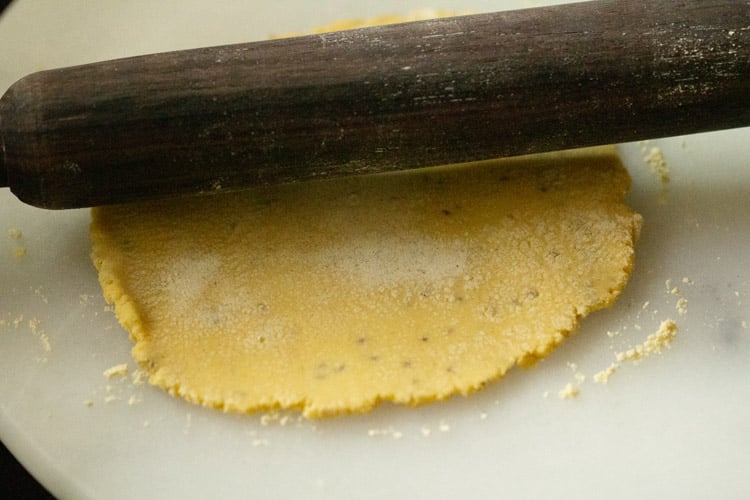
9. Roll into small- to medium-sized rounds. They should be roughly the size of a phulka or chapati, but not very thin.
The roti should not break if you handle them carefully. If the rolling pin is sticking, add more flour as required.
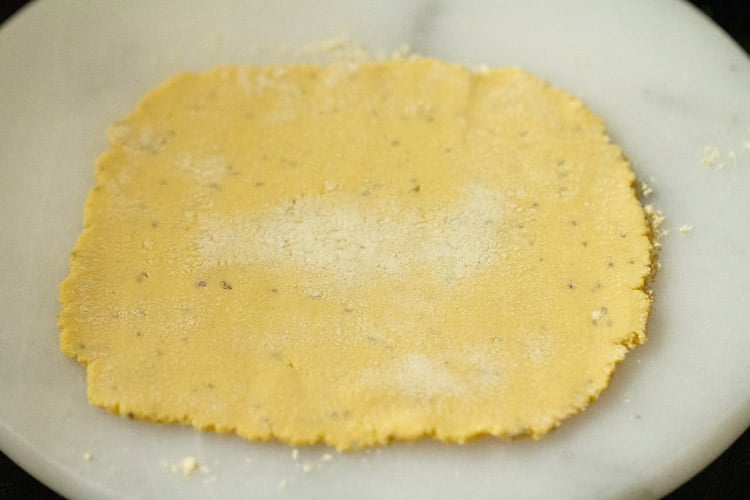
Rolling Method 2 – Hand Shaping
10. Makki roti can also be made by patting the dough. To start, sprinkle some maize flour on the dough ball and on the rolling board.
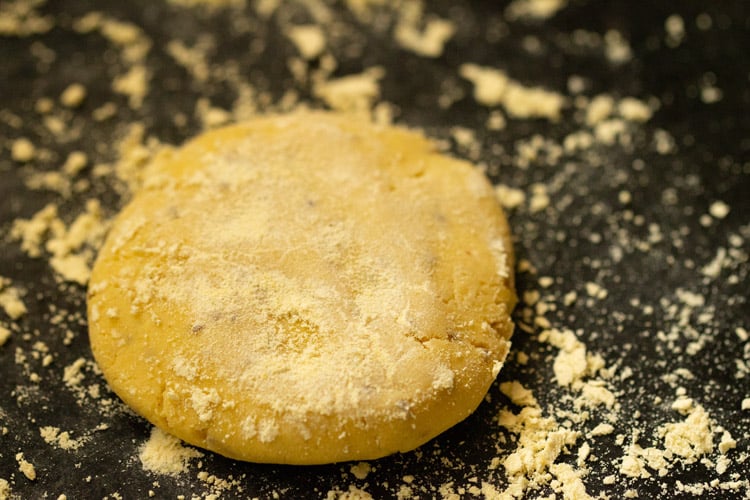
11. Now, with your fingers, gently press and pat the dough. As you press the dough, also move it clockwise.
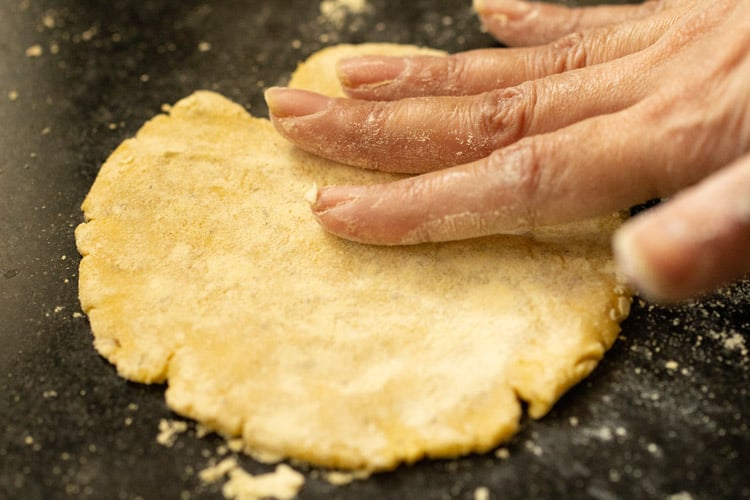
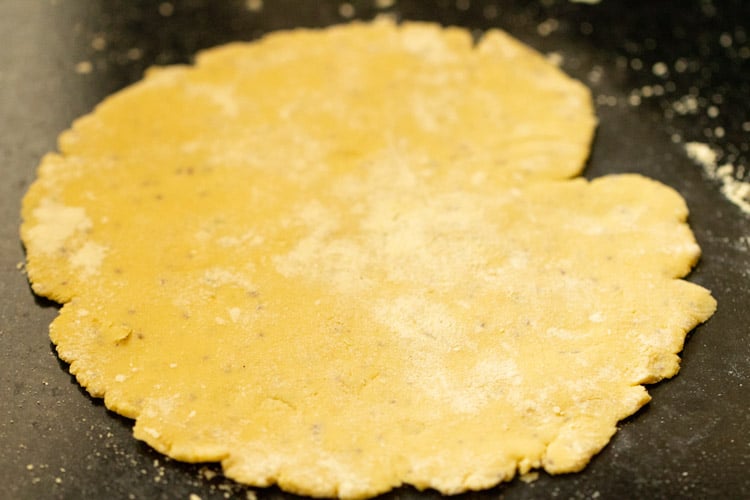
12. Continue to press and pat the dough till you get a neat roti. Do not make thin but slightly thick roti. When the dough is patted, the edges won’t be as even as if you had rolled it; this is fine.
If you are experienced in making the roti by pressing the palms of your hands together the way our grandmothers and great-grandmothers used to, feel free to make the makki roti this way too.
Cook Makki Ki Roti
13. Now spread about 1 to 2 teaspoons of ghee or a neutral flavored oil on a hot tawa or skillet or frying pan. Cook the roti on medium to medium-high heat.
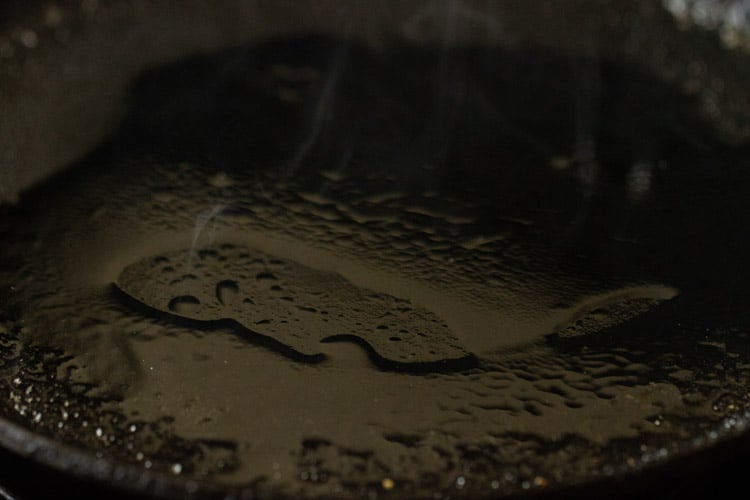
14. Gently place the makki di roti on the tawa. If there is a crack in the roti dough, then gently pat that portion with a few drops of water to seal it shut.
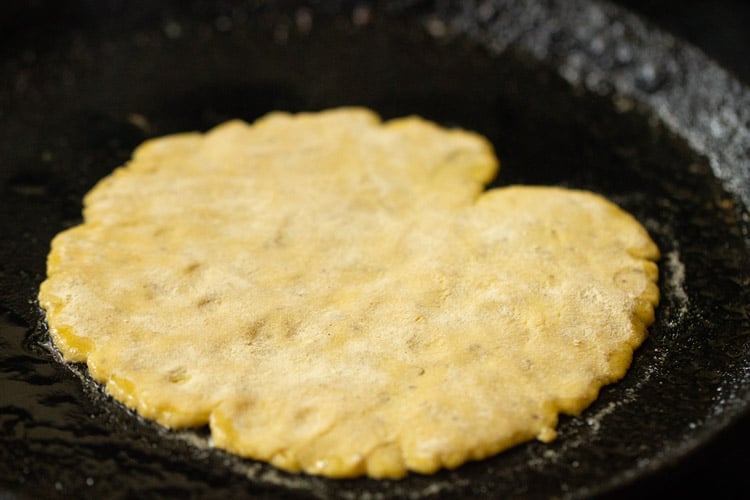
15. When one side is a little browned, flip the makki roti with the help of a spatula.
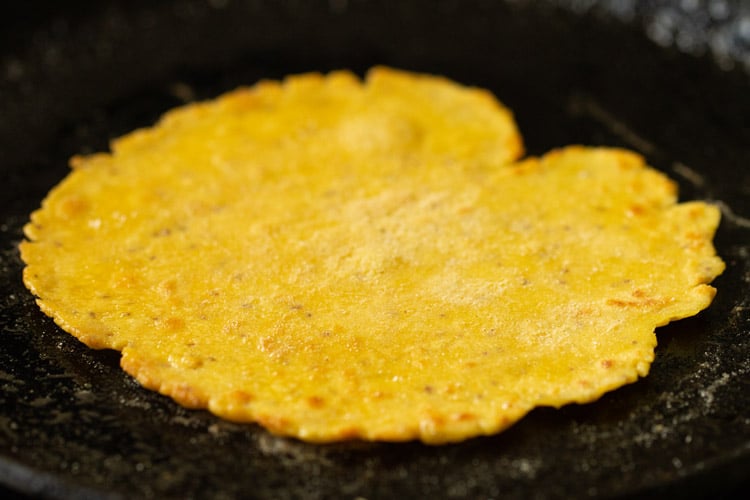
16. When the other side gets browned, flip again. Flip for a couple of times till the makki di roti is well browned and cooked from all sides. Drizzle a bit of ghee on the sides whilst cooking the roti.
If the dough is kneaded well, the makki di roti will start puffing up. Press the edges with a spatula so that the edges are also cooked well. Continue making all rotis this way until the dough is over.
If you like multi-tasking, you can roll and roast the rotis simultaneously. If you prefer working in stages, you can also roll all the makki ki rotis first. Cover them with a kitchen napkin to keep them from drying out, and then roast them one by one.
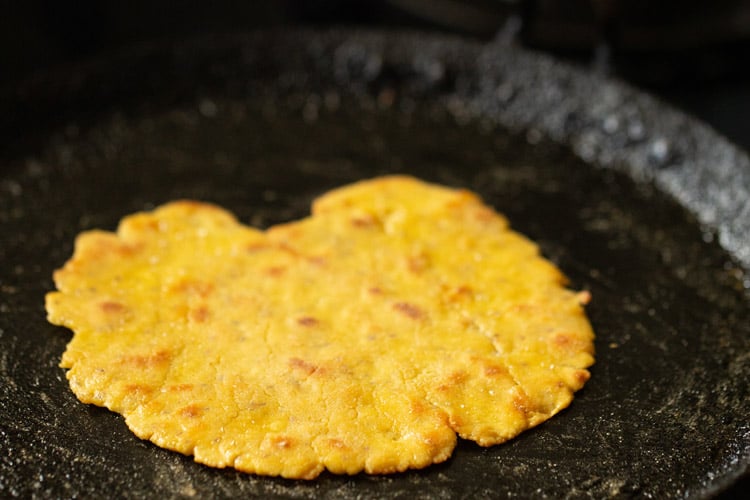
Serve the makki ki roti hot with saag and jaggery cubes. We also like to add some white butter on top of the makki di roti while serving; that’s how they are relished and served in Punjabi families.
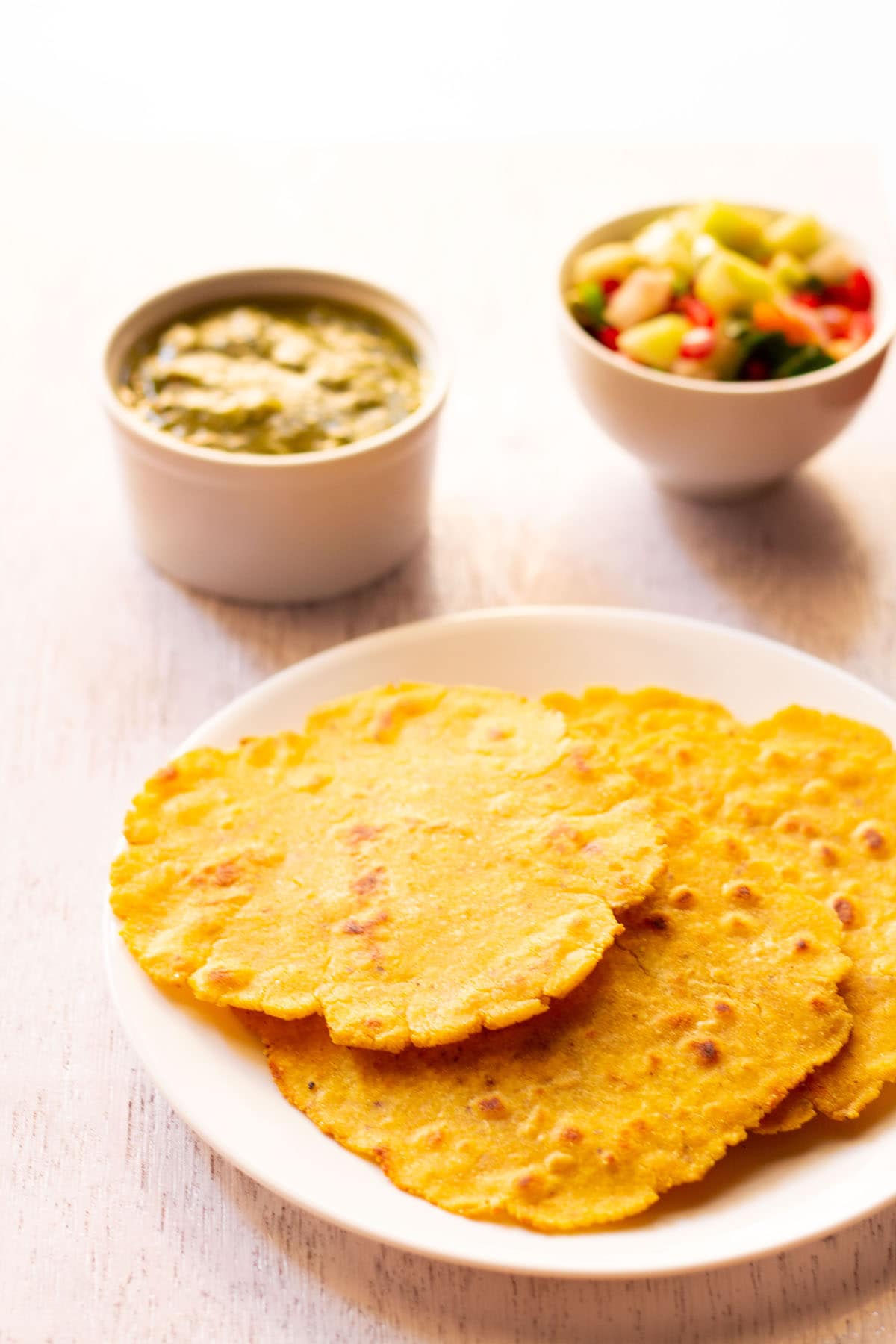
Serving & Storage Suggestions
Remember to serve makki ki roti hot as it tends to dry out on cooling. As I have mentioned above, pair with sarson ka saag, white butter, or jaggery.
If making in advance, keep rotis wrapped in a clean kitchen towel or in a covered container to retain softness.
Expert Tips
- Flour: Use finely ground maize flour. Coarse flour makes rolling difficult and rotis break easily.
- Kneading: Knead until smooth but firm. Add warm water if dry, or extra flour if sticky. Using hot water gives a more pliable dough.
- Rolling: Roll between parchment sheets or inside a zip lock bag to avoid cracks.
- Shaping: Pat the dough with your hands if rolling feels tough.
- Alternative: Add a small portion of wheat flour (atta) for easier rolling, though this slightly alters the taste.
- Cracking Dough: If the dough cracks while kneading or rolling, sprinkle warm water and knead again until smooth.
- Sticking Dough: If the dough sticks to the surface, dust lightly with maize flour before rolling.
- Roasting: Cook on a hot tawa without fat, then brush with ghee or butter. For smoky flavor, try roasting in a tandoor.
- Temperature: Keep the tawa on medium to medium-high heat. If it’s too hot, the roti will burn outside and stay raw inside. Too low and it will dry out.
- Portioning: Divide the dough into small or medium lemon-sized balls. Large rotis are harder to roll and may break.
FAQs
Can I substitute Mexican masa harina for the makki ka atta?
While I myself have not tried it, I have heard from several of my readers that they have made this substitution with very good results.
Instead of rolling these out, do you think a tortilla press would work?
Can I make these ahead of time?
Makki di roti, much like other types of bread, are best served hot or warm. That said, you can make the dough a day earlier and refrigerate it. Cover the dough with a clingfilm or place in an air-tight container so that it does not become dry.
Can I freeze makki ki roti?
Sure! Once cooked, separate the rotis with pieces of parchment. Place them in a zip top bag and remove as much air as possible. They should keep for up to 2 months in the freezer. To serve, warm them on a tawa until heated through.
How do I keep my makki ki roti from breaking when I roll them?
These flatbreads are a little harder to roll than other types because maize flour doesn’t have gluten. The gluten creates long strands of protein that help hold everything together. Have you ever rolled out a dough for it to spring back somewhat? That’s the gluten at work!
Using very hot water to make the dough helps somewhat. I also recommend rolling them between pieces of parchment paper or in a zip top bag to help keep things together. Finally, don’t be afraid to use your hands to help press and shape the roti as needed.
If you are still having a tough time, you can add a bit of wheat flour (atta) to the dough before rolling, which will add some gluten to help guide you. That said, please note that this is not the traditional method of making makki ka atta, and it will slightly change the flavor of the final product.
Making Dough
-
In a mixing bowl take the maize flour or cornmeal, carom seeds and salt as required. Mix them together with a spoon.
-
Heat water separately in a pan till it comes to a boil. Add this hot water to the flour.
-
Mix with a spoon. Cover and keep aside till the dough mixture becomes warm.
-
When the mixture becomes warm and the heat is fine to handle, begin to knead to a smooth yet firm dough. If the dough looks dry, then add some warm water. If the dough looks sticky, then add a few tablespoons of maize flour.
-
Knead into a smooth yet firm dough. Fine cracks will be there on the dough but not to worry. Make medium sized balls of the dough. Shape them into a neat ball and flatten them.
Rolling – Method 1
-
Sprinkle some maize flour on the rolling board. Place the dough ball on the rolling board. Then sprinkle some maize flour on the dough ball also.
-
Begin to gently roll with a rolling pin (belan). Add more flour if required.
-
Roll to small to medium-sized round circle. Make into the size of a roti or chapati but not very thin, but a little thick.
-
You can even use a ziplock bag. If using a ziplock bag, then keep the bag on the rolling board or on a plate or on a surface which you can move. Place the dough ball in the bag. Press it slightly with your hands. Now with the rolling pin, slowly roll. Sprinkle some flour. Move the rolling board and roll again. This is to ensure that all the sides of the roti are evenly rolled.
Rolling – Method 2
-
Makki roti can also be made by patting the dough. Sprinkle some maize flour on the dough ball all over and also on the rolling board.
-
Now with your fingers gently press and pat the dough. As you press the dough, also move it clockwise. add flour as required when patting the dough.
-
Continue to press and pat the dough till you get a neat makki roti. Do not make thin but slightly thick roti. When the dough is patted, the edges won’t be even.
Making Makki ki Roti
-
Now spread some ghee or oil on a hot tawa (skillet) – about 1 to 2 teaspoons of ghee or oil
-
Gently place the roti on the tava or griddle. If there is a crack on the roti, then gently and carefully pat that portion with a few drops of water.
-
When one side is a little browned, flip the roti with the help of a spatula.
-
When the other side gets browned, flip again. Flip a couple of times and cook till the roti is well browned and cooked from all sides. Press the edges with a spatula so that they get cooked well.
-
Drizzle a bit of ghee on the sides while cooking the roti. If the dough is kneaded very well, the roti will start puffing up also or you can see the roti puffing at some spots.
-
Remove roti from pan and serve hot. Or you can stack them in a roti basket or bundle a stack of them in a clean kitchen cotton towel. Roll and roast the remaining roti this way until all the dough is used up.
-
Serve the Makki ki Roti hot with Sarson ka Saag and jaggery cubes. You can also add a dollop of White Butter (Makhan) on top, as it is traditionally enjoyed in Punjabi homes.
- Flour: Use finely ground maize flour (cornmeal) for best results. Coarse flour makes the roti hard to roll and more likely to break.
- Kneading: Knead the dough until smooth and firm. If it looks dry or cracked, add a little warm water. If it turns sticky, sprinkle in more maize flour.
- Rolling (Method 1): Since maize flour has no gluten, the dough can be tricky to roll. Using hot water while kneading makes it more pliable. Roll the rotis between parchment sheets or inside a zip lock bag to avoid tearing.
- Rolling (Method 2): Pat the dough with your hands to shape the rotis. If rolling still feels difficult, add a small amount of wheat flour (atta). This makes it easier to handle, but slightly changes the traditional taste.
- Roasting: Opt to cook the rotis on a hot tawa without oil or ghee. Once done, brush with ghee or oil. For a smoky flavor, you can also roast them in a tandoor.
- Serving: Always serve makki ki roti hot. They tend to dry out quickly as they cool.
- Note: The approximate nutrition values are calculated for one makki ki roti cooked with 2 teaspoons ghee.
Calories: 207kcal | Carbohydrates: 22g | Protein: 3g | Fat: 12g | Saturated Fat: 7g | Polyunsaturated Fat: 1g | Monounsaturated Fat: 4g | Cholesterol: 29mg | Sodium: 149mg | Potassium: 76mg | Fiber: 2g | Sugar: 1g | Vitamin A: 1IU | Vitamin B1 (Thiamine): 1mg | Vitamin B2 (Riboflavin): 1mg | Vitamin B3 (Niacin): 1mg | Vitamin B6: 1mg | Vitamin E: 1mg | Calcium: 40mg | Vitamin B9 (Folate): 8µg | Iron: 1mg | Magnesium: 27mg | Phosphorus: 62mg | Zinc: 1mg
Makki ki roti recipe from the archives was first published on January 2012.