It is 3 pm on a spring Sunday in mid-March. About 20 curious visitors — from families to couples to youngsters — crowd a sunlit tasting room at the edge of rolling vineyards, hanging onto every word as a young vintner explains the differences between Chenin Blanc and Chardonnay. They then swirl, sniff and sip the white wine from narrow, long-stemmed glasses. Nearby, the rhythmic thump of grape-crushing signals peak harvest season. At a little distance, check-ins buzz at reception and the restaurant is filled with happy chatter. The atmosphere is intoxicating.
A veteran winemaker remarks, “Did you know the least understood and least selling alcohol in India is wine? Yet, almost every liquor shop is called a ‘wine shop’.” The crowd chuckles but the irony is no joke. It captures the paradox of India’s wine industry nestled amid the beautiful Sahyadhris in Nashik: thriving as a tourism destination yet struggling for mainstream acceptance as wine still hovers below one per cent of the nation’s alcohol consumption.

If that wasn’t a challenge enough, a new threat is fermenting. The proposed EU-India trade agreement seeks to sharply lower duties on imported wine. If that transpires, Indian producers — already battling complicated taxes, weak distribution and a thin domestic market — may find themselves under pressure. Is this likely to make the nascent industry more fragile?
Sowing the seeds
It doesn’t feel fragile once you drive in. Past the cluster of industries in the MIDC area of Nashik, a narrow road with open fields on either side and the whiff of a river nearby takes you to Sula Vineyards, the pioneering winery of the region. Spread over 22 acres with picture-postcard grape vineyards, Sula produces about 60 per cent of the country’s wine.
Its serendipitous beginning is now industry folklore. In 1994, Rajeev Samant — fresh from Stanford and Oracle — stood on family land in Nashik. He saw thriving table-grape orchards and realised it was a result of the region’s unique natural conditions — a climate comprising warm days around 35°C that cool to 10°C at night, red laterite and sandy loam soils laced with limestone for drainage and the Godavari River, Gangapur lake and Sahyadri hills together tempering the monsoons. In short, perfect terroir.
He returned to the US, trained for three weeks at a California winery run by his friend Kerry Damskey and returned home. In 1998, Samant planted the Vitis vinifera (grape) vines and named his new venture Sula after his mother, Sulabha. The first Chenin Blanc bottle in 2000 uncorked a quiet revolution.
In 2001, on the heels of the pioneering winery, came catalysts in the form of Maharashtra’s Grape Processing Policy: tax breaks, subsidies. Other entrepreneurs arrived. Grover, Zampa, York, Soma, Chandon set up wineries in different patches in the region and a wine cluster emerged. Californian consultants were approached, farming techniques sharpened and contracts went out to farmers encouraging them to switch from table-grapes to wine varieties.
By 2010, Nashik had earned its crown.
Story continues below this ad
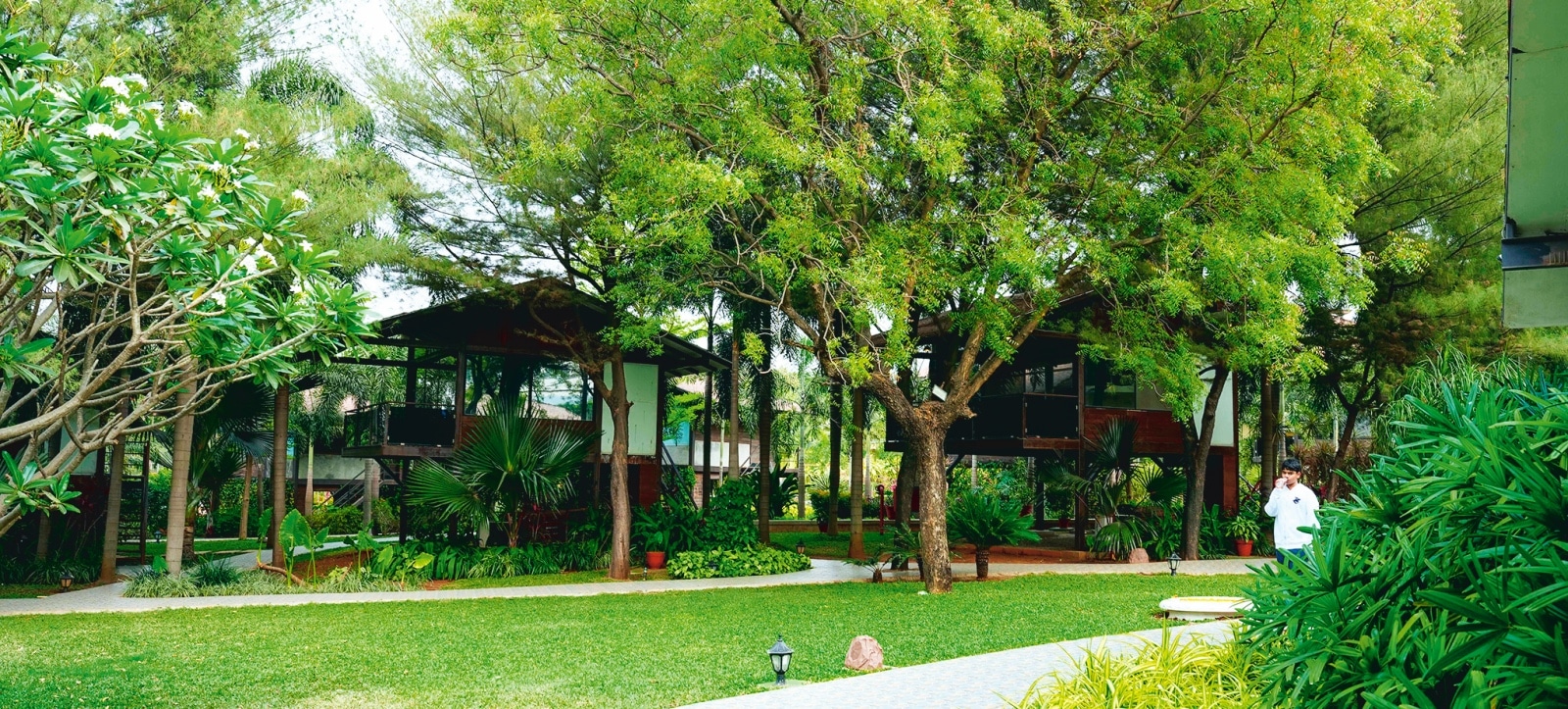 Tree houses, a popular stay option at The Source at Sula (Photo: Arul Horizon)
Today, around 30 wineries operate in the Nashik region, supplying nearly 80 per cent of the country’s wine. Maharashtra, with 40–50 wineries, accounts for 90 per cent of national production. Roughly 8,000 acres are dedicated to wine grapes — whites such as Chenin Blanc, Sauvignon Blanc, Chardonnay, Riesling and reds such as Shiraz, Cabernet Sauvignon, Merlot, Zinfandel, Tempranillo — names that Nashik grape farmers rattle off with ease. Annual crushing hovers around 20,000 tonnes, yielding 1.4 crore litres with the industry valued close to Rs 2,000 crore. “Sula alone grew from a 30-acre family plot to over 2,800 acres across the country,” says Samant, who now handles operations from Dubai after taking out an IPO in 2022.
With these numbers the industry should have been brimming with confidence. But something was amiss.
Listening to the grapevine
The realisation soon dawned: making wine was one thing; getting people to drink it was another. India did not inherit a wine culture. Whisky, rum and beer were alcohol staples. Vodka and gin had their fans. Wine, by contrast, came dressed in imported manners and difficult pronunciation. Many Indians were not merely unfamiliar; they were actively intimidated by it.
Sula once again took charge. After spending its first 15 years building the hard infrastructure — crushers, casks, bottling, supply chains, distribution — it pivoted to something more ambitious: making wine feel easy. Its estate evolved into a lifestyle destination, complete with vineyard-facing rooms, tree houses, restaurants, selfie-points, gift shops, grape-stomping sessions, giant bottle installations and guided tastings that stripped away the snobbery.
It worked. Today over 3.5 lakh visitors arrive annually, with their recently concluded 15th edition of the SulaFest in February 2026 drawing 12,500 revellers for the music, wine and gastronomy under the stars.
Other wineries followed the blueprint, each adding its own distinct flavour. Grover Zampa, currently renovating its Sanjegaon facility, started tastings showcasing their innovative concrete tanks for fermentation of grapes instead of the ubiquitous steel. They have a unique terracotta tank that produces a rare wine that is bottled once in 5-6 years. It’s more accessible One Tree Hill label carries a quaint story: from a distance, the vineyard reveals a giant mango tree dwarfing a mountain behind it — hence the name.
Story continues below this ad
Vallonné Vineyards is set behind a picturesque yellow building beside a lake. Founder Shailendra Pai bought the land in 2006 after a marketing career that began in the late 1980s with Champagne India Limited. First harvest came in 2009. Ever the experimenter, he introduces new varieties and styles each year, proving Indian wine can innovate.
Then there is Fratelli. It is based in Akluj (Solapur), a spot chosen over Nashik based on expert viticulturist Piero Masi’s assessment of terroir suitability. “Wine is made 70 per cent in the field, 30 per cent in wineries. Our vineyards and expertise in viticulture set us apart,” says Jayanth Bharati of Fratelli that holds roughly one-third market share, after Sula and Grover.
As these scattered estates turned weekend getaways into mini Napa experiences, blending wine tourism with the region’s ancient caves and temples, improved connectivity added to their accessibility. “A large number of people come from Gujarat, followed by Delhi connected with a direct flight, and then, Mumbai and Pune,” says Rahul More, Deputy General Manager – Winemaking and Exports, Sula.
India’s warm climate and spicy cuisine is further leveraged as ideal for wine drinking in food pairing workshops. Rohan Anand, Associate Vice President, Hospitality, Sula points out to the cookery sessions they hold every evening. “The talk is as basic as what goes with whites, rosé and reds to how a dry wine blends better with spicy Andhra food to cooking with wine. We have some unique dishes like Mutton Shiraz or a wine cheese cake,” he said.
Story continues below this ad
Creating wine awareness becomes all the more challenging in India due to the ban on alcohol advertising. More quips how a single organic moment of wine-drinking scene in the OTT series Mirzapur, where one of the characters explains the finer nuances of enjoying wine through the swirl, smell and sip method to a novice, did more for wine popularity than anything else in recent years.
The highs and the lows
Drive to Nashik’s outskirts and a hilly road takes you to a different world of wines — this is the Vinchur Wine Park, a MIDC-developed industrial zone since 2005 with shared facilities for production, testing and storage. About a dozen wineries operate here, more tied to the soil than to tourism.
At the heart of it lies the Wine Information Centre (WIC). Vikrant Holkar, 34, founder of Red Grapes and the son of a farmer from onion-famous Lasalgaon, studied in France and New Zealand, then started the WIC to bridge the gap he perceived. “Our farmers grew great grapes but marketing eluded them,” says Holkar.
Story continues below this ad
WIC welcomes thousands of students annually for “Grapes to Glass” days — tastings, process lessons, winery tours. The message is simple: wine is healthy, farmer-made, casual. “We are hoping the students carry this message to their families,” says Holkar. The centre has an eatery, tasting space, “India’s largest wine shop” (all brands at factory prices, highlighting local fruit wines), and booklets covering basics, labels, and trivia like how Hippocrates prescribed wine and Titanic bottles endured 12,000 feet underwater.
One of the prides of the wine park is Vinsura, started by 66-year-old Prahlad Sampat Khadangale. A pioneer of growing wine grapes, he went on to establish the first farmer-owned winery in Nashik. “My mother, a labourer, saved money to educate me. I completed BSc Chemistry in 1982 and farmed onions, sugarcane, and then grapes. Inspired by Sharad Joshi in the early 1980s, I joined farmer agitations for fair prices. In 1984 we held a meeting of five lakh farmers. That was the day Indira Gandhi was assassinated and the tragedy ended the movement. I was disillusioned. Later, I went to France and studied wine grapes,” recounts Prahlad, who has since visited 26 countries.
In 2022, he launched Vinsura — 45 farmers, five directors, with Prahlad as CEO — producing and exporting 2.5 lakh litres yearly.
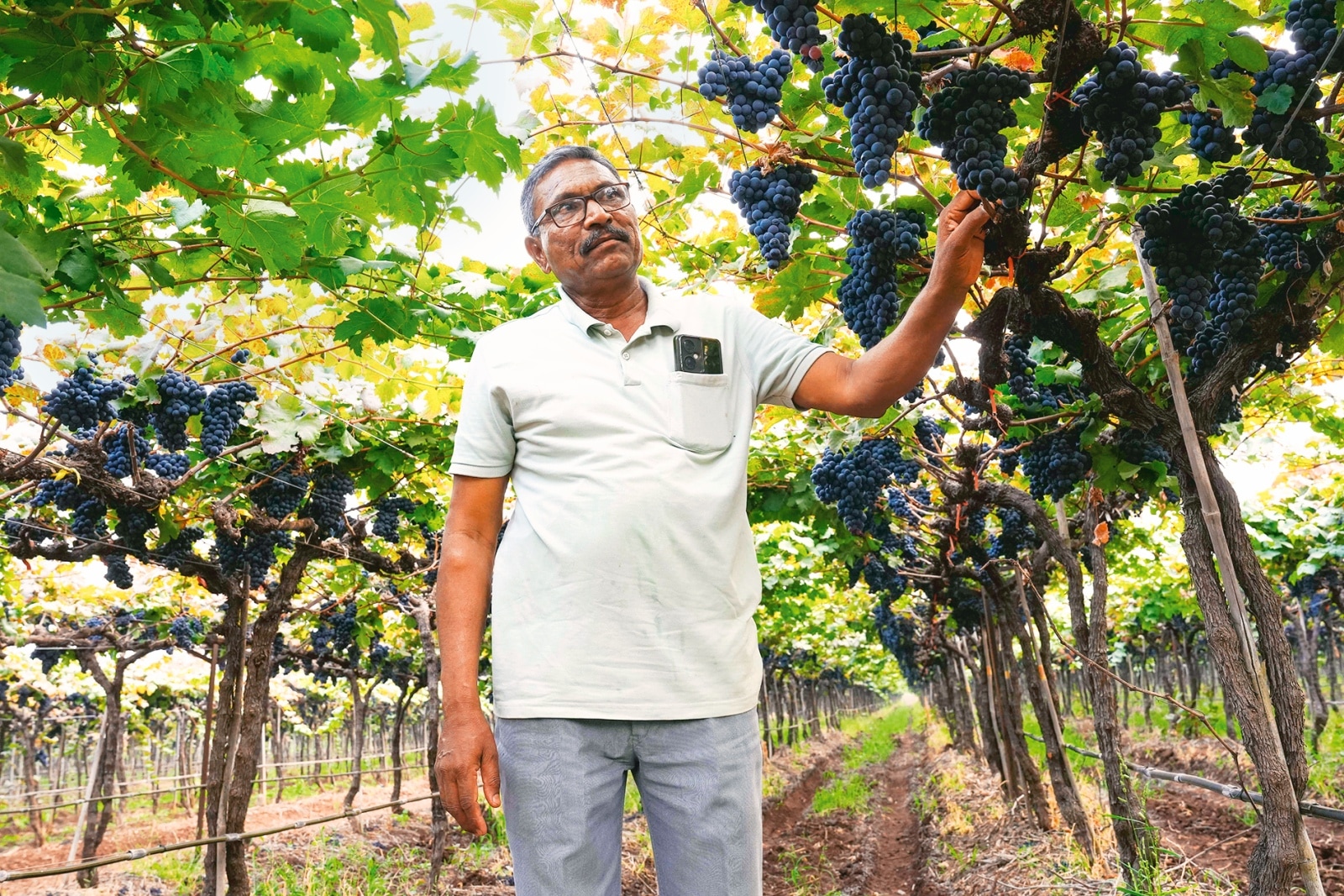 Damodar Khadangale at his farmland where 36 acres are under wine grapes (Photo: Arul Horizon)
Half an hour away from the wine park, Prahlad’s brother Damodar Khadangle walks through his 35 acres of wine grapes under cultivation — a part of it owned by the elder brother. “For the past 26 years, I have been growing five varieties of wine grapes, that majorly include Chenin Blanc and French Tempranillo. The period between 1998 and 2008 was the golden phase, with 35 per cent growth every year. I even travelled to Europe in 2014 and saw how grapes are produced economically there,” says Damodar, whose double-storey bungalow sits on the edge of the field.
Story continues below this ad
But after Covid, demand crashed and in the last 3-4 years, winery purchases have fallen sharply. He says, “I am now selling only 50 per cent of what I sold in 2008. We face heavy rains five or six times a year, no dormant period as we do two cuttings unlike Europe’s one.”
The struggle is greater for Vinchur wineries without the hospitality backup. Twelve are up for sale. After 25 years, Damodar is pulling out vines for patented table grapes. “Profits once Rs 3 lakh per acre are now uncertain; many neighbours have switched too,” he explains.
Ashwin Rodrigues, who left a chartered-accountant career to train in Barossa and Napa, is doing his bit. He founded the Wine Growers Association of India to give smaller producers a voice and through festivals in Mumbai, advocates for research labs and quality standards. “The industry must start investing in better grapes, better winemaking and better storytelling,” argues Rodrigues who launched Good Drop Wine Cellars in Vinchur Wine Park with labels such as Good Earth and the fizzy Rio.
The glass is always half full
Wine owners agree that despite scenic beauty and the buzz, the lows run deep. “What began as one teaspoon of the market has grown only to one tablespoon,” says Pai of Vallonné.
In fact, there has been a decline in wine consumption globally. Wine production fell nearly 19 per cent between 2015 and 2024 due to factors like extreme weather conditions that disrupted harvest and rising prices of raw material, according to the International Organisation of Vine and Wine. Consumption declined at a slightly lower pace at 11 per cent during this period. “The younger generation is drinking less alcohol for health reasons or veering towards lighter drinks such as beer, tequila or ready-to-drink alcoholic beverages,” says Jagdish Holkar, president of the All-India Wine Producers Association (AIWPA).
Then, imports are more than exports. “Only around seven per cent of the domestic production is exported while imported wines account for 15 per cent of consumption,” says Holkar. And with the UAE being the main importer of Indian wines, even this figure is near nought the past month due to the West Asia conflict.
Story continues below this ad
The EU-India FTA signed in early 2026 brings the biggest test, phasing down tariffs on European wines from 150 per cent to as low as 20–30 per cent for many bottles. Samant remains measured, “Any reduction applies only above a Minimum Import Price of €2.5 per bottle. This protects over 90 per cent of Indian wines retailing below Rs 1,500 MRP.” Holkar feels European players could in fact help build better wine culture in India. “If wine reaches even 3 percent of the alcohol market, local volumes would rise,” he says.
Sonal C Holland, the first Indian Master of Wine (2016), is also optimistic about India’s wine future. “Wine is still perceived as healthy, seen as a symbol of success and sophistication, and is socially the most acceptable drink. No other alcoholic beverage enjoys this trilogy of appeal,” avers the lady who has spent two decades popularising it. She adds that their 2 million followers and over 1,500 videos indicate an encouraging trend; even their Hindi and Marathi videos are getting great traction.
Well, the vines are rooted, cellars stocked and tasting rooms waiting. All that remains, perhaps, is persuading India that wine, particularly its own, is worth raising a glass to.