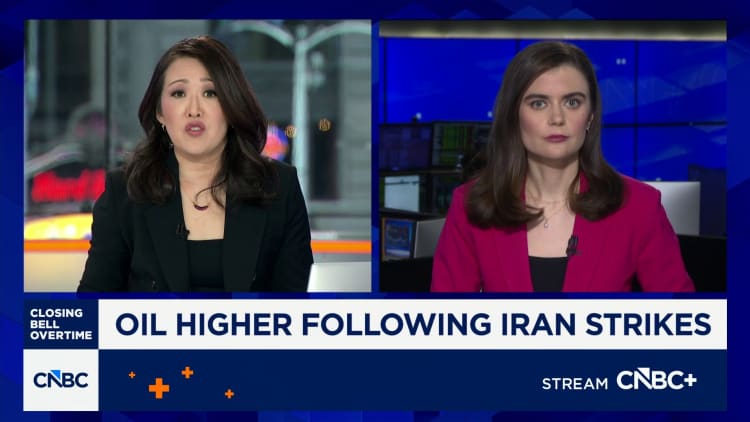

Oil prices rose more than 5% on Wednesday, as escalating threats from Israel and Iran against Middle East energy infrastructure risk compounding the already massive disruption to global oil supplies.
Brent prices, the international benchmark, rose 5.88% to $109.50 per barrel by 10:33 a.m. ET. U.S. oil prices traded 2.95% higher to $99.05.
Israel attacked Iran’s largest gas processing facility located in Bushehr Province, according to reports in the Times of Israel and Jerusalem Post.
Iran threatened Wednesday to strike oil facilities in Saudi Arabia, the United Arab Emirates and Qatar. The Revolutionary Guard warned people to stay away from several facilities that it described as “legitimate and prime” targets, according to Iranian state media.

The facilities are the Samref refinery and Al-Jubail petrochemical complex in Saudi Arabia; the Al Hosn gas field in the UAE; and the Mesaieed petrochemical complex and Mesaieed holding company in Qatar.
The renewed threat from Iran comes after it launched attacks against energy infrastructure in the UAE earlier this week. Widespread attacks against oil and gas facilities would compound the massive supply disruption triggered by the plunge in tanker traffic through the Strait of Hormuz.
Citi forecasts that Brent prices will rally as high as $120 per barrel in the coming days. The bank sees a disruption of 11 million to 16 million barrels per day through April.
Brent prices could average $130 per barrel in the second and third quarter in a scenario where there are broad attacks on regional energy infrastructure and the Strait remains closed for a prolonged period, the Citi analysts told clients in a Wednesday note.
“The market is likely to rally until it finds the price or market event which drives the US to end its military operation,” the analysts said.
President Donald Trump, meanwhile, has issued a two-month waiver of the Jones Act in an effort to ease surging fuel prices in the U.S.
The Jones Act requires that the transport of goods between domestic ports must be done by U.S. vessels. Trump’s waiver would allow foreign ships to also transport oil and other energy supplies in the U.S., potentially lowering transit costs.