

Observing that compensation in injury cases was not merely about numbers, but also about acknowledging pain, the Punjab and Haryana High Court has enhanced the compensation awarded to a lawyer suffering from 100 per cent functional disability from Rs 52 lakh to Rs 9.16 crore.
Justice Sudeepti Sharma was dealing with a plea filed by the insurance company and the lawyer against the 2008 order of a Motor Accident Claims Tribunal, Jalandhar, in a motor vehicle accident case.
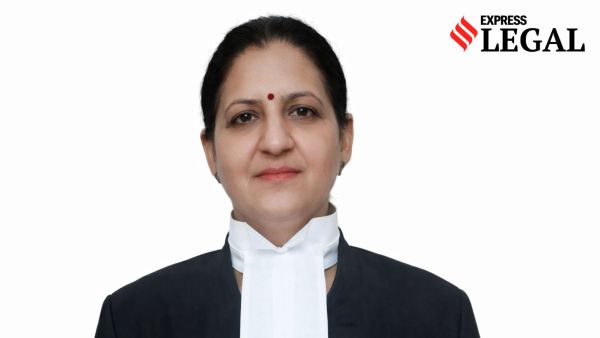 Justice Sharma said that claimant seeks enhancement of compensation not as a matter of largesse, but as a rightful claim grounded in law, equity, and compassion. (Image enhanced using AI)

The tribunal had awarded Rs 52 lakh to the lawyer who met with an accident in 2002 after the scooter he was a riding pillion was hit by a car allegedly coming from the wrong direction.
Despite continuing treatments for his injuries, the lawyer rendered was disabled with “bilateral hearing loss, permanent neurological impairment and persistent tinnitus”.
The MACT calculated his monthly income as Rs 25,000.
The high court, on the other hand, considered the fact of the lawyer having consulted over 100 doctors across India without relief, and rejected the insurance company’s claims, which said that the treatment was available in India.
“The compensation in injury cases is not merely about numbers; it is about acknowledging pain, restoring dignity, and securing the future of a person whose life has been irreversibly altered,” the January 23 order read.
‘Compensation in injury cases not merely numbers’
- The gravity of the injuries sustained, the prolonged and continuous medical treatment, and the permanent functional disabilities resulting therefrom have subjected the claimant to suffering of an intensity and duration that is incapable of precise quantification.
- Nevertheless, the claimant is entitled to just, fair, and reasonable compensation under this head, commensurate with the extent of pain and suffering endured.
- Due to the prolonged hospitalisation and nature of injuries sustained by the claimant, it is appropriate to grant a compensation of Rs 30 lakh under the head of “pain and suffering”.
- In such kind of cases, the pain and suffering are not confined to the injured person alone. The parents, family members, and near and dear ones of a person who has suffered such functional disability endure almost the same degree of pain and anguish.
- When the injured is unable to sleep throughout the night, the near and dear ones also remain sleepless, sharing the agony in equal measure.
- In effect, they too suffer each day along with the injured. Indeed, the attendant and family members often experience even greater distress than the person who is actually suffering, for while the injured may be administered medicines or injections to obtain rest, the near and dear ones remain continuously anxious 24 hours a day about the health, prospects, and medical condition of the injured.
- Justice demands that the compensation under the head of pain and suffering should also be granted to the parents, family members, and near and dears ones of the injured.
- Considering that the total amount of compensation in the present case runs into crores, we consciously restrained itself from granting compensation under the head of pain and suffering to the parents, family members, near and dears ones, which should actually be granted if justice is to be done emphatically.
- Cases of the present nature are not merely disputes over figures, but solemn reminders of lives irreversibly altered by unforeseen misfortune.
- The purpose of awarding compensation in such cases is not to bestow the amount, but to acknowledge suffering, alleviate hardship, and secure the livelihood and the dignity of a person who has been compelled to live with permanent and continuing disability as far as possible.
- Courts, while discharging their statutory obligation, cannot remain oblivious to the human dimension underlying such claims.
- A just, fair, and reasonable compensation must therefore not respond only to the injuries of the past, but also to the medical needs of the future, so that the claimant is not left to face a lifetime of suffering without adequate means of care.
Findings
- The claimant sustained grievous injuries in a motor vehicle accident. Though more than two decades have elapsed since the occurrence of the accident, the claimant continues to suffer from the debilitating consequences of the injuries to date.
- The injuries have neither healed nor stabilised, and he remains under continuous medical supervision.
- Despite having undergone treatment at several hospitals over the years, the claimant has not attained complete recovery.
- The requisite specialised treatment is not available in India and can be effectively undertaken only in the US.
- Records show that the claimant has endured prolonged physical pain, mental agony, and financial hardship for over two decades.
- The claimant seeks enhancement of compensation not as a matter of largesse, but as a rightful claim grounded in law, equity, and compassion, to enable him to secure necessary medical treatment and to live the remainder of his life with dignity in the face of permanent and continuing disability.
- The insurance company has failed to impeach the testimony of medical witnesses/doctors, who are specialists of the highest repute, or to place on record any contrary medical opinion or cost estimate.
- Consistent and expert medical evidence, coupled with the claimant’s failure to obtain relief despite extensive treatment within the country, we find no reason to disbelieve the conclusion of the tribunal in its recent report that the advanced treatment required by the claimant is not readily available in India.
- Based on the estimates produced on record from the Mayo Clinic, Minnesota, US, the average estimated cost for brain lesion removal surgery is 1,08,950 USD, which, at the prevailing exchange rate, converts to approximately Rs 99.76 lakh (about 1 crore).
- These figures are based on official estimates issued by the Mayo Clinic and remain unrebutted, as the insurance company has neither produced any contrary estimate nor led evidence to dispute the necessity or cost of such treatment.
- The foreign medical expenditure claimed by the claimant cannot be termed speculative and deserves due consideration while awarding just compensation.
- In view of the above, we deem it just, fair, and reasonable to award a consolidated sum of six crore towards foreign medical treatment, including post-operative rehabilitation, incidental expenses, and future follow-ups, in the interest of justice.
- The award of 2008 of the tribunal is modified accordingly, and the claimant is entitled to enhanced compensation of Rs 9.16 crore.
Background
- The 26-year-old practising advocate, who was a pillion rider on a scooter, met with an accident in October 2002 in Jalandhar when the two-wheeler was struck by a car allegedly driven rashly and negligently on the wrong side of the road.
- The accident left the man with grievous injuries, including a fractured right clavicle and severe head and brain injuries.
- Both the victim and the United India Insurance Company Limited filed a plea, where the victim sought enhancement, and the insurance company challenged liability.
- Appearing for the victim, senior advocate M S Sachdev and advocate Arsh Gupta contended that their client had duly proved his pre-accident income through income tax returns, yet his income had been assessed on the lower side, resulting in an erroneous computation of loss of earning capacity.
- They argued the claimant was about 26 years of age at the time of the accident and sustained multiple grievous injuries, including fracture of the right clavicle and severe head and brain injuries, leading to complete bilateral hearing loss, permanent neurological impairment, and persistent tinnitus.
- They submitted that the amounts awarded under the heads of attendant charges, loss of marriage prospects, loss of amenities of life, pain and suffering, and other non-Advocate pecuniary damages are grossly inadequate, particularly in view of the 100 per cent permanent disability of the claimant and complete dependence on attendants.
- Appearing for the insurance company, advocate Vikas Mohan Gupta argued that the tribunal had erred in holding that the accident occurred due to rash and negligent driving.
- He contended that the amount of compensation awarded by the tribunal is on the higher side. Therefore, the plea filed by the insurance company should be allowed, and the plea filed by the claimant should be dismissed.


© IE Online Media Services Pvt Ltd








m41gb5