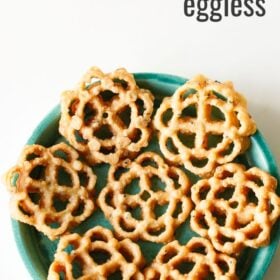
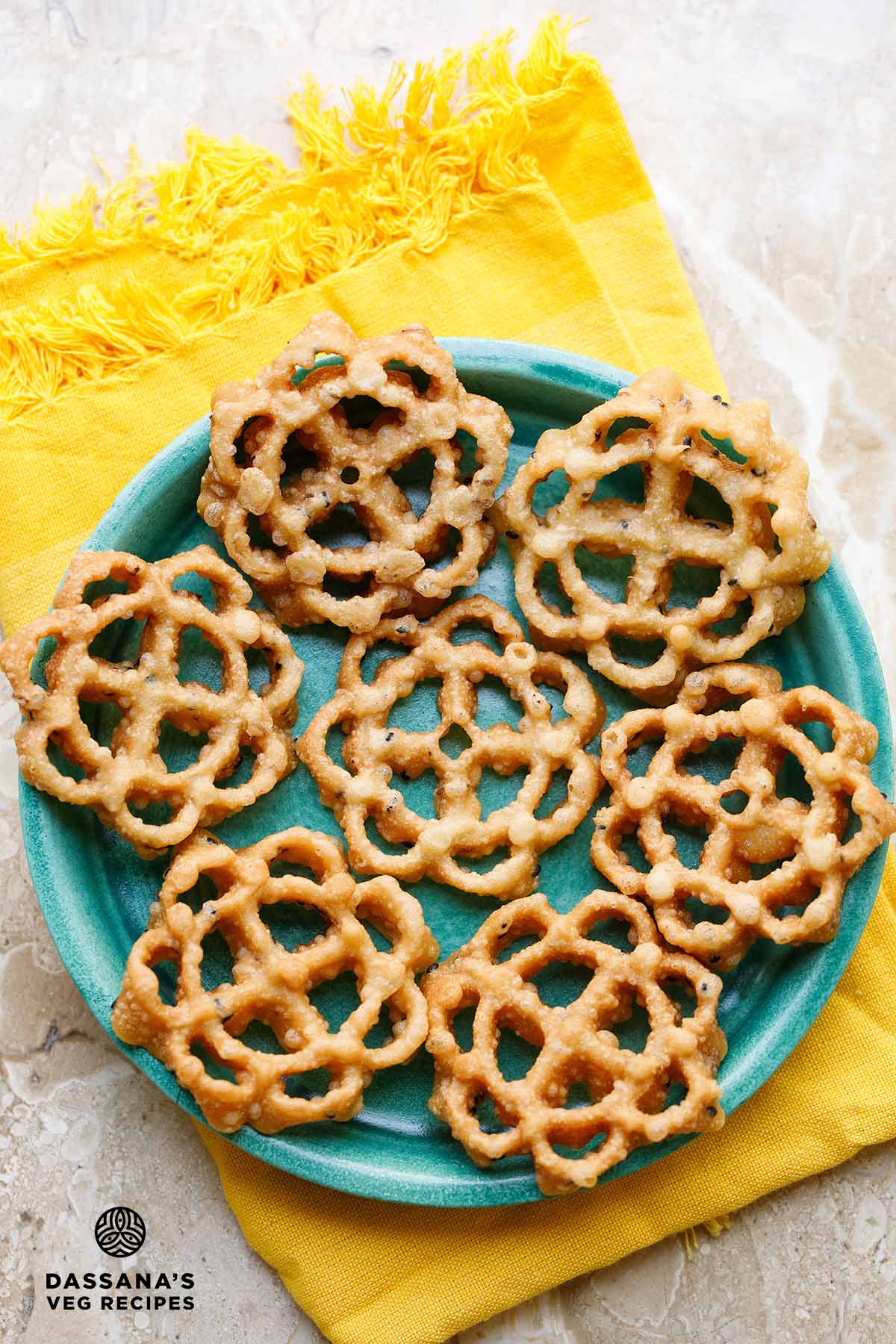
Rose cookies recipe, also called achappam or achu murukku, is a traditional South Indian snack made with a light batter that is shaped using a special mould and deep fried until crisp. These cookies are thin and lightly sweet, with a delicate texture that is crunchy and crispy. They are popular during festivals like Christmas and also made for special occasions at home. This is my mom’s recipe which I have adapted into an eggless version with simple ingredients and easy steps.
About Rose Cookies (Achappam)
Achappam, also known as achu murukku or rose cookies, is a festive snack from Kerala and parts of Tamil Nadu. In Goa, a similar version is made and is called rose de coque, often flavored with vanilla and cardamom.
This snack is believed to have come through European influence, especially during the colonial period. A very similar cookie is made in Scandinavian countries like Sweden and Norway, where it is known as rosette cookies.
These are also made using a metal mould dipped in batter and then fried. Over time, this technique came to India and was adapted with local ingredients like rice flour, coconut milk and spices, giving us achappam and achu murukku.
The name achappam comes from the words “achu,” which means mould, and “appam,” meaning a snack or a sweet.
Similarly, the term achu murukku combines “achu,” meaning mould, and “murukku,” meaning a twisted or shaped snack.
So achu murukku refers to a shaped, crispy snack made using a mould. The flower-like pattern is why these are also called rose cookies.
About My Recipe
Traditionally, rose cookies are made with eggs and more rice flour. In my version, I have adapted my mom’s recipe to make it eggless.
I use more all-purpose flour (maida) and less rice flour. This helps give a lighter texture even without eggs. I have also added a small amount of baking powder for lightness, which you can skip if you prefer.
The batter is simple to make with all-purpose flour, rice flour, sugar, coconut milk and water. You just mix the ingredients together or blend them for a smooth consistency. Keep in mind that sugar should be dissolved well before frying.
I also add some black sesame seeds and cumin, which you can skip. You could even add nigella seeds (kalonji) to the batter.
About Achappam Mould
You can use either a metal mould or a non-stick rose cookie maker for this recipe. A non-stick mould is easier to work with as the batter releases more easily and gives better results, especially for beginners.
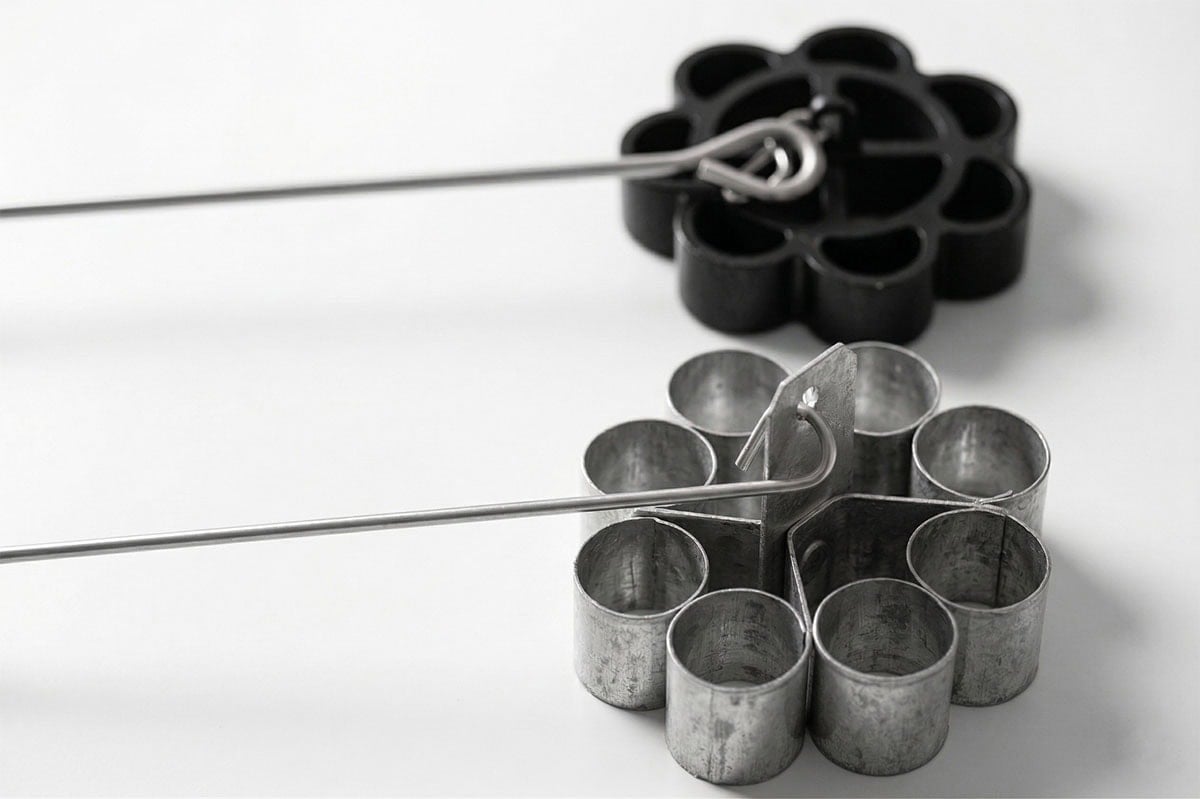
If using a metal mould, it must be well seasoned, otherwise the batter will stick and not release properly in the oil.
To season it, keep the mould in hot oil for a few minutes, then remove and let it cool. Repeat this heating process a couple of times before using. This helps create a light coating of oil so the cookies release more easily.
A Simple But Skill-Based Recipe
This rose cookies recipe is easy in terms of preparation, but it does need a bit of practice.
The most important part is using the rose cookie mould correctly. Once you understand how much to heat the mould and use it in the oil, the process becomes smooth.
The batter should have a flowing consistency so that the cookies turn out light and crisp.
This is not a difficult recipe, but it does take time since the cookies are fried one by one if you have a small to medium sized kadai or wok. So it is best not to rush.
I have also shared a short video below where you can see how the mould is dipped into the batter and then fried. That will give you a clear idea of the process.
Once you make a few, you will get the hang of it. This is a fail-proof recipe if you follow the method patiently.
This recipe makes about 18 to 22 achappam, depending on the mould size.
You may also like these South Indian snack recipes:
How To Make Rose Cookies (Stepwise)
Make The Batter
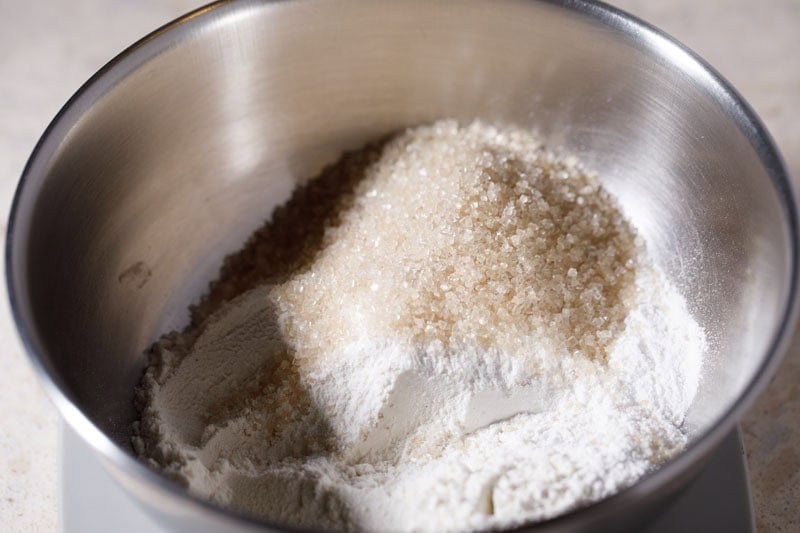
1. Take ½ cup all-purpose flour (60 grams), ¼ cup rice flour (30 grams) and 3 tablespoons sugar in a bowl. Mix well so that everything is evenly combined.
2. Add the following ingredients:
- ½ teaspoon black sesame seeds
- ½ teaspoon cumin seeds
- ¼ teaspoon cardamom powder
- 2 pinches baking powder, optional
- a pinch of salt
- 1 teaspoon coconut oil or melted butter
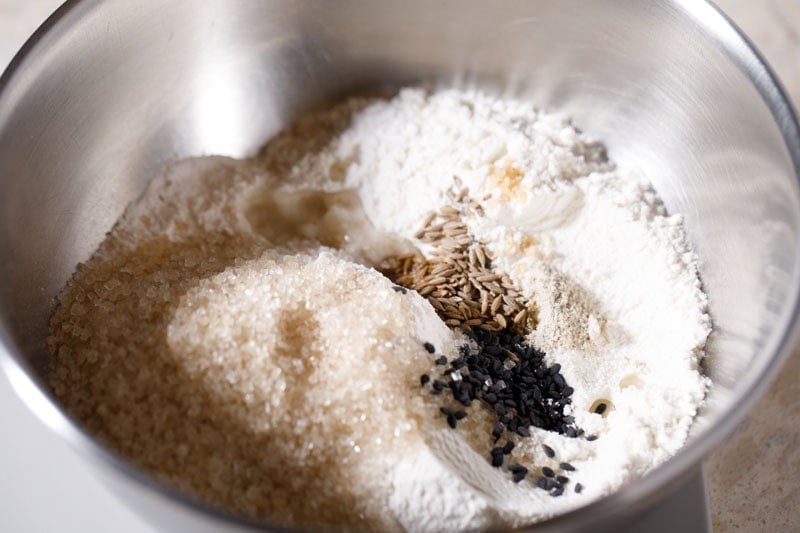
3. Now pour in ½ cup canned coconut milk and ½ cup water gradually.
Tip: If using Homemade Coconut Milk, add water as needed.
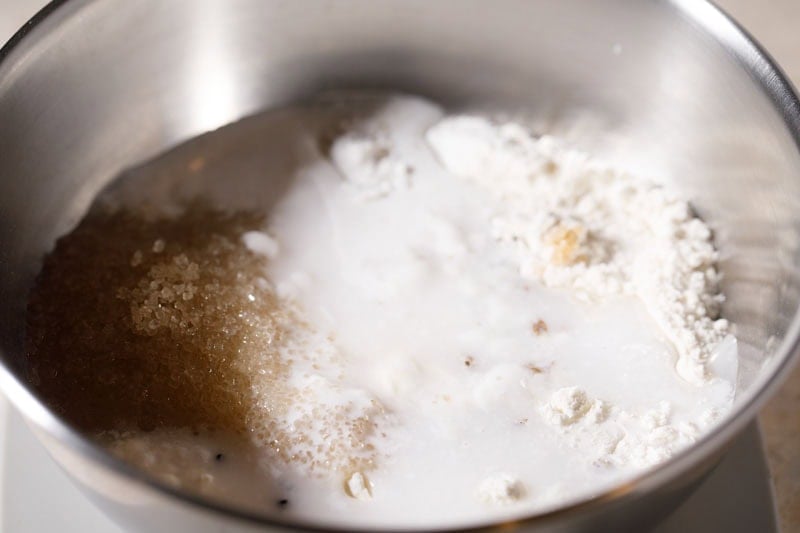
4. Whisk continuously to make a smooth batter without lumps. You can also blend the batter in a mixer for a smoother consistency.
Make sure that the sugar has completely dissolved in the batter.
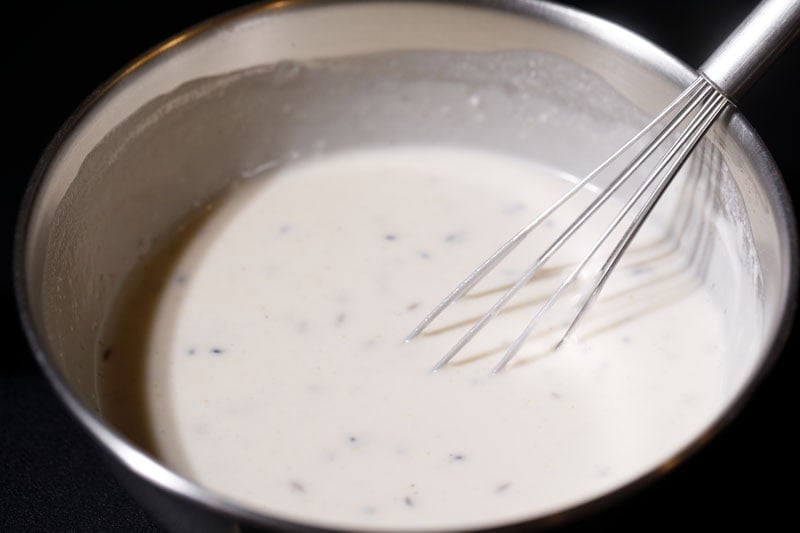
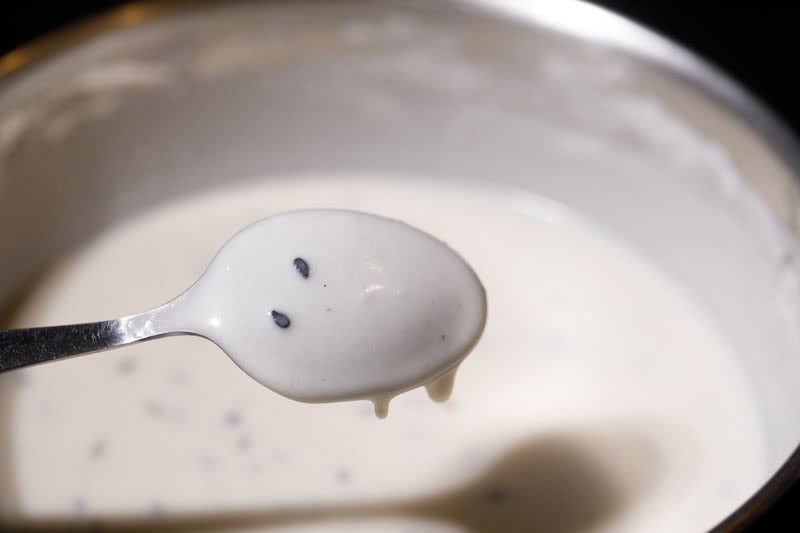
5. The batter should be medium thin and flowing, similar to crepe batter or slightly thinner than Dosa Batter.
To check, dip a spoon in the batter and check the back of the spoon. It should lightly coat the spoon and drip easily.
Cover and let the batter rest for 5 minutes.
Tip 1: If batter looks thick, add 1 to 2 tablespoons more coconut milk or water.
Tip 2: If it looks thin, add 1 to 2 tablespoons of all-purpose flour.
Fry Achappam
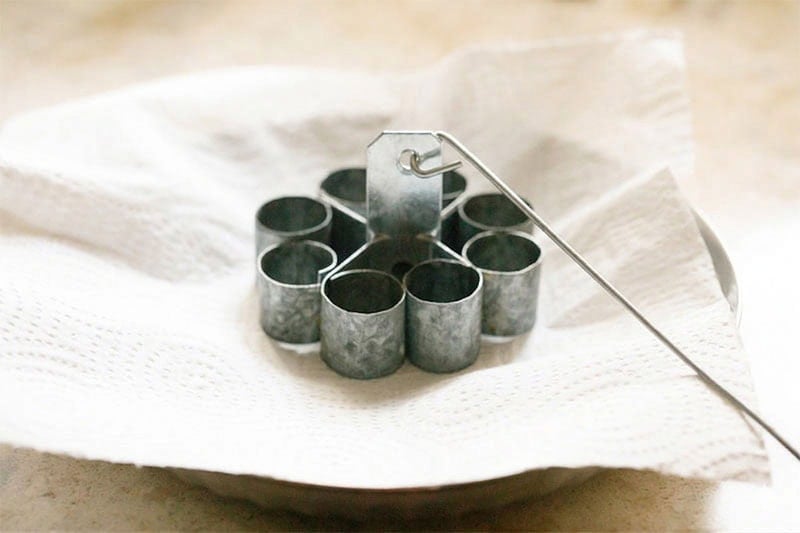
6. Before you begin frying, keep the achappam mould on a plate lined with paper towels. Since the mould is used repeatedly, this helps absorb excess oil and keeps the process neat and mess-free while you move between oil and batter.
You will be dipping the mould in hot oil, then in batter, and back into the oil again for each cookie. Placing it briefly on the paper towel in between helps manage the oil and makes handling easier.
In this step-by-step photo you will see a metal mould, but I have used a non-stick mould for this recipe. My batter was sticking to the metal one, so I switched.
You can use either, but if using a metal mould, make sure it is very well seasoned so the cookies release easily.
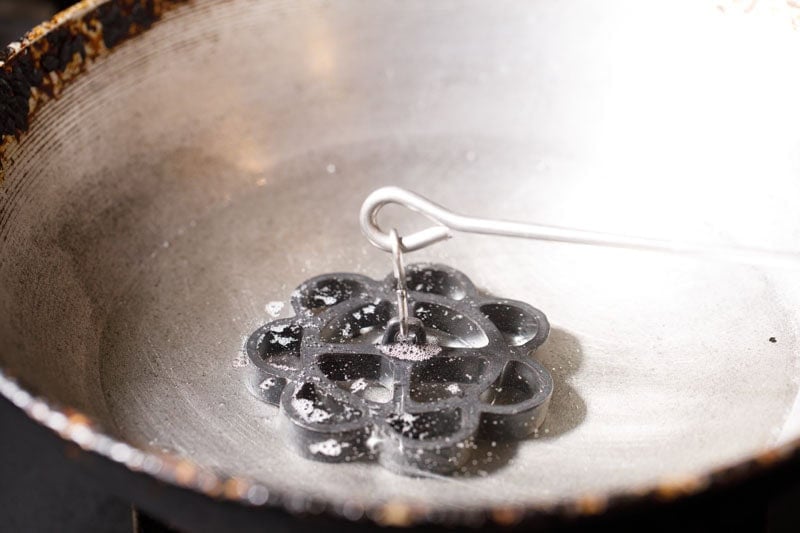
7. Heat 1.5 cups coconut oil in a kadai on medium heat. You can also use any neutral cooking oil.
Place the achappam mould in the medium hot oil for about 1 minute so it heats well.
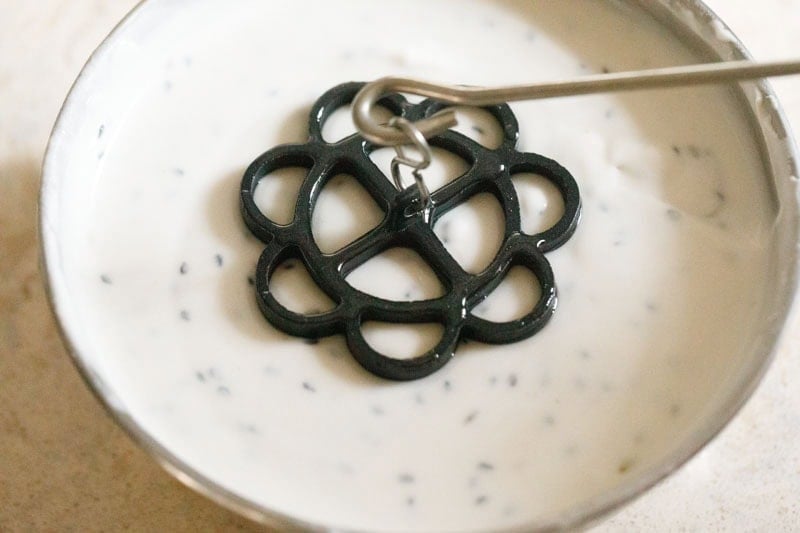
8. Lift the mould and dip it into the batter only up to three-fourth height. Do not let the batter cover the top edge.
If you are new to this, do watch the video below to see how the mould is heated, dipped and how the achappam releases in the oil.
9. Immediately place the mould back into the hot oil.
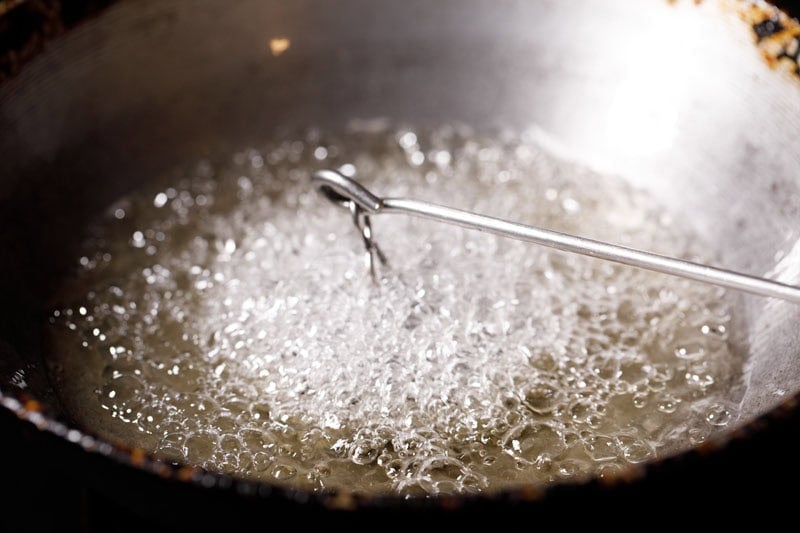
10. After a few seconds, gently shake or tap the mould. The achappam will release and float.
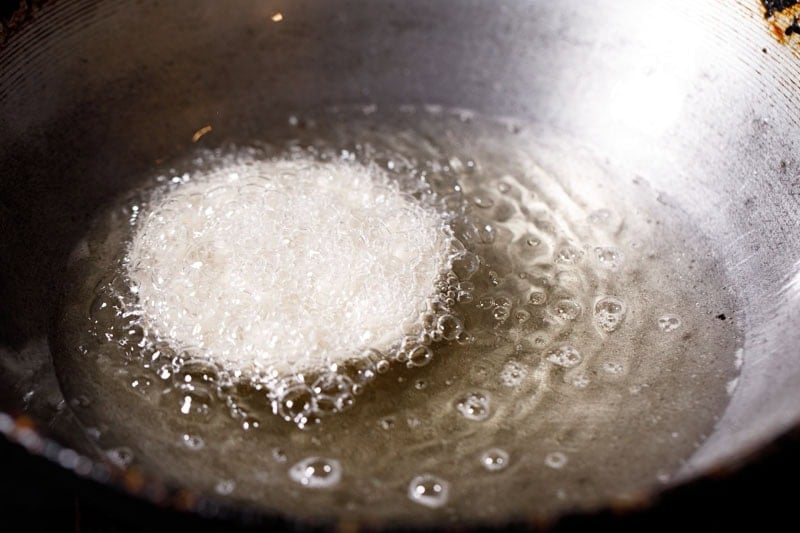
11. Fry on medium heat. When bubbles reduce and the cookie looks pale golden, flip with a slotted spoon.
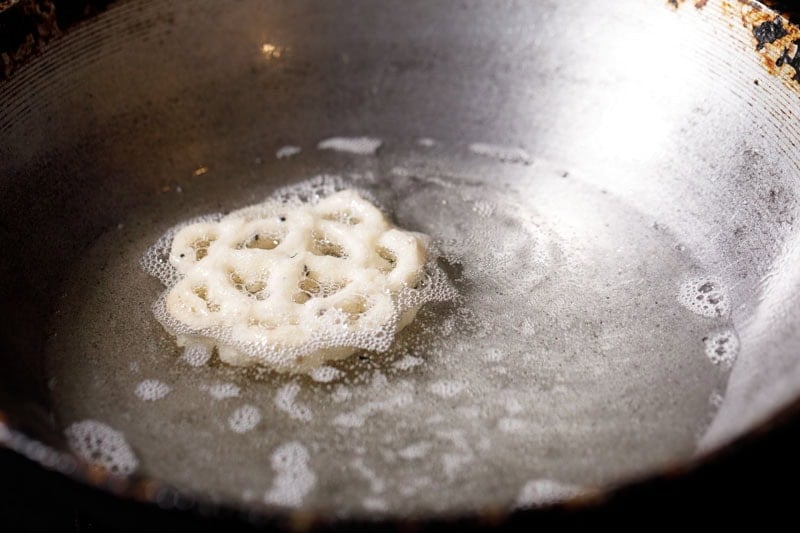
12. Fry the other side until light crisp.
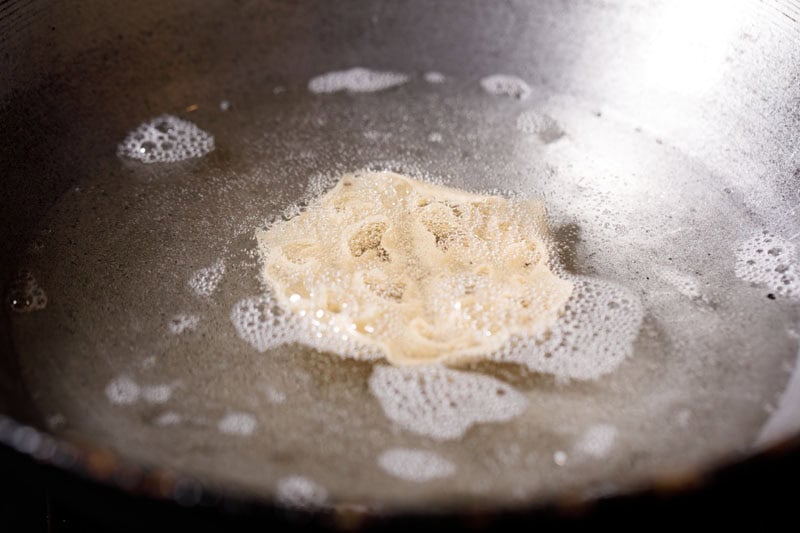
13. Turn as needed and fry till the rose cookie is light golden. You do not need to brown them.
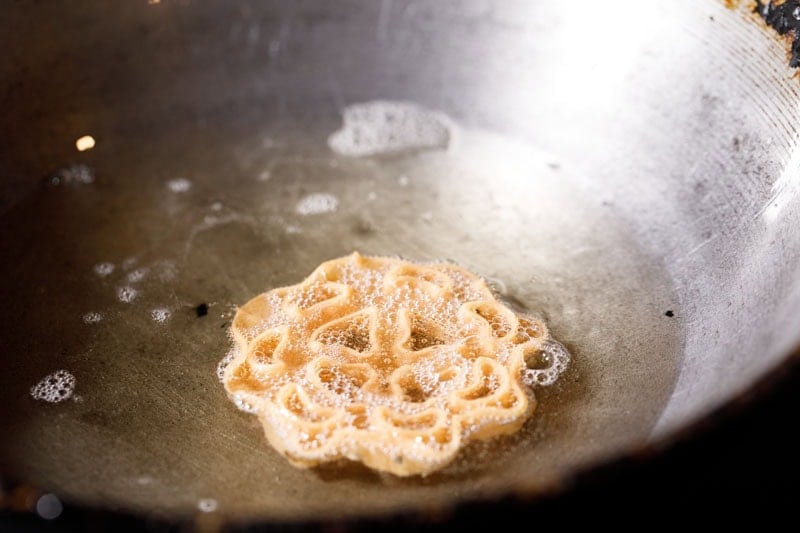
14. Remove with a slotted spoon or bamboo skewers.
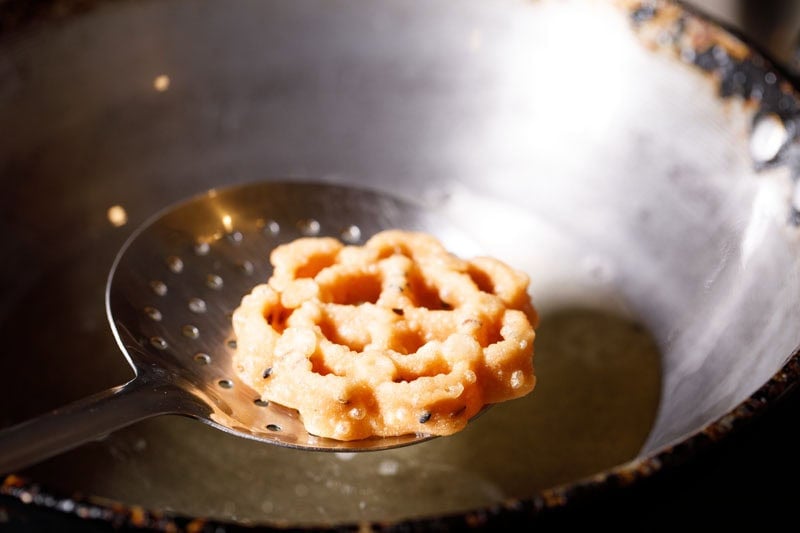
15. Drain on paper towels. Once cooled, store the rose cookies in an air-tight jar or container.
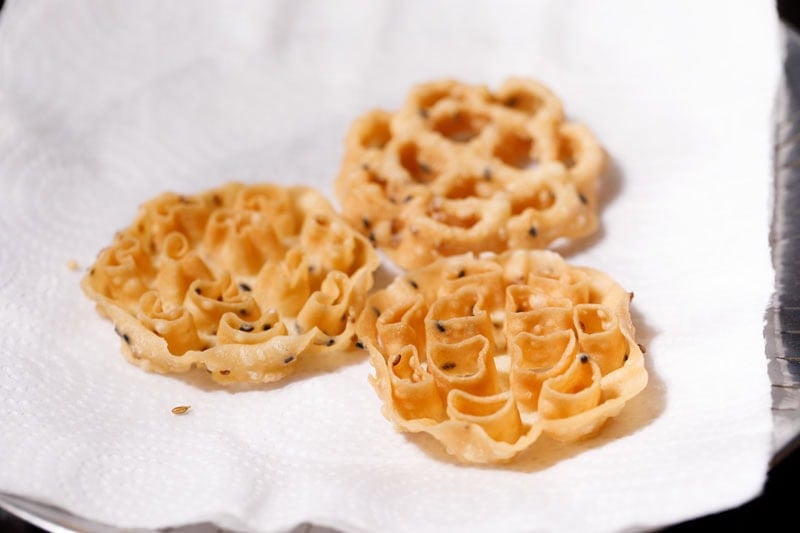
16. Before making the next one, place the mould back in the oil for 15 to 20 seconds to heat again.
Repeat the same process and fry the rose cookies in batches.
As the batter reduces, transfer it to a smaller bowl so the mould can dip properly and coat up to three-fourth height.
You can fry 2 to 3 rose cookies at a time, depending on how big your kadai or pan is, but avoid overcrowding.
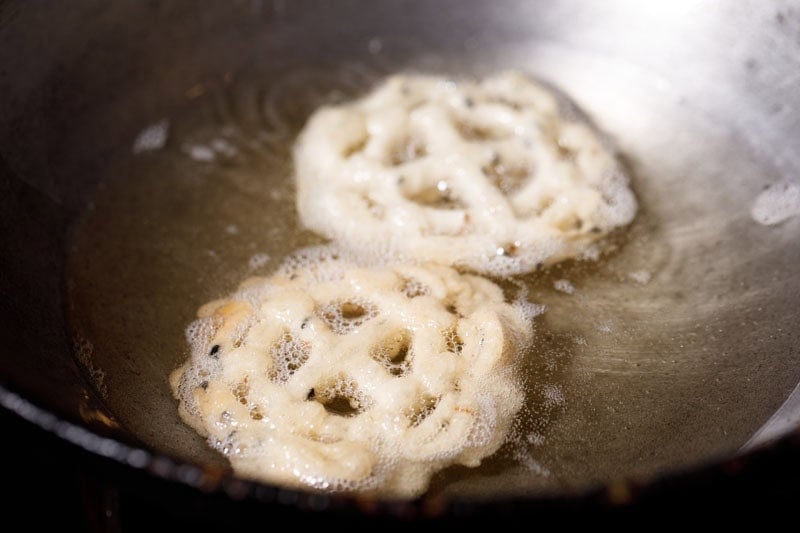
Watch How to Dip & Fry Achappam
Watch how the mould is dipped in the batter and how the achappam releases from it in the hot oil.
Serving Suggestions & Storage
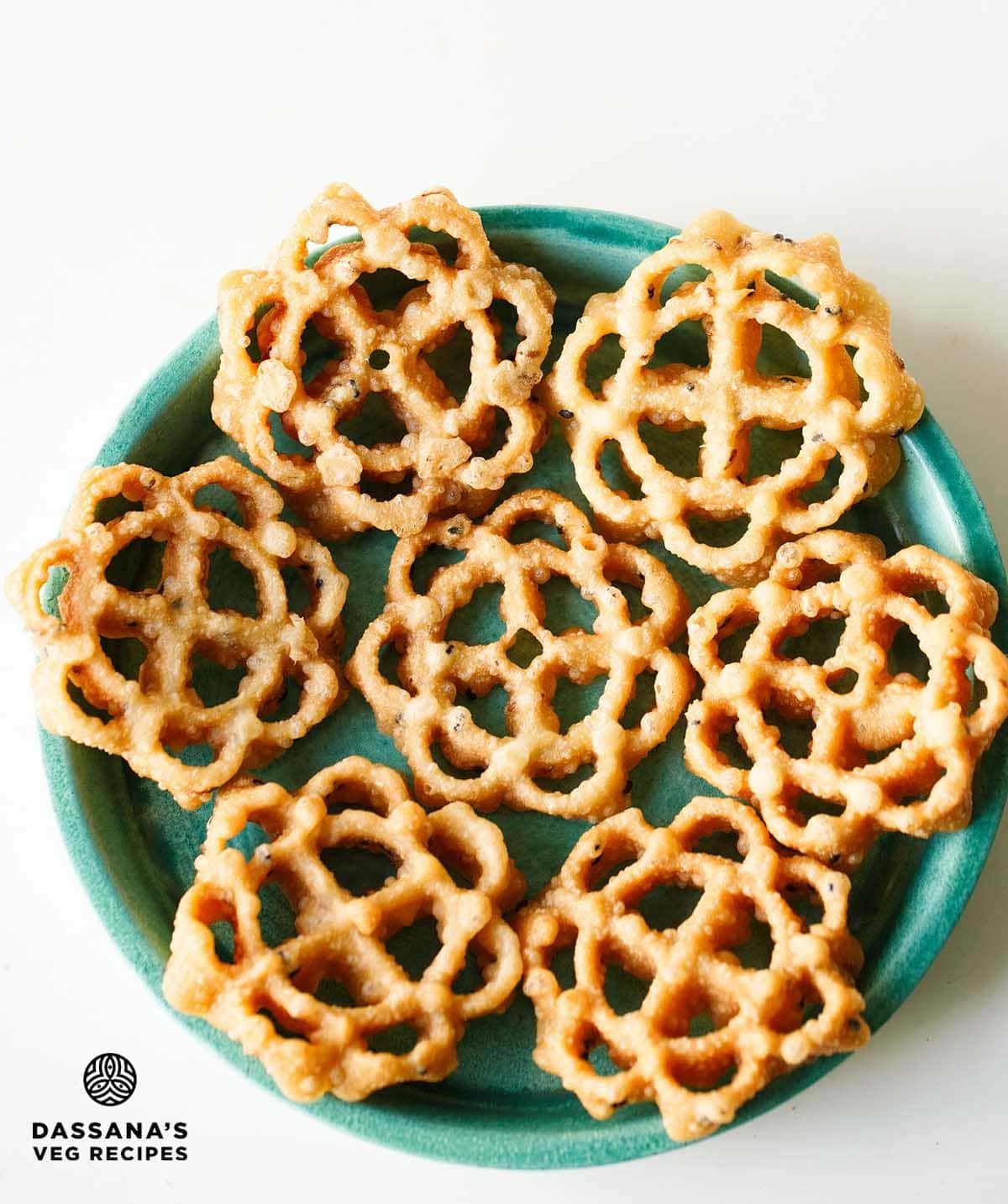
This batch gives about 20 achappam, depending on the mould size.
Serve achappam as a tea-time snack or festive treat. It pairs well with tea or coffee.
You can also serve it as part of a festive platter with other snacks.
Once completely cooled, store in an airtight container or tin. They stay crisp for several days at room temperature.
Dassana’s Recipe Tips
- Batter consistency: Keep the batter medium thin and flowing. A thick batter will make the cookies dense and hard. If needed, add a little coconut milk or water to adjust the consistency.
- Heating the mould: The mould must be properly hot before dipping into the batter. If it is not hot, the batter will not stick.
- Dipping the mould: Dip only up to three-fourth height. If the top edge gets coated, the cookie will not release easily.
- Oil temperature: Fry on medium heat. Very hot oil will brown the cookies quickly but not cook them evenly.
- Mould choice: A well-seasoned metal mould works fine, but a non-stick mould is easier, especially for beginners.
- First few pieces: The first one or two cookies may not come out perfect. This is normal while the mould settles.
- Rice flour: Always use plain, unroasted rice flour for best texture.
- Sugar: Make sure the sugar dissolves completely in the batter.
- Time and patience: Frying is done one by one, so take your time and do not rush.
Troubleshooting queries
Why is my achappam not sticking to the mould?
The mould is not hot enough. Heat it properly in oil before dipping.
Why are my rose cookies thick and hard?
The batter is too thick. Add a little coconut milk or water to make it flowing.
Why is the achappam not releasing from the mould?
Either the mould is too hot or the batter has coated the top edge. Dip only up to three-fourth height.
Can I use milk instead of coconut milk?
Yes, you can use regular milk. The cookies will still turn out good, but coconut milk gives a more authentic and traditional flavor.
Can I skip baking powder?
Yes, it is optional. It just helps in making the cookies slightly lighter.
-
Mix all-purpose flour, rice flour and sugar in a mixing bowl.
-
Add the sesame seeds, cumin seeds, cardamom powder, baking powder, salt, and 1 teaspoon coconut oil.
-
Pour in coconut milk and water. Mix to combine and make a smooth, lump-free batter with a flowing consistency. Rest the batter briefly.
-
Heat oil in a kadai and place the mould in the hot oil for about a minute or until properly heated.
-
Dip the mould into the batter up to three-fourth height and place it back in the hot oil.
-
After some seconds, gently shake it so the achappam releases and floats in the oil.
-
Fry on medium heat until the bubbles reduce and the cookie firms up and turns pale golden.
-
Flip gently with a slotted spoon and cook the other side. Turn over as needed and fry until crisp and evenly light golden.
-
Remove the fried rose cookie with a slotted spoon and place on paper towels.
-
Before making the next one, heat the mould again in the oil for 15 to 20 seconds.
-
Dip in batter and repeat the same process.
-
You can also fry 2 to 3 rose cookies at a time, depending on the pan size. Do not overcrowd.
-
Serve once cooled and crisp. Store in an airtight container at room temperature. Rose cookies keep well for a few weeks at room temperature.
- Baking powder can be skipped.
- Use white sesame seeds instead of black sesame seeds.
- You can also use nigella seeds (kalonji) instead of sesame seeds.
- Cumin can be skipped if you do not prefer it.
- Keep the batter medium thin for crisp cookies.
- Always heat the mould before dipping.
- Do not coat the top edge of the mould.
- Fry on medium heat for even cooking.
- Store only after cooling completely.
Calories: 64kcal | Carbohydrates: 6g | Protein: 1g | Fat: 4g | Saturated Fat: 4g | Polyunsaturated Fat: 0.1g | Monounsaturated Fat: 0.3g | Sodium: 3mg | Potassium: 32mg | Fiber: 0.3g | Sugar: 2g | Vitamin A: 1IU | Vitamin B1 (Thiamine): 0.03mg | Vitamin B2 (Riboflavin): 0.02mg | Vitamin B3 (Niacin): 0.3mg | Vitamin B6: 0.01mg | Vitamin C: 0.2mg | Vitamin E: 0.02mg | Vitamin K: 0.04µg | Calcium: 7mg | Vitamin B9 (Folate): 7µg | Iron: 0.3mg | Magnesium: 4mg | Phosphorus: 19mg | Zinc: 0.1mg