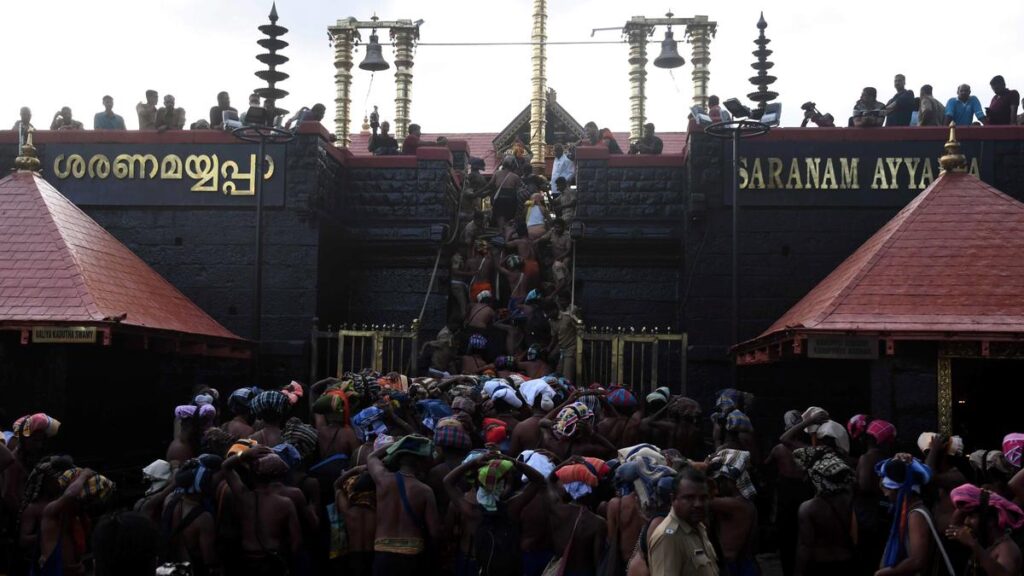
The Union government has told the Supreme Court that a straitjacket definition of what constitutes a ‘religious denomination’ or which religious practices are ‘essential’ would “compress” the inherently plural nature of Hinduism expressed through diverse sects, groups, spiritual lineages, regional traditions, faith, practices, rituals, customs and beliefs.
The Centre has made its position clear ahead of the maiden hearing of a series writ and review petitions linked to the Sabarimala temple case scheduled to be heard by a nine-judge Bench headed by Chief Justice of India Surya Kant from April 7. The nine-judge Bench would also look into, in the backdrop of the Sabarimala case, the larger question of the extent to which constitutional courts could engage in core matters of faith.
The written submissions of the Union government, represented by Solicitor General Tushar Mehta, countered the September 2018 judgment of the Supreme Court which had held that devotees who visit the Sabarimala temple in Kerala were not a separate religious denomination called ‘Ayyappans’ protected under Article 26 of the Constitution.
The five-judge Bench had dismissed the notion that the prohibition of women aged between 10 and 50 from entering the temple was an ‘ancient custom’ of the religious denomination amounting to an ‘essential religious practice’ protected under Article 25.