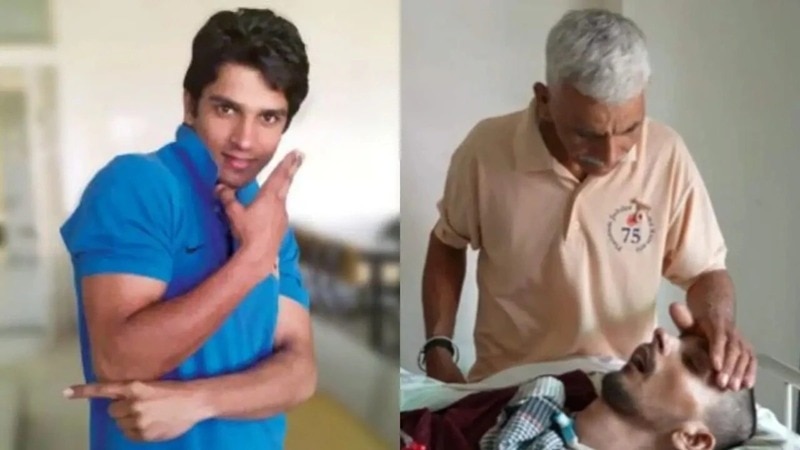
In a landmark judgment on Wednesday, the Supreme Court permitted the withdrawal of life support for a 32-year-old man who has been in a permanent vegetative state for over 13 years, paving the way for passive euthanasia in the case. The court held that medical reports showed the patient was in a “pathetic condition” and that continuing life-sustaining treatment was not in his best interest.
A bench comprising Justice JB Pardiwala and Justice KV Viswanathan allowed the plea and directed the All India Institute of Medical Sciences (AIIMS) to admit the patient, Harish Rana, to its palliative care unit where life support may be withdrawn in a carefully planned manner that preserves his dignity.
Here are the key takeaways from the verdict.
- Delivering the verdict, Justice Viswanathan stressed that the guiding principle in such cases must be the welfare of the patient. “The best interest of the patient is the only interest to be considered,” he said.
- The bench also acknowledged the family’s long struggle in caring for Rana. “His family never left his side…to love someone is to care for them even in the darkest times. Our decision today does not neatly fit in logical but love, life and loss.”
- The judges clarified that while doctors have a duty to administer treatment, that obligation does not extend indefinitely when there is no hope of recovery and the treatment merely prolongs biological existence. “While doctor’s duty is to apply treatment, that duty no longer sustains when the patient has no hope of recovery and prolong his biological life”.
- The court further clarified that a patient need not necessarily be terminally ill to be considered for withdrawal of life support. “A person need not to be terminally ill, if he is in the permanent vegetative state, it would qualify for constitution of medical board.”
- The bench also clarified the scope of palliative and end-of-life care, noting that such care need not be restricted to hospitals. “We would like to clarify that palliative and end of care is in hospital. It is permissible to give at home or any choice as long as it is tailored so that the patient is not deprived of the medical care.”
Passive euthanasia refers to the intentional withdrawal or withholding of medical treatment or life support necessary to keep a patient alive, allowing death to occur naturally. The court directed that the withdrawal of treatment in Rana’s case must follow a tailored plan to ensure his dignity is maintained during the process.
– Ends
Published On:
Mar 11, 2026 11:38 IST