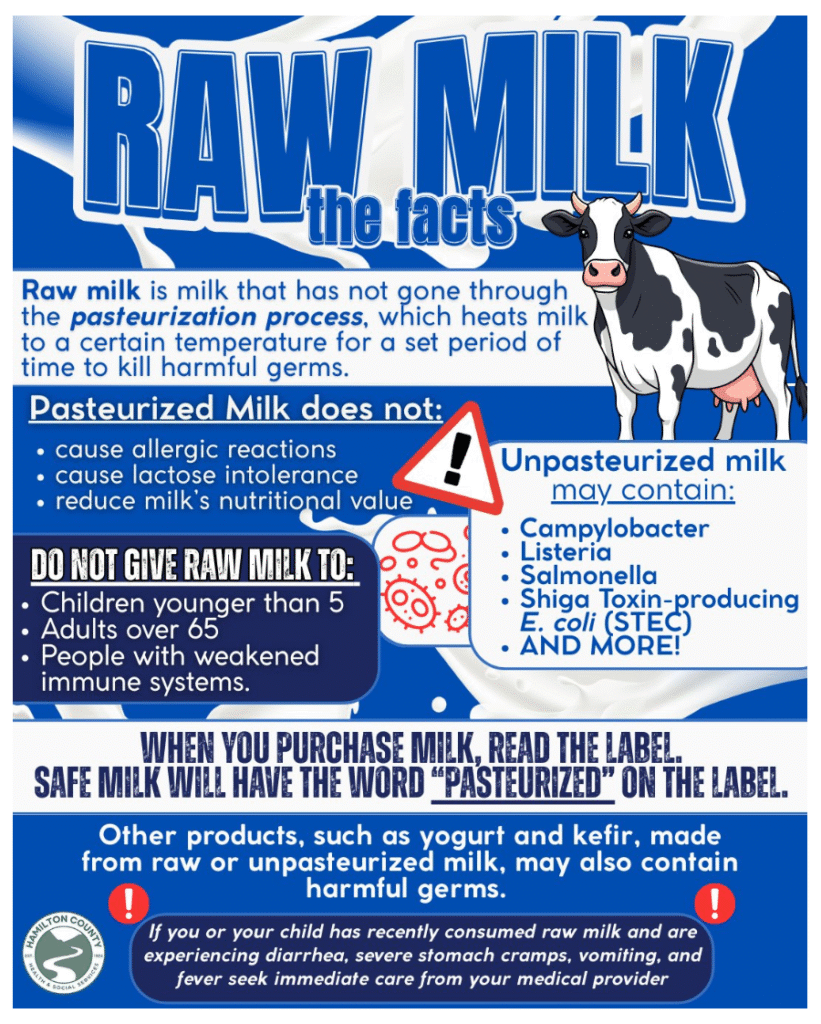
The Hamilton County Tennessee Health Department has identified an unexpected increase in Shiga toxin-producing E. coli cases associated with the consumption of raw, unpasteurized milk.
The health department’s notice did not include the names of implicated dairies.
“Raw milk can carry harmful bacteria that may cause severe or life-threatening illness, particularly in young children, older adults, pregnant individuals, and individuals with weakened immune systems,” according to the health department alert.
“If you or your child has recently consumed raw milk and is experiencing diarrhea, fever, stomach cramps, or vomiting, seek immediate care from your medical provider.”
The health department investigation is ongoing and can be aided by consumers’ reports of illnesses that develop after consumption of raw milk.
Children younger than five years old are particularly susceptible to infections from raw milk.
State and federal health officials routinely warn of the dangers of raw milk. More than 95 percent of foodborne illness outbreaks linked to dairy products involve raw milk.
Pasteurization heats milk to 161 degrees for 15 seconds to kill harmful bacteria and viruses such as E. coli, Salmonella, Listeria, Campylobacter and hepatitis A.
About E. coli infections
Anyone who has consumed raw milk and developed symptoms of E. coli infection should seek medical attention and tell their doctor about their possible exposure to the bacteria. Specific tests are required to diagnose the infections, which can mimic other illnesses.
The symptoms of E. coli infections vary for each person but often include severe stomach cramps and diarrhea, which is often bloody. Some patients may also have a fever. Most patients recover within five to seven days. Others can develop severe or life-threatening symptoms and complications, according to the Centers for Disease Control and Prevention (CDC).
About 5 to 10 percent of those diagnosed with E. coli infections develop a potentially life-threatening kidney failure complication, known as a hemolytic uremic syndrome (HUS). Symptoms of HUS include fever, abdominal pain, feeling very tired, decreased frequency of urination, small unexplained bruises or bleeding, and pallor.
Many people with HUS recover within a few weeks, but some suffer permanent injuries or death. This condition can occur among people of any age but is most common in children younger than five years old because of their immature immune systems, older adults because of deteriorating immune systems, and people with compromised immune systems such as cancer patients.
People who experience HUS symptoms should immediately seek emergency medical care. People with HUS will likely be hospitalized because the condition can cause other serious and ongoing problems such as hypertension, chronic kidney disease, brain damage, and neurologic problems.