By the time Sonu Kumar died on Tuesday evening, he was not able to talk. With the few gestures the bedridden 33-year-old could make, he kept asking for money, says mother Manjeet Kaur.
“We didn’t give it because we wanted him to quit drugs,” says Manjeet, breaking down. “We didn’t know he would die.”
The case of Manjeet, 60, who lost in Sonu her fifth and only remaining son to addiction and its complications – one son to alcohol, four to the white powder known as chitta – has shaken Punjab, bringing focus back to its protracted, and faltering, war on drugs.
Neighbours hope it will also bring attention to the crisis in Sultanpur Lodhi village of Kapurthala, where in just the small Mohalla Pandori where Manjeet and her family live, about a dozen youngsters in the past few years have succumbed reportedly to drugs.
Manjeet’s home lies 100 metres from a police station, down a narrow lane in this neighbourhood. It is an uncemented two-room structure with four rooms, built with Pradhan Mantri Awas Yojana funds (as clearly written beside the main door). Inside, Manjeet stands dwarfed by a long, dingy hall with an uneven floor, a pedestal fan, and a bulb giving off a weak yellow light.
Manjeet’s husband Jaswinder Pal does not keep well. The family of 12, including Manjeet’s daughters-in-law, three grandchildren and two great-grandchildren, depends on the Rs 11,500 a month she makes with odd jobs around a gurdwara. One of the daughters-in-law works as a municipal safai karamchari, earning Rs 10,000 monthly.
Manjeet’s eldest son Jaswinder Singh Jassa died following a long struggle with alcohol addiction in ߜ he was 26. Balvinder, 25, followed three months later. Ravi, 30, died while imprisoned in Kapurthala Jail in 2021 (the family claims on false charges of selling drugs), while Mitthu, 32, passed away in 2023.
Story continues below this ad
About 10 days ago, as Sonu’s condition worsened, a desperate Manjeet called police. As this went viral, police and district medical officials got the 33-year-old admitted to a local hospital, from where he was referred to a government hospital in Amritsar.
Chief Minister Bhagwant Singh Mann, whose government launched a ‘Yudh Nasheyan Virudh’ anti-drug campaign a year ago, offered free treatment for Sonu.
But, it proved too late.
Civil Surgeon, Kapurthala, Dr Sanjeev Bhagat says that on getting to know about Sonu’s condition, Senior Medical Officer, Sultanpur Lodhi, Dr Subodh Kumar Kataria arranged for his admission to Civil Hospital, Sultanpur Lodhi. He was referred from there to Guru Nanak Medical College, Amritsar.
Sonu was found to be ailing from a severe chest infection, with fluid accumulation in his lungs, Dr Bhagat says. He eventually died after a sudden heart attack.
Story continues below this ad
The Mohalla
Most of the youths who died due to drugs in Mohalla Pandori, villagers say, were poorly educated and working as daily wagers.
Charanjeet Kaur says her elder son Harpeet was found dead by the roadside at the age of 34, in 2019, after battling addiction for 10 years. “We were not aware of the extent of it in the beginning. Later, we made every effort to help him quit, but we could not save him.” She lost her younger son Harjit, 30, who made a living as a wall painter, in 2023.
Sunita Rani says her son Lovepreet was in Class 12 in a government school when he caught the habit. “In 2014, we found him by the roadside dead of an overdose.”
Blaming “open availability” of drugs, Sunita claims that when she took on suspected addicts once who were trying to steal the family’s car, she was attacked, leaving her with injuries that required multiple stitches. “Police did not do anything,” she says.
Story continues below this ad
Sultanpur Lodhi Assistant SP Dhirendra Verma says they raided the mohalla recently “but could not find any drugs”. He adds: “In March, we registered four cases under the NDPS against residents of the area.”
Senior Superintendent of Police, Kapurthala, Gaurav Toora told The Indian Express: “Over the past year in the district, we have registered 1,360 cases and arrested 1,700 drug peddlers, recovered 23.5 kg heroin, 450 kg poppy, and over 11 kg opium and other substances.”
Anti-drug campaign
As per the Aam Aadmi Party government, its Yudh Nasheyan Virudh programme has met significant success, including in convictions. The focus, officials say, is on not just enforcement but also treatment and community participation.
Punjab DGP, Law and Order, Arpit Shukla says that over the year-long campaign, “we have registered around 80,119 cases, arrested 54,119 people and recovered more than 2,384 kg of heroin”.
Story continues below this ad
Authorities claim around 90,000 youths have quit drugs through rehabilitation efforts, and that they have set up village-level defence committees involving lakhs of volunteers, and deployed anti-drone systems to curb cross-border smuggling.
However, experts say that apart from crackdowns, which may disrupt supply chains temporarily, the battle against drugs ultimately hinges on consistent local enforcement, rehabilitation infrastructure, and socio-economic support systems.
Dr Harshinder Kaur, the president of a charitable trust and a professor at Government Medical College, Patiala, says the state’s approach is “completely opposite” to international practices.
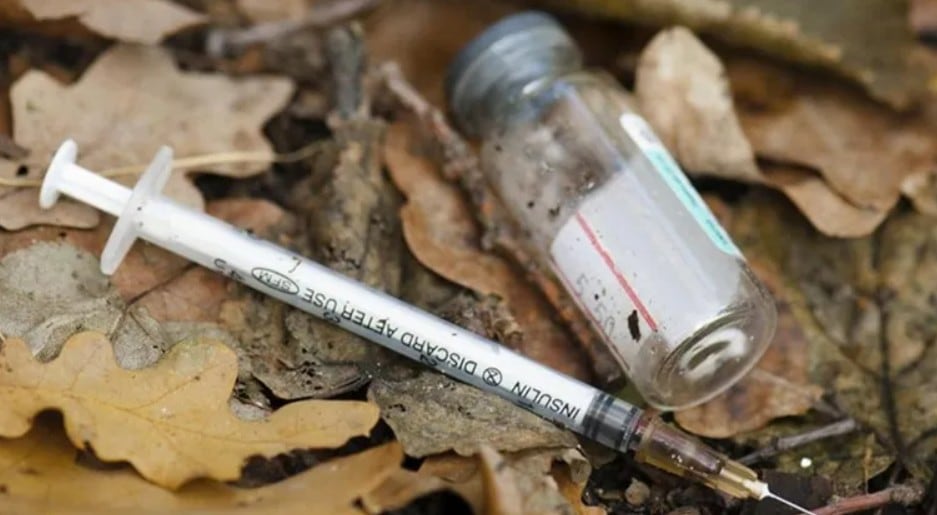
“Abroad, they provide clean syringes to prevent diseases like hepatitis and HIV and ensure regular health check-ups. In Punjab, we restrict access to syringes, forcing multiple users to share them,” she says. “What the addicts need is empathy, rehabilitation and prevention.”
Story continues below this ad
Dr Harshinder also stresses the need to address the root cause of why youths turn to drugs. “Unless we fix the environment and underlying issues, we are only treating the symptoms.”
The families
In Mohalla Pindori, Dr Harshinder’s words are a constant reality.
None of Manjeet’s five sons studied beyond Class 6. Mitthu was the only one who held on to a regular job, with the Municipal Council, earning about Rs 10,000 a month and giving Rs 7,000 for the household. “He helped build this house,” she says.
Sonu dropped out of school after Class 4 and used to be a municipal worker, till he stopped working seven-eight years ago.
Story continues below this ad
Manjeet says he got addicted at a young age, but seemed to have kicked the habit after a one-year stint at a rehabilitation centre in 2021-22. They arranged his marriage then, hoping he would settle down, but Sonu relapsed into drug use.
Manjeet, whose only remaining child is a married daughter, now fears for her grandchildren and great-grandchildren. Sonu left behind a wife, a toddler son and an infant daughter.
Manjeet says some people in the village are not happy about her bringing attention to Sultanpur Lodhi. “People say I brought police here. But I only wanted to save my son,” Manjeet says.
Hoping the government won’t forget about her, and give a job to one of her grandsons, she adds: “I have lost everything. But the government must save other mothers’ sons.”