It starts with a list.
A recall notice comes through, identifying specific products, specific lots, and specific urgency. Upstream, the issue is clearly defined.
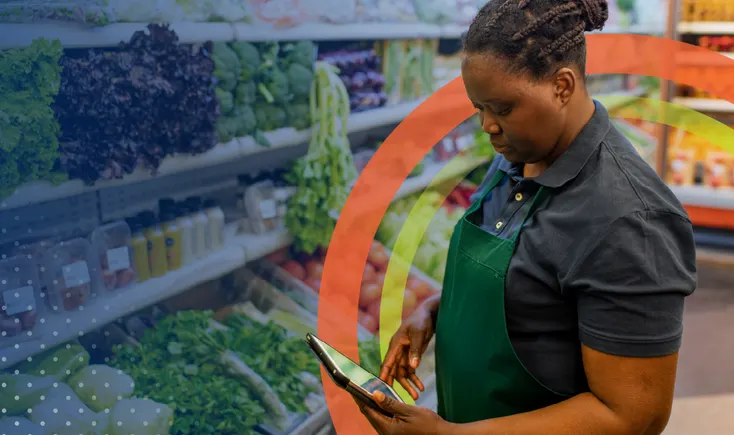
On the store floor, it feels more like a rodeo, sorting through confusion and chaos to round up the right products and get them off the shelves.
Cases have been opened. Products have been stocked. Items from different shipments may sit side by side on the same shelf. The store associate must decide what stays and what goes.
In that moment, precision matters. Yet it’s often the hardest thing to achieve.
By the end of September 2025, the USDA and FDA had already recorded a combined 445 recalls, the highest total since 2020. At the same time, consumer confidence is strained. Nearly all U.S. adults — 93% — say they are concerned about the frequency of food recalls.
For retailers and brands, the expectation is clear: move fast, get it right, and avoid unnecessary disruption. But those expectations are colliding with a reality that’s far less orderly.
The further products move from distribution centers, the harder they become to track with precision. That loss of visibility creates a fast-moving operational challenge.
The recall notice goes out. The rodeo begins.
Where visibility breaks down
Traceability works best when products are moving through the supply chain, tracked in cases, logged in systems, and clearly tied to specific lots. When products arrive at the store, the trail blurs.
“Once a case of a product is opened, it’s subject to co-mingling with other products, removing the visibility to the exact lot or batch,” said Amy Behm, director of industry initiatives at GS1 US.
Items from multiple shipments end up side by side. Labels that once carried meaning at the case level are no longer visible on the shelf. And the associate tasked with executing a recall is left trying to match a precise instruction to an imprecise reality.
When precision slips, the impact grows
When store teams cannot confidently isolate affected products, recalls expand.
Instead of removing only what’s necessary, retailers may pull broader sets of inventory to ensure safety. It’s a cautious approach — often the only viable one in the moment — but it invites consequences.
The biggest impacts are cost and consumer confidence. Product loss, labor, logistics, and operational disruption add up quickly when recalls extend beyond the original scope — and the longer-term effects on trust can be just as significant.
Consumers may not see the data gaps or supply chain complexities behind a recall. What they experience is empty shelves and uncertainty about what’s safe to buy.
Over time, those moments can chip away at trust.
From data trails to clear paths
In response, many organizations are investing in better systems to improve traceability. But technology alone doesn’t solve the problem.
Retailers sit at the end of a long, interconnected supply chain. The information they rely on originates with suppliers, manufacturers, and distribution partners. If that data is flawed, even the most advanced tools can only take them so far.
“All the planning and systems out there cannot account for inaccurate data,” Behm said.
That reality is coming into sharper focus as the industry prepares for the FDA’s Food Safety Modernization Act Rule 204, or FSMA 204, which establishes new requirements for tracing high-risk foods. The rule is designed to improve how quickly and accurately companies can identify where products came from and where they went.
The key to compliance is capturing data in a way that can be shared and understood across partners.
That’s where GS1 US plays a role, Behm said.
GS1 US is the organization behind widely used supply chain standards like barcodes and product identifiers. Its role is to help companies speak a common language so that when data moves between trading partners, it remains consistent, usable, and actionable.
Event-based data standards, such as Electronic Product Code Information Services (EPCIS), allow organizations to record critical events (shipping, packing, receiving, or storing products) in a structured, shareable way.
When that data is connected across partners, Behm said, it creates a clearer trail from shelf back to source.
Today, teams often ask, “Which products do we pull?”
With better data standards, they can ask a more precise question: “Which lot moved through which facilities, and where did it land?”
A more connected path forward
For many in the industry, the way forward is alignment across systems and partners.
Standards make that possible. By creating a shared approach to identifying products and exchanging information, they reduce friction at the moments when speed and clarity matter most.
“As the industry has been noting for the past several years, common language and common use of identification make everything simpler and quicker to act upon,” Behm said.
Progress is best supported by collaboration.
Behm meets monthly with a group of retailers to compare notes on what’s working, what isn’t, and where traceability efforts are gaining traction, reinforcing that recalls and compliance are shared challenges, not solo efforts.
Retailers are sharing lessons learned, and expectations are becoming clearer at every stage of the supply chain.
Supported by clear communication, retailers are defining the data they need and how it should be shared. Brands are working to align with those expectations and respond more quickly when issues arise.
If we return to the store floor — the recall notice in hand, the shelves in front of us — the goal becomes clearer.
It’s a system where products are identified with confidence. Where decisions can be made quickly and precisely. Where disruption is contained, and confidence is retained.
Recalls will always happen.
Yet, with a shared approach to traceability, the industry can keep a firmer grip on the rope — and bring a little more order to the recall rodeo.
Learn how GS1 US food safety resources help trading partners strengthen traceability and recall readiness ahead of FSMA 204.