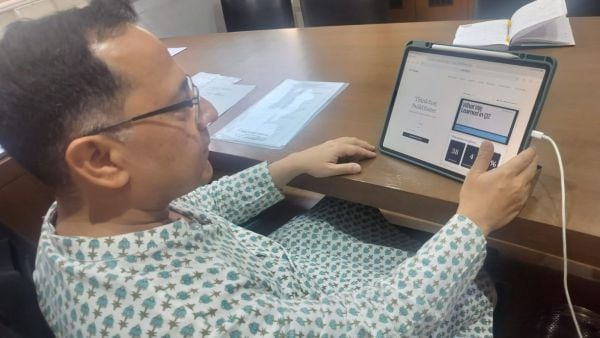
Sitting in his chamber in Delhi’s Jor Bagh, Senior Advocate Saurabh Kirpal (54) has Claude open on his iPad. As someone who once used to think Artificial Intelligence (AI) is a ‘fad’, he now calls it a tool “essential for any legal practice”.
“In terms of court work, it makes a very good list of dates and can also give a synopsis of the case in minutes,” he says. “It’s good for repetitive tasks where it can do the heavy lifting… It is undoubtedly helping my juniors save time.”
Across Delhi’s legal chambers, it’s no longer just tech-savvy junior lawyers experimenting with AI. From senior advocates prepping for high-stakes cases to first-generation litigators making first drafts, the Capital’s legal fraternity is slowly adapting to the tech.
With the SC and various High Courts routinely flagging practices of using AI while drafting petitions which cite “non-existent” law, The Indian Express speaks to four lawyers on their thoughts on AI, how they use them, and its limitations.
‘Lawyers need training in using AI’
According to Kirpal, he uses AI for repetitive court work and for initial drafts. “So, what I do use it most for is cranking data and uploading files once in a while. I don’t do it very often otherwise my juniors would be unemployed…,” he says.
“It’s now essential for any legal practice and I think if you don’t use it, you’ll be left behind,” says Kirpal. “And my own views on this have changed in the last year… When it first came, I said, ‘this is just another fad’,” he tells The Indian Express.
Kirpal, however, stays away from AI while doing legal research. “The one thing I started initially, but abandoned just as rapidly, was using AI for legal research. There was a problem not only of hallucinations (making up cases), but also giving cases whose proposition was quite different from what I had asked for.”
Story continues below this ad
“… One example I saw recently is the petition filed in the Supreme Court challenging the amendment to the Transgender Act 2026… it has quoted provisions which do not exist,” he says.
Kirpal, who has been practising for over two and a half decades, was part of the team of lawyers that represented Sunil Mehra and Navtej Singh Johar, who were among the petitioners in the landmark case in which the apex court decriminalised homosexuality.
But, he says, AI has already improved a lot in the last two years. “The way it took people time to get used to even something like SCC online legal database, it’ll take time for us to get used to. I think some better legal interfaces are necessary. And they really need to improve their legal research and methodologies. AI is like any lawyer, you know. It’ll get better with age and practice,” he says.
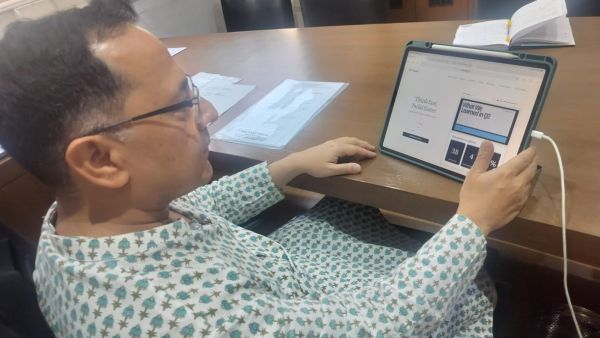 Senior advocate Saurabh Kirpal (54) studied law at Oxford and Cambridge Universities. (Express Photo)
Kirpal believes that lawyers also need to be trained in using AI. “Another thing with AI I find… is that the more detailed the question (prompt), the better the answer. But often we lawyers are rather terse in our language. The consequence is that you don’t get the results that you could get. AI has to be trained, but lawyers have to be trained in how to use AI also,” he says.
Story continues below this ad
Kirpal studied law at Oxford and Cambridge Universities and is also the editor and writer of Sex and the Supreme Court: How the Law is Upholding the Dignity of the Indian Citizen.
‘Final review must always be human’
Five km away, Special Public Prosecutor (SPP) Rahul Tyagi (49), wearing an olive-green Nehru jacket,
sits in his office In Lajpat Nagar 3, concentrating on his desktop screen. His screen looks minimalistic and almost completely organised. There are separate folders for every case and every agency.
Tyagi, a seasoned criminal lawyer, is handling some of the most sensitive NIA cases as the SPP, including Matthew Van Dyke’s case, the Popular Front of India case, gangster Arshdeep Dalla’s case, gangster Anmol Bishnoi’s case and the ISIS module cases. He also represents the Enforcement Directorate and the Delhi Police in multiple cases and has over 20 years of legal experience.
Story continues below this ad
“I feel like many prosecutors are averse to using AI, but I find it to be a very useful tool. It is very efficient for workflow management and first legal drafts. The tools today work at 10 times efficiency of a novice junior,” he says.
Tyagi sometimes drags multiple judgments together and combines them to prepare initial drafts for his understanding using Claude. “I use Claude Pro to summarise drafts and to organise my case files. This sometimes saves me a lot of time.”
“But one has to finally cross check everything. Many times, citations and quotations could be wrong due to hallucinations. As of now, AI can’t replace lawyers, it can only augment them. The final review must always be human,” he says.
Since Tyagi is handling multiple sensitive cases, he takes precautions to maintain anonymity. “As a prosecutor, I have to be careful of what data I’m sharing with AI due to the sensitive nature of cases. I make sure that I give anonymous case data. I’ve taken precaution that all my personal and sensitive data is moved from my desktop,” he says.
Story continues below this ad
“While AI is useful for culling out information and making initial drafts, it is not at a stage where it can even begin to replace legal expertise… I think it will become far better in the future,” he adds.
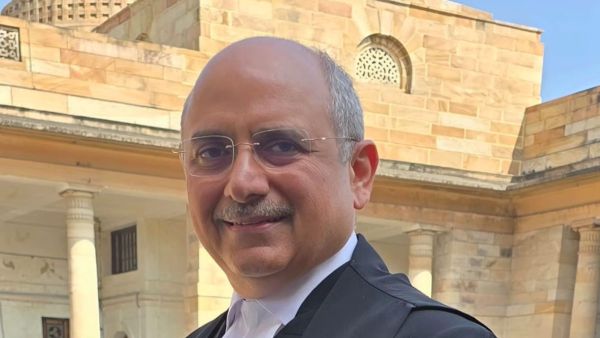 Special Public Prosecutor (SPP) Rahul Tyagi (49), is a seasoned criminal lawyer, is handling some of the most sensitive NIA cases. (Express Photo)
Tyagi sometimes uses Amicus AI for legal research and has also taken virtual lessons to understand the tool, which is often used for research, help draft written submissions, summarise bulky orders, refine oral arguments and compare how different courts have treated similar issues. Today, it has answered more than a million requests for thousands of lawyers across India.
“… There’s a long way to go, but if you’re not learning AI as a lawyer, you might be missing out,” he says.
‘Helps with large case files’
For 32-year-old advocate Mathew M. Philip, incorporating AI into his legal practice is an evolving exercise. He initially used Microsoft Copilot for enhanced search or to clarify basic legal concepts and look up basic case law.
Story continues below this ad
“It was useful as a starting point, especially when I needed quick answers, but I never really relied on it for drafting. The outputs didn’t feel polished or nuanced enough for legal work, so I kept its use fairly limited,” he says.
Over time, he moved to ChatGPT for initial drafting — he would write a well-defined prompt and go back and forth to refine the output.
“I would generate a draft, tweak the prompt, refine the structure, adjust the tone, and continue until I got something usable. That said, one of the constraints I faced was the limitation on document uploads,” he says.
He then shifted to Perplexity, which he says helped him better in dealing with larger volumes of case files.
Story continues below this ad
He is, however, cautious of what AI produces. “One important constant across all these tools has been the need for careful verification. AI is inherently prone to errors and hallucinations, especially in a field like law where precision is critical. So even when I use AI generated drafts, I go through them meticulously,” he says.
His recent experimentation has been with Claude. “… my initial impression is that its drafting quality is better, more structured and closer to how I would naturally write…,” he adds.
Currently, Mathew uses AI for preparing first drafts and for initial research. He says AI significantly reduces the time it takes to get from a blank page to a workable document.
‘People blindly depending on it is dangerous’
Senior advocate Nalin Kohli (55), meanwhile, prefers the old-school method and has steered clear of the tech so far.
Story continues below this ad
“I don’t use AI yet,” he says. “In fact, I believe it’s risky for a lawyer who is presenting something in court to exclusively depend on AI for research and arguments. There are several instances where judges and courts have expressed concern and anguish about AI being used to quote non-existent case laws. Such use of AI risks shaking the very foundation of the adjudicatory process and the trust judges and courts repose in arguing counsel.”
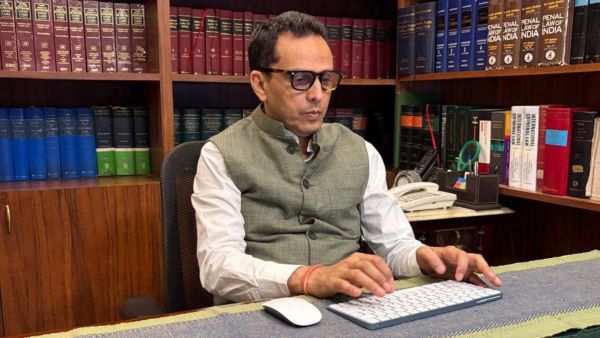 Senior advocate Nalin Kohli (55), prefers the old-school method and has steered clear of the tech so far. (Express Photo)
He says he is not against the use of AI in a structured or regulated manner by law firms or colleagues, provided they are not blindly dependent on it. “As a tool, it could be useful, but AI leading our work, people blindly being dependent on it, is dangerous and unacceptable.”
“… Whatever comes through the use of Artificial Intelligence needs to be carefully reviewed and checked to ensure case laws and other legal propositions are correct…,” he adds.
Kohli is a prominent senior advocate at the Supreme Court and a BJP national spokesperson. He has served as Senior Additional Advocate General for Assam and previously for Rajasthan. He regularly appears in complex legal matters across commercial, constitutional, criminal, electrical and insolvency law, among others.